Wilderness Conservation Movement
Interactive passage with audio narration, comprehension questions, and printable PDF.
What's included
Wilderness Conservation Movement preview and details
About this printable Wilderness Conservation Movement reading passage (Grades 6-8)
Sample passage and quiz from Wilderness Conservation Movement
Reading passage and comprehension quiz preview
Wilderness Conservation Movement
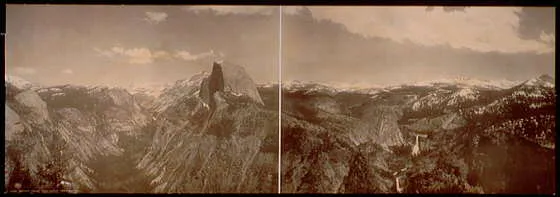
Source: Library of Congress - Detroit Publishing Co.
The Wilderness Conservation Movement began in the late 1800s and early 1900s, when Americans realized that their nation's forests, rivers, and wildlife were being threatened by rapid industrial growth. During the Progressive Era, cities and industries expanded quickly, often destroying natural habitats. This created a major conflict: Should the country use its natural resources for economic gain, or protect them for future generations?
One group of activists, called conservationists, believed that the government should manage forests, water, and land so resources would not run out. They argued for sustainable use, meaning people could benefit from nature without causing permanent harm. President Theodore Roosevelt became a strong supporter of conservation. He used his authority to set aside millions of acres as national parks, forests, and wildlife refuges.
However, another group, known as preservationists, wanted to keep wild places completely untouched by human activity. John Muir, a famous writer and explorer, was a leading preservationist. He helped create Yosemite National Park in California and founded the Sierra Club. Muir believed that nature had spiritual value and should be protected for its own sake, not just for human use. This led to debates with conservationists, who thought some use of resources was acceptable if it was carefully managed.
The government faced difficult choices. For example, the Hetch Hetchy Valley in Yosemite became a symbol of this struggle. San Francisco wanted to build a dam in the valley to supply water to the city. Muir and the preservationists fought to save Hetch Hetchy, but the government eventually allowed the dam, arguing that it was necessary for public good. This decision disappointed many preservationists but showed the complexity of balancing human needs with environmental protection.
Gifford Pinchot, the first chief of the United States Forest Service, worked closely with Roosevelt. He promoted the idea of resource management, which meant using science and planning to decide how forests and other resources should be used. Pinchot and his supporters created new rules for logging, mining, and grazing to make sure natural areas could still provide benefits in the future.
Despite disagreements, the Wilderness Conservation Movement led to major changes. The creation of national parks, new conservation laws, and public awareness about the environment were all important outcomes. Over time, Americans began to see wilderness not just as land to be used, but as a legacy to be protected. This movement continues to influence environmental policy and how people think about nature today.
Interesting Fact: The National Park Service, which now manages more than 400 sites across the United States, was established in 1916 as a direct result of the conservation movement.
Comprehension quiz (8 questions)
1. Who was a leader in conservation?
2. What did John Muir help create?
3. When was the National Park Service founded?
4. Why did San Francisco want Hetch Hetchy Valley?
5. What is resource management?
6. How did the movement change America?
7. The Wilderness Conservation Movement began in the 1800s.
8. What does "sustainable" mean?
Common Core standards for Wilderness Conservation Movement
Explain events, procedures, ideas, or concepts in a historical, scientific, or technical text, including what happened and why, based on specific information in the text.
Determine the meaning of general academic and domain-specific words or phrases in a text relevant to a grade 4 topic or subject area.
Write informative/explanatory texts to examine a topic and convey ideas and information clearly.
Perfect for the way you teach
- Build comprehension skills
- Auto-graded quiz
- Differentiated reading
- Read together at home
- Improve fluency
- Quiet reading time
- Reading curriculum support
- Independent practice
- Track Lexile growth