Wilmot Proviso Explained
Interactive passage with audio narration, comprehension questions, and printable PDF.
By completing this purchase you agree to our Terms of Use and Privacy Policy. Your subscription renews automatically until you cancel. You can cancel anytime from your account settings. All sales are final and non-refundable. Digital content is available for download in your account immediately upon purchase.
What's included
Wilmot Proviso Explained preview and details
About this printable Wilmot Proviso Explained reading passage (Grades 6-8)
Sample passage and quiz from Wilmot Proviso Explained
Reading passage and comprehension quiz preview
Wilmot Proviso Explained
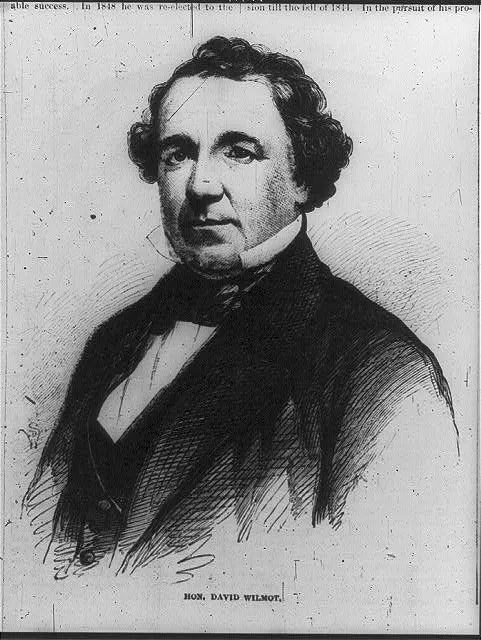
"David Wilmot, 1814-1868" / Library of Congress.
The Wilmot Proviso was a proposal introduced in the United States Congress in 1846. It aimed to prevent the expansion of slavery into any territory gained from Mexico after the Mexican-American War. The main author, David Wilmot, was a congressman from Pennsylvania who believed that new western lands should be free from slavery. His amendment quickly became a source of heated debate between the North and South, revealing deep sectional differences within the country.
At the time, the United States had acquired vast new lands after the Mexican-American War. These territories included present-day California, Arizona, New Mexico, and parts of other western states. Many Americans saw these lands as opportunities for settlement and economic growth. However, the question of whether slavery would be allowed in these regions sparked fierce arguments. Southern lawmakers wanted the right to bring enslaved people into the new territories, while many Northern politicians wanted to stop slavery from spreading.
The Wilmot Proviso was attached as an amendment to a bill providing funds for peace negotiations with Mexico. It stated that "neither slavery nor involuntary servitude shall ever exist in any part of said territory." This direct language threatened the interests of slaveholding states. Supporters of the Proviso argued that stopping the extension of slavery was necessary to protect free labor and democratic ideals. Opponents argued that Congress had no right to limit slavery and that such actions ignored the rights of southern states.
Although the Wilmot Proviso passed several times in the House of Representatives, it always failed in the Senate, where southern states had greater power. The repeated debate over the Proviso increased distrust and resentment between the North and South. Many Southerners began to see the North as determined to destroy their way of life, while some Northerners grew more committed to limiting slavery. The controversy over the Wilmot Proviso showed how difficult it was to find compromise on the issue of slavery. Attempts to resolve the conflict, such as the Compromise of 1850, only temporarily calmed the situation.
The Wilmot Proviso never became law, but its impact was significant. It made the issue of slavery in the new territories a central question in American politics. The debate over the Proviso paved the way for the rise of new political parties, such as the Free Soil Party, which opposed the spread of slavery. Ultimately, the failure to reach lasting compromise over slavery would lead to the outbreak of the Civil War in 1861.
Interesting Fact: Although the Wilmot Proviso never passed, its language influenced the Fourteenth Amendment, which guarantees equal protection under the law for all citizens.
Comprehension quiz (8 questions)
1. Who introduced the Wilmot Proviso?
2. What year was the Wilmot Proviso proposed?
3. Which war led to new territories?
4. What did the Wilmot Proviso try to stop?
5. Why did Southerners oppose the Proviso?
6. What effect did the Proviso have on politics?
7. The Wilmot Proviso became law. True or false?
8. What is a compromise?
Common Core standards for Wilmot Proviso Explained
Explain events, procedures, ideas, or concepts in a historical, scientific, or technical text, including what happened and why, based on specific information in the text.
Determine the meaning of general academic and domain-specific words or phrases in a text relevant to a grade 4 topic or subject area.
Write informative/explanatory texts to examine a topic and convey ideas and information clearly.
Perfect for the way you teach
- Build comprehension skills
- Auto-graded quiz
- Differentiated reading
- Read together at home
- Improve fluency
- Quiet reading time
- Reading curriculum support
- Independent practice
- Track Lexile growth