Women's Roles in the Middle Ages
Interactive passage with audio narration, comprehension questions, and printable PDF.
By completing this purchase you agree to our Terms of Use and Privacy Policy. Your subscription renews automatically until you cancel. You can cancel anytime from your account settings. All sales are final and non-refundable. Digital content is available for download in your account immediately upon purchase.
What's included
Women's Roles in the Middle Ages preview and details
About this printable Women's Roles in the Middle Ages reading passage (Grades 5-8)
Sample passage and quiz from Women's Roles in the Middle Ages
Reading passage and comprehension quiz preview
Women's Roles in the Middle Ages
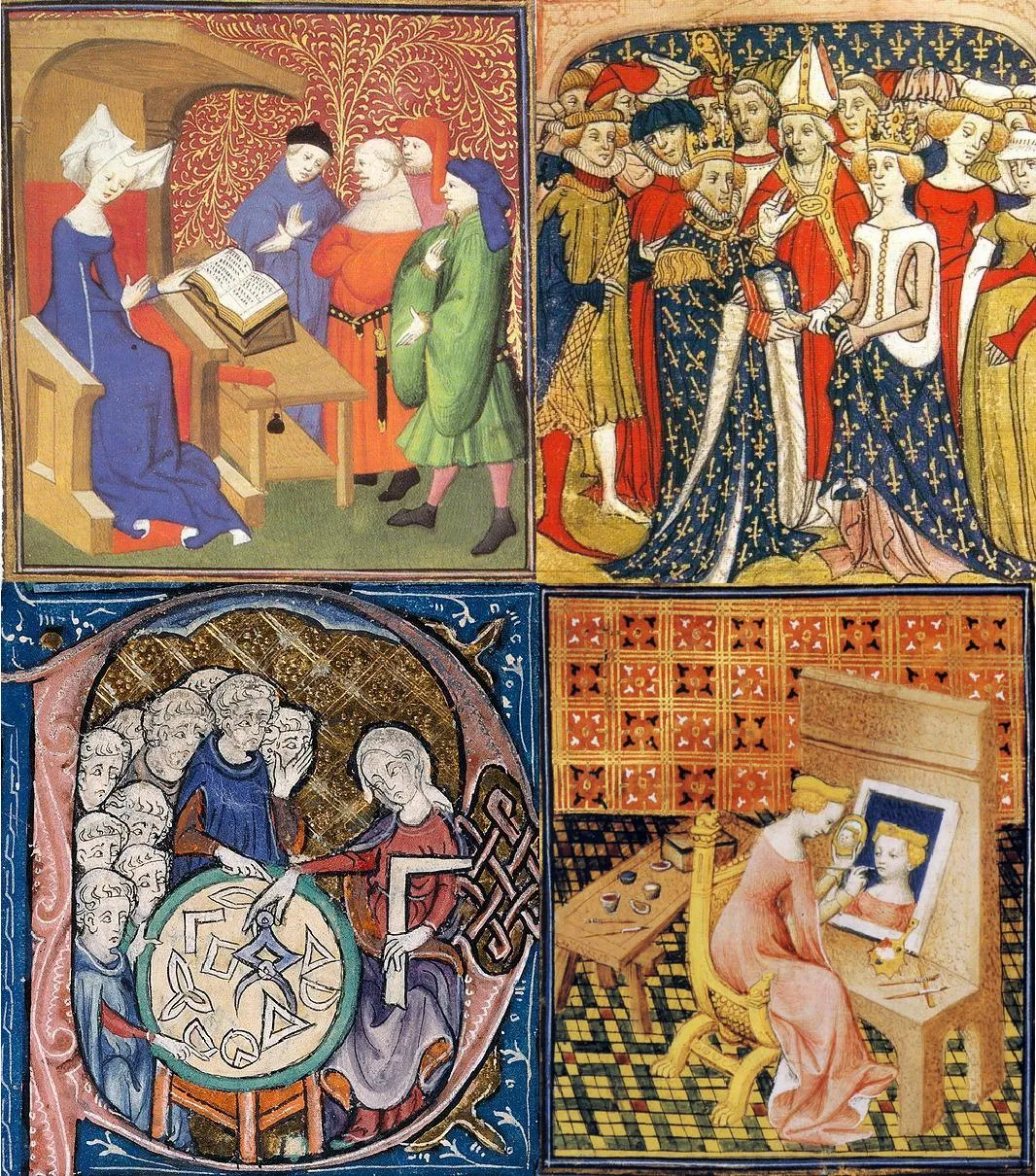
Women activities in middle ages. Wikimedia Commons (Public domain).
Women in medieval Europe lived very different lives depending on their social class and location. From about 500 to 1500 CE, roles for women were shaped by the feudal system, religious beliefs, and local customs. This passage explores the daily experiences of peasants, noblewomen, and nuns during the Middle Ages, highlighting both their challenges and their influence on society.
Most women in medieval Europe were peasants who worked long hours alongside men in the fields. Their days began before sunrise and included planting, harvesting, caring for animals, and preparing food. Historical records, such as the English Domesday Book of 1086, show that peasant women sometimes owned property or managed farms when their husbands were away. Archaeological finds, like spinning tools and pottery, reveal the essential role women played in the household economy. Although they had little power, peasant women contributed to the survival of villages and families, especially during hard times such as famines or wars.
Noblewomen belonged to the aristocracy and had different responsibilities and privileges. They managed large estates when their husbands were away at war or on business, overseeing servants, collecting rents, and sometimes defending castles. For example, Eleanor of Aquitaine (1122–1204) was a powerful noblewoman who ruled lands in France and England. Some noblewomen arranged marriages for their children to form political alliances. However, their lives were still restricted by rules of inheritance and expectations of obedience to men. Letters and legal documents from the period show that some noblewomen used their position to influence local decisions or support the arts and learning.
Another path for women was religious life in a convent. Nuns devoted their lives to prayer, study, and helping the poor. Medieval convents, like the one at Whitby in England, became centers of education, where women could read, write, and copy manuscripts. Some nuns, such as Hildegard of Bingen (1098–1179), became famous writers, healers, and leaders. Convent rules, called "the Rule of St. Benedict," provided structure but also allowed women to escape forced marriages. Evidence from surviving manuscripts and letters shows that nuns sometimes advised kings or acted as diplomats, though their independence depended on the support of local bishops or nobles.
Across all classes, women's opportunities and limitations were shaped by geography, religion, and social hierarchy. While most women had little formal power, they influenced family, economy, and sometimes politics through their daily labor, management skills, and religious devotion. Over time, some changes occurred, such as increased education for noblewomen and the gradual improvement of women's legal rights in certain regions. However, traditional roles remained strong throughout the Middle Ages.
This study of medieval women connects to broader themes in world history, including the impact of social class, religion, and geography on people's lives and the ways individuals shape and are shaped by their societies.
Interesting Fact: In some medieval convents, nuns brewed beer as a source of income and nutrition for the community.
Comprehension quiz (8 questions)
1. When was the Domesday Book created?
2. Who was Eleanor of Aquitaine?
3. What was one job of medieval nuns?
4. Why did noblewomen manage estates?
5. How did convents help women?
6. What does 'hierarchy' mean?
7. True or false: Most medieval women were nuns.
8. Which word means agreement between families?
Perfect for the way you teach
- Build comprehension skills
- Auto-graded quiz
- Differentiated reading
- Read together at home
- Improve fluency
- Quiet reading time
- Reading curriculum support
- Independent practice
- Track Lexile growth