Works Progress Administration — Reading Comprehension
Rate this
Premium Resource
Present
Present in classroom. No work saved
Assign
Classroom with student accounts, Track progress
Quick Play
No student accounts, assign with a link
Grades
6
7
8
Standards
D2.HIS.2.3-5
D2.HIS.3.3-5
RI.4.3
RI.4.4
W.4.2
PRINT+DIGITAL RESOURCE
This learning resource is available in interactive and printable formats. The interactive worksheet can be played online and assigned to students. The Printable PDF version can be downloaded and printed for completion by hand.
This history reading passage examines the Works Progress Administration (WPA), a New Deal agency created during the Great Depression to provide employment and relief to millions of Americans. Students will learn how the WPA addressed high unemployment by building critical infrastructure, such as roads, schools, and airports, and by supporting cultural projects led by artists, writers, and musicians. The passage explores the complex challenges faced by both workers and the government, the impact of public works on American society, and the enduring legacy of the WPA’s projects. This resource includes a read aloud audio, Spanish translation, differentiated reading levels, vocabulary glossary, and standards-aligned activities. It supports learning in U.S. History and meets standards HSS 11.6.4, CCSS.RI.6-8.1, and RI.6-8.3.
CONTENT PREVIEW
Expand content preview
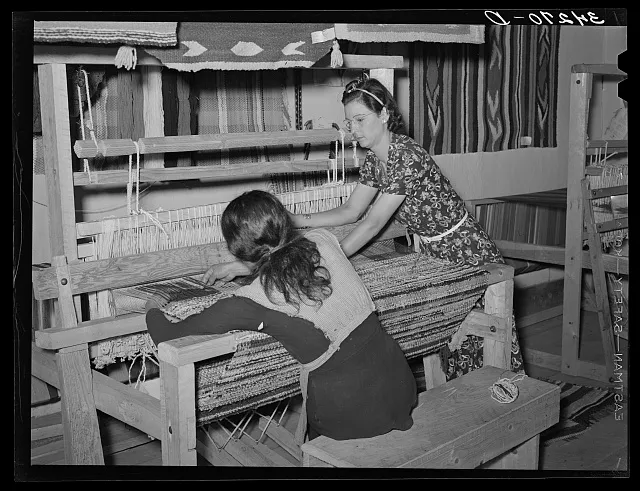
WPA (Works Progress Administration/Work Projects Administration) supervisor instructing Spanish-American woman in weaving of rag rug. WPA project. Costilla, New Mexico. Source: Library of Congress - Lee, Russell, 1903-1986
The Works Progress Administration (WPA) was a large government program created in 1935, during the Great Depression, to help solve the crisis of widespread unemployment. At that time, millions of Americans had lost their jobs and were struggling to survive. President Franklin D. Roosevelt and his advisors believed that direct relief payments were not enough. They wanted to find a solution that would restore dignity and hope by offering people a chance to work and earn a living.
To address these problems, the WPA focused on providing employment through public works projects. These were jobs paid for by the government, designed to create new buildings, roads, bridges, and other vital infrastructure. By hiring unemployed men and women to complete these projects, the WPA not only gave families income, but also improved communities across the nation.
The scale of WPA projects was enormous. Workers built over 650,000 miles of roads, 125,000 public buildings, and thousands of parks and playgrounds. In addition to construction, the WPA also supported the arts. Programs hired artists to paint murals, writers to record oral histories, and musicians to perform concerts. These cultural efforts helped preserve American stories and provided creative outlets during a difficult era.
Despite its successes, the WPA faced criticism and challenges. Some argued that the government was spending too much money. Others felt the jobs were temporary or not always efficient. However, many historians agree that the WPA played a crucial role in helping Americans survive the Depression, strengthening the nation’s economy, and leaving a legacy of lasting public works.
One complexity was deciding which communities and projects deserved funding. The WPA tried to distribute resources fairly, but some regions and groups benefited more than others. Women and people of color sometimes found it harder to get jobs, even though their need was great. These issues remind us that even well-intentioned solutions can have unintended consequences.
Ultimately, the WPA demonstrated how government action could address a major national crisis. By combining immediate relief with long-term infrastructure investments, the program helped millions of Americans find purpose and rebuilt the country in lasting ways.
Interesting Fact: The WPA funded writers who created the first guidebooks for every U.S. state, many of which are still used by historians today.
When did the WPA begin?
1935192919411918
Who was president when WPA started?
Franklin D. RooseveltHerbert HooverHarry S. TrumanJohn F. Kennedy
What did the WPA build?
Roads and schoolsRailroads onlyShopping mallsPrivate homes
Why was the WPA created?
To provide jobsTo raise taxesTo start warsTo build monuments
How did WPA help the economy?
By giving people workBy closing schoolsBy stopping tradeBy raising prices
What was one challenge of the WPA?
Some groups got less helpToo many jobsNo government supportIt lasted too long
The WPA supported artists and musicians. True or false?
TrueFalse
What does 'infrastructure' mean?
Roads and buildingsStories and songsJobs and moneyLaws and rules
Perfect For:
👩🏫 Teachers
• Reading comprehension practice
• Auto-graded assessments
• Literacy skill development
👨👩👧👦 Parents
• Reading practice at home
• Comprehension improvement
• Educational reading time
🏠 Homeschoolers
• Reading curriculum support
• Independent reading practice
• Progress monitoring
Reading Features:
📖
Reading Passage
Engaging fiction or nonfiction text
❓
Comprehension Quiz
Auto-graded questions
📊
Instant Feedback
Immediate results and scoring
📄
Printable Version
Download for offline reading
🔊
Read Aloud
Voice-over with word highlighting
Reviews & Ratings
No reviews yet. Be the first to share your experience!
Related Content
Native American Tribes Across America
This engaging history reading passage introduces students to Native American tribes across America, focusing on their da...
D2.HIS.1.3-5D2.HIS.2.3-5RI.4.1RI.4.2
Teepees: Homes on the Great Plains
This engaging history reading passage introduces students to teepees, the unique homes of Native American tribes on the ...
D2.HIS.2.3-5D2.HIS.14.3-5RI.4.1RI.4.2RI.4.4
Traditional Native American Clothing
This engaging history passage explores traditional Native American clothing and how it reflected the environment, values...
D2.HIS.2.3-5D2.HIS.3.3-5RI.4.3RI.4.4
The Iroquois Confederacy: A System of Peace
This engaging U.S. History reading passage introduces students to the Iroquois Confederacy, a powerful alliance of Nativ...
D2.HIS.2.3-5D2.HIS.3.3-5RI.4.3RI.4.4
The Cherokee Nation: History and Culture
This reading passage explores the rich history and culture of the Cherokee Nation, one of the largest Native American tr...
D2.HIS.2.3-5D2.HIS.14.3-5RI.4.3RI.4.4RI.4.10
The Sioux: Warriors and Tribal Leaders
This history reading passage explores the Sioux Nation, focusing on their roles as warriors and tribal leaders. Students...
D2.HIS.1.3-5D2.HIS.2.3-5RI.4.1RI.4.3
Native American Respect for Nature
This engaging history reading passage explores Native American respect for nature, emphasizing the close relationship be...
D2.HIS.2.3-5D2.HIS.3.3-5RI.4.3RI.4.4
Jamestown: The First Permanent English Colony
This engaging history passage explores the founding of Jamestown, the first permanent English colony in America. Aligned...
D2.HIS.1.3-5D2.HIS.2.3-5RI.4.3RI.4.4
Pocahontas and the Powhatan People
This engaging reading passage explores the life of Pocahontas and the Powhatan people and their important role in early ...
D2.HIS.1.3-5D2.HIS.2.3-5RI.4.1RI.4.3
Colonial Children: School and Chores
This reading passage explores the daily lives of colonial children, focusing on their experiences at school and their ma...
D2.HIS.2.3-5D2.HIS.3.3-5RI.4.1RI.4.2RI.4.4
Colonial Clothing and Homemade Goods
This engaging U.S. history passage explores the daily life of early American colonists with a focus on colonial clothing...
D2.HIS.2.3-5RI.4.3RI.4.4
Colonial Jobs: Blacksmiths, Bakers, and Craftsmen
This engaging history reading passage explores the vital roles of blacksmiths, bakers, and craftsmen in colonial America...
D2.HIS.2.3-5D2.HIS.3.3-5RI.4.3RI.4.4
Colonial Towns and Village Life
This engaging history reading passage explores the daily life, work, and unity found in colonial towns and villages. Ali...
D2.HIS.1.3-5D2.HIS.2.3-5RI.4.3RI.4.4
Colonial Trade with England and Africa
This history reading passage explores colonial trade between the American colonies, England, and Africa, focusing on the...
D2.HIS.2.3-5D2.HIS.14.3-5RI.4.3RI.4.4
Benjamin Franklin: Printer, Inventor, and Leader
This history reading passage explores the life and achievements of Benjamin Franklin, one of America's most important ea...
D2.HIS.2.3-5D2.HIS.3.3-5RI.4.1RI.4.3
George Washington Leads the Army
This engaging history reading passage explores how George Washington bravely led the Continental Army during the America...
D2.HIS.1.3-5D2.HIS.2.3-5RI.4.3RI.4.4
Women and Children During the Revolutionary War
This reading passage explores the important roles women and children played during the Revolutionary War. Students will ...
D2.HIS.2.3-5RI.4.3RI.5.3
African Americans Fight for Freedom
This educational passage explores the brave and inspiring story of how African Americans fought for freedom in the Unite...
D2.HIS.2.3-5D2.HIS.3.3-5RI.4.3RI.4.4
The Battle of Yorktown Ends War
This engaging U.S. history reading passage explores the Battle of Yorktown, a key event that ended the American Revoluti...
D2.HIS.1.3-5D2.HIS.2.3-5RI.4.1RI.4.3
Loyalists vs. Patriots: Divided Families
This engaging U.S. history reading passage explores the division between Loyalists and Patriots during the American Revo...