
Passage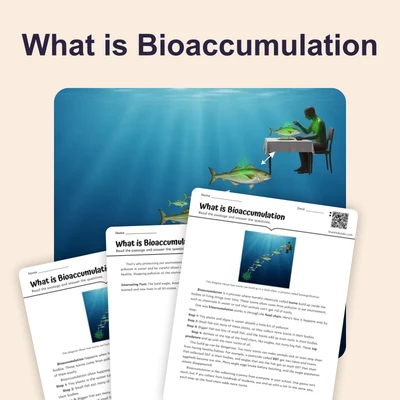
Grades 3–6
What is Bioaccumulation
Reading Passage
$1.50

Explore our collection of Biodiversity and Human Impact curriculum resources for grades K-8. These printable and digital worksheets, activities, reading passages, games, and graphic organizers help students understand how living things interact with their environments and how human actions affect ecosystems. Some resources are free, with full access through a paid membership.
Reading Passage
Reading Passage
Reading Passage · MS-LS2-4
Reading Passage · MS-LS2-4
Reading Passage · MS-LS2-4
Reading Passage · MS-LS2-4
40% off until Aug 1
Reading Passage · MS-LS2-5
Reading Passage · MS-LS2-5
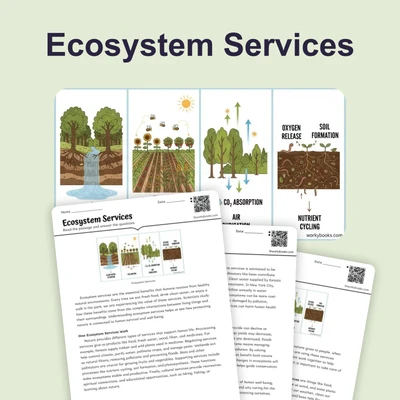
Reading Passage · MS-LS2-5
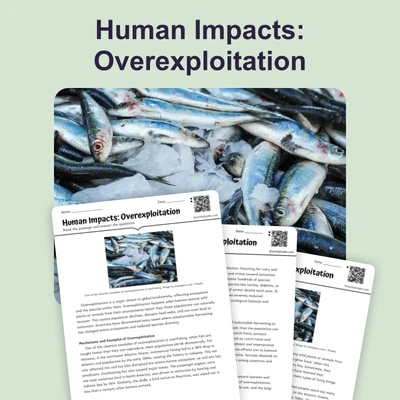
Reading Passage · MS-LS2-4
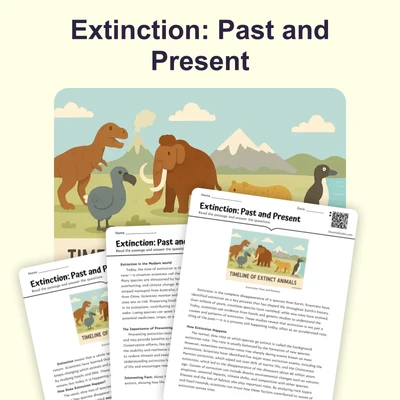
Reading Passage · MS-LS4-1
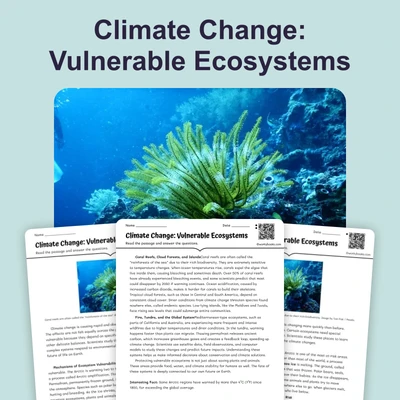
Reading Passage · MS-ESS3-5
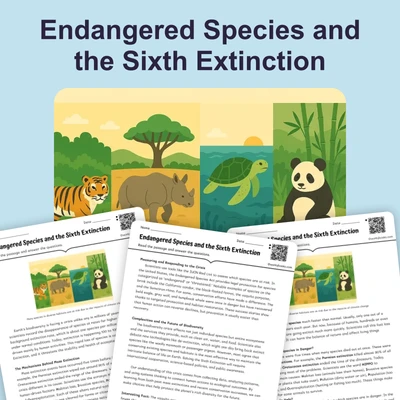
Reading Passage · MS-LS4-1
40% off until Aug 1
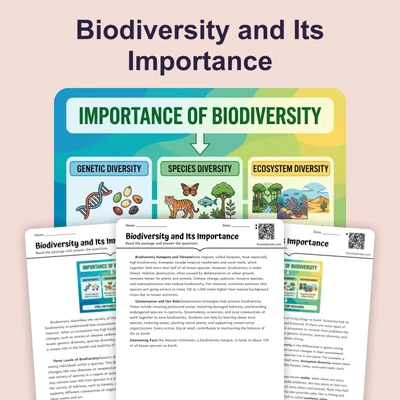
Reading Passage · MS-LS4-4
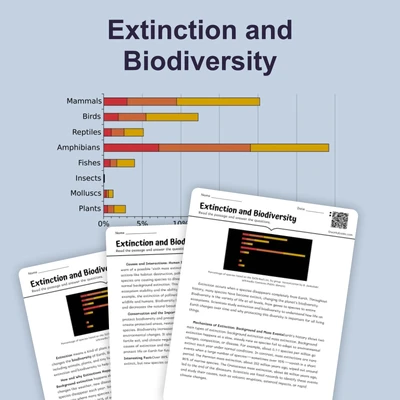
Reading Passage · MS-LS4-1
Reading Passage · MS-LS4-4
Reading Passage · MS-ESS3-5
Three ways to use Workybooks — pick what fits.
In the earliest grades, students begin by identifying basic needs of plants and animals and recognizing that living things live in habitats that provide food, water, and shelter. As they move through grades 2-3, they explore simple food chains, how changes in habitats affect organisms, and the concept of endangered species. By grades 4-5, students investigate ecosystems more deeply, examining food webs, the effects of pollution and deforestation, and conservation strategies. Related concepts include interdependence, adaptation, extinction, renewable and nonrenewable resources, and human impact on land, water, and air.
Our resources build skills such as observing, classifying, comparing, cause-and-effect reasoning, and using evidence to support claims. Across the grade range, students practice reading informational texts, analyzing data, and communicating scientific ideas. The progression ensures that foundational ideas are reinforced while complexity increases, preparing students for middle school science.
Teachers can use this hub to find the right level for any class. For whole-group instruction, choose a reading passage or activity at the class's average level. Differentiate by assigning simpler worksheets to struggling learners and more complex ones to advanced students. Small groups can work on hands-on games or graphic organizers while others do independent practice. These resources work well in literacy centers, for homework, intervention, review, and assessment. Mix printable worksheets with digital activities to suit different learning environments. All materials are no-prep, standards-aligned, and teacher-authored, making them classroom-ready.
These resources align with grade-level Common Core standards for reading informational text and writing, as well as Next Generation Science Standards for life science and human impact. Specific standards vary by grade and resource.
Yes, many of our Biodiversity and Human Impact worksheets are printable. You can download and print them for classroom use. Some resources are also available in digital format for online learning.
Absolutely. Our Biodiversity and Human Impact worksheets for kids are designed for grades K-8. They include age-appropriate activities, reading passages, and games that make learning about ecosystems and human impact engaging and accessible.
Some resources are free, but most require a paid Workybooks membership. With a membership, you get unlimited access to all printable and digital materials, including worksheets, games, readers, and activities across all grade levels.
Our resources are scaffolded and differentiated by grade level. You can assign simpler versions to students who need extra support and more challenging ones to advanced learners. Use the same topic across different levels so all students can participate in discussions and activities.