This learning resource is available in interactive and printable formats. The interactive worksheet can be played online and assigned to students. The Printable PDF version can be downloaded and printed for completion by hand.
Furbish’s Lousewort is a rare flowering plant found only in Maine and New Brunswick. Discovered by botanist Kate Furbish, it grows along the Saint John River and is listed as an endangered species. Threats include habitat destruction and climate change. Conservation efforts focus on protecting its habitat and educating the public about its ecological importance.
CONTENT PREVIEW
Expand content preview
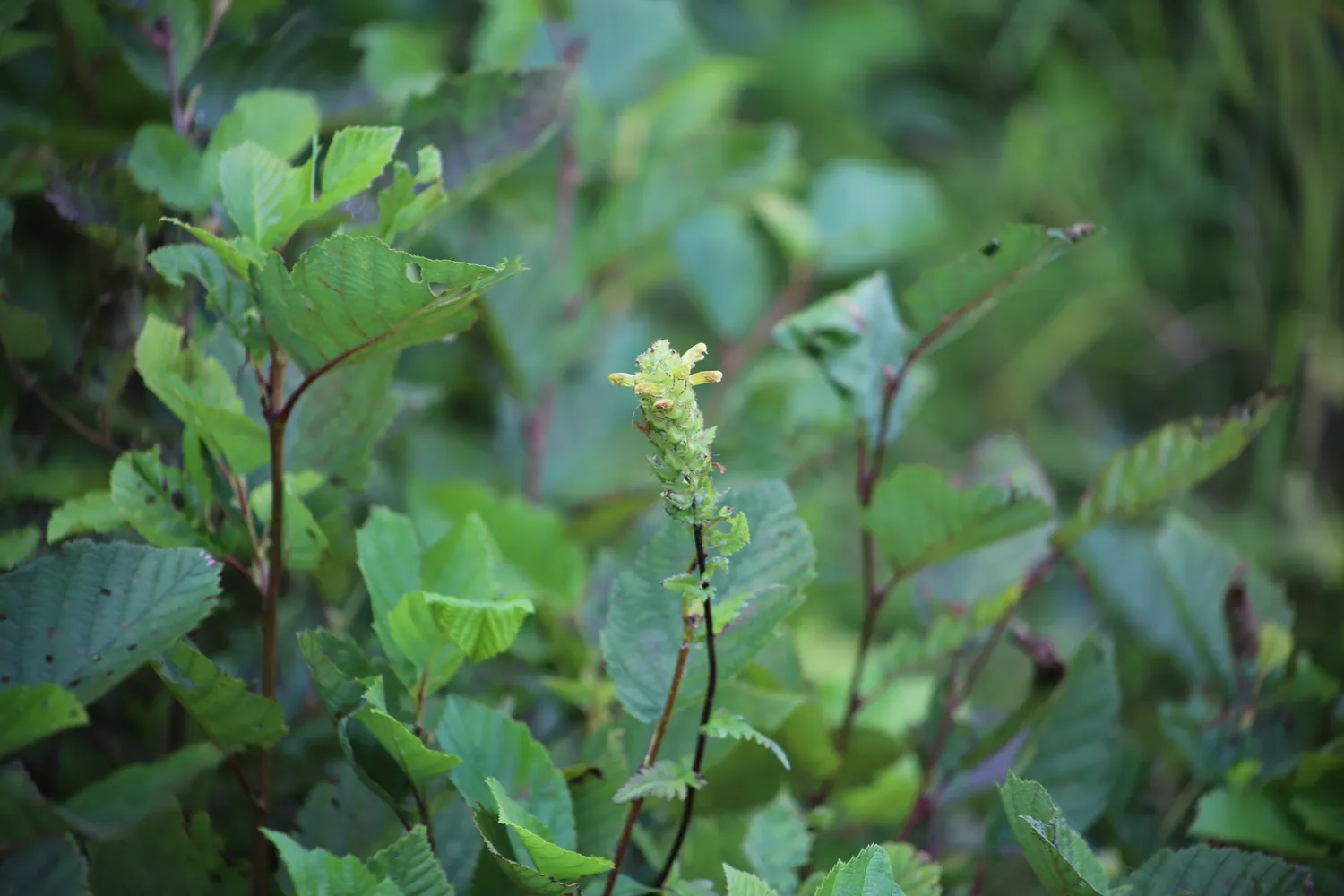
"Furbish lousewort (37037460636)" by U.S. Fish and Wildlife Service Northeast Region / Wikimedia Commons.
Furbish’s Lousewort is a rare flowering plant found only in the state of Maine in the United States and in New Brunswick, Canada. This small, yellow-flowered plant grows along the banks of the Saint John River, where it thrives in sandy, rocky soils.
Discovered in the late 1800s by botanist Kate Furbish, the plant was once thought to be extinct. However, it was rediscovered in the 1970s, sparking efforts to protect it. Furbish’s Lousewort is now listed as an endangered species under the U.S. Endangered Species Act.
The plant faces several threats, including habitat destruction from dam construction, logging, and development. Climate change also poses a risk, as rising temperatures and changing water levels could disrupt its fragile ecosystem.
Efforts to conserve Furbish’s Lousewort include protecting its habitat, monitoring populations, and educating the public about its importance. The plant plays a key role in its ecosystem by providing food for pollinators like bees and butterflies.
Fun fact: Furbish’s Lousewort is named after Kate Furbish, a pioneering botanist who documented hundreds of plant species in Maine during the 19th century.
Where is Furbish’s Lousewort found?
California and OregonMaine and New BrunswickFlorida and TexasAlaska and Canada
What type of environment does Furbish’s Lousewort grow in?
DesertSandy, rocky soils along riversTropical rainforestsGrasslands
Who discovered Furbish’s Lousewort?
Charles DarwinKate FurbishJames LovelockRachel Carson
Why was Furbish’s Lousewort thought to be extinct?
It was overharvestedIt was not seen for many yearsIt was eaten by animalsIt was destroyed by wildfires
What is one threat to Furbish’s Lousewort?
OverwateringHabitat destruction from dam constructionToo much sunlightLack of pollinators
What role does Furbish’s Lousewort play in its ecosystem?
It provides food for pollinatorsIt cleans the waterIt produces oxygenIt controls pests
What is the fun fact mentioned in the passage?
Furbish’s Lousewort is named after a riverIt was discovered in the 1900sIt is named after botanist Kate FurbishIt grows in deserts
Why is Furbish’s Lousewort important to protect?
It is a source of medicineIt supports pollinators and its ecosystemIt is used for building materialsIt is a major food crop
Perfect For:
👩🏫 Teachers
• Reading comprehension practice
• Auto-graded assessments
• Literacy skill development
👨👩👧👦 Parents
• Reading practice at home
• Comprehension improvement
• Educational reading time
🏠 Homeschoolers
• Reading curriculum support
• Independent reading practice
• Progress monitoring
Reading Features:
📖
Reading Passage
Engaging fiction or nonfiction text
❓
Comprehension Quiz
Auto-graded questions
📊
Instant Feedback
Immediate results and scoring
📄
Printable Version
Download for offline reading
🔊
Read Aloud
Voice-over with word highlighting
Reviews & Ratings
No reviews yet. Be the first to share your experience!
Related Content
Key Details in Text
RI.1.1RI.1.2RI.1.10
Informational Text — Armadillos
This informational text on armadillos is a great way to practice reading comprehension. Students will read the short pas...
RI.2.1RI.2.10
Informational Text — Penguins
This informational text on penguins is a great way to practice reading comprehension. Students will read the short passa...
RI.2.1RI.2.10
Informational Text — Habitats
This short informational text on habitats will teach your students what a habitat is, as well as provide some examples o...
RF.3.4.A
Informational Text —Bioluminescence
This informational text on bioluminescence will teach your students about this phenomenon. Examples in nature are provid...
RI.3.10RF.3.4RF.3.4.ARI.3.1
Informational Text —Migratory Birds
Engage young minds with this worksheet that delves into the wonders of migratory birds. Learn about their extraordinary ...
RI.4.10RI.4.3RF.4.4RF.4.4.A
Informational Text — Astronauts
Practice this second grade context clues worksheet with this informational text on astronauts. Students will read the te...
RI.2.4RI.2.10RI.3.4RI.3.10
Informational Text —Snowflakes
This informational text on snowflakes will teach your students how snowflakes are formed. Images of several different fl...
RI.3.10RF.3.4RF.3.4.ARI.3.1
Informational Text —Importance of Sound
This Reading Informational Text Common Core standards calls for 4th graders to be able to effectively describe and analy...
RI.4.5
Informational Text on Parts of a Tree
This informational text on the parts of a tree is a great way to practice using images during reading. Students will rea...
RI.1.7RI.10RF.1.4.ARF.1.4
Informational Text — Cloud Gazing
This informational text teaches students how different types of clouds are formed. A page with pictures of the different...
RI.3.10RF.3.4RF.3.4.ARI.3.1
Informational Text —Sea Stars
Use this second grade worksheet on context clues with this informational text on sea stars. Students will read the text ...
RI.2.4RI.2.10RI.3.4RI.3.10
Informational Text on Butterflies
This resource is a great way to practice differntiating between information gained from illustrations and words in a tex...
RI.1.6RI.10RF.1.4.ARF.1.4
Informational Text—Tardigrades
This informational text on tardigrades will teach your students all about this strange animal! Free response comprehensi...
RI.2.1RI.2.10RI.3.1RI.3.10
Sharks—Informational Text
This informational text on the sharks will teach your students all about these incredible, ancient animals! Free respons...
RI.3.1RI.3.10RF.3.4RI.3.1
Informational Text —Uh Oh, Where Did Gravity Go?
This short informational text on gravity will teach your students about this natural phenomenon. A fun drawing activity ...
RF.3.4.A
Informational Text —Learn About Dinosaurs
This informational text on dinosaurs with comprehension questions to follow is perfect for teaching main idea. Students ...
RF.3.4RF.3.4.ARF.3.4.CRI.3.2
Informational Text —All About Dentists
Students read an informational text explaining what dentists do and how they are trained. Aligned to RI.4.3-2
RI.4.10RI.4.3RF.4.4RF.4.4.A
What Do Humans Need? Informational text
This worksheet contains an informational text on what humans need to survive. Following the passage is a short comprehen...
RL.3.1
All about shells—Informational Text
This informational text on mollusks will teach your students all about these awesome animals! Free response comprehensio...