Alluvial Soil Characteristics
Interactive passage with audio narration, comprehension questions, and printable PDF.
By completing this purchase you agree to our Terms of Use and Privacy Policy. Your subscription renews automatically until you cancel. You can cancel anytime from your account settings. All sales are final and non-refundable. Digital content is available for download in your account immediately upon purchase.
What's included
Alluvial Soil Characteristics preview and details
About this printable Alluvial Soil Characteristics science reading passage, NGSS-aligned (Grade 6)
Sample passage and quiz from Alluvial Soil Characteristics
Reading passage and comprehension quiz preview
Alluvial Soil Characteristics
Have you ever wondered why some areas near rivers are so good for farming? The secret often lies in a special kind of soil called alluvial soil. This unique soil is created by the natural power of moving water, particularly rivers.
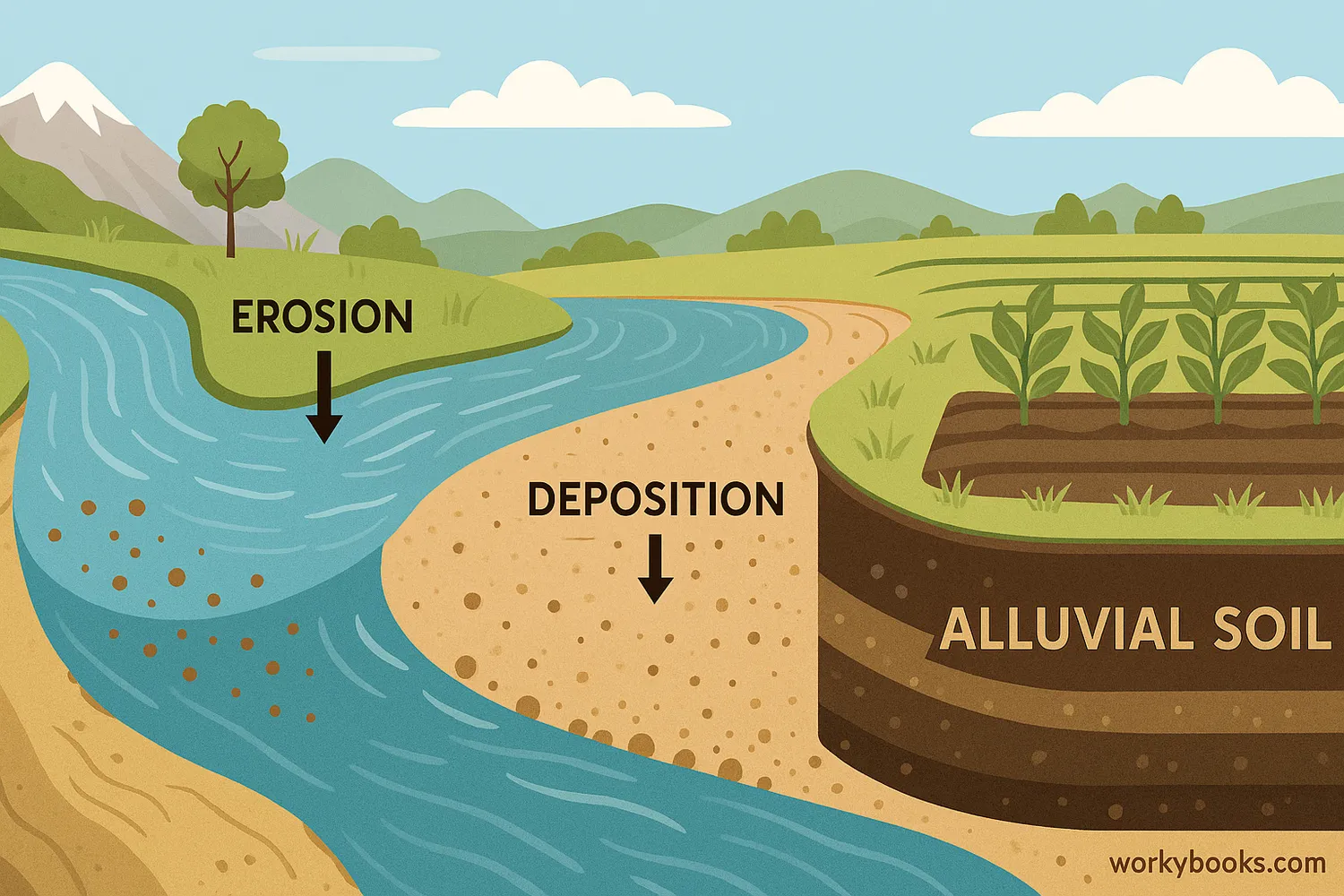
Rivers are constantly at work, changing the Earth's surface. As they flow, they pick up tiny bits of rock, sand, and organic matter. This material is called sediment. The process of picking up and carrying away sediment is known as erosion. Think of a river as a giant conveyor belt, moving these particles from one place to another.
When a river slows down, especially when it overflows its banks during a flood or as it reaches flatter land, it can no longer carry all of its sediment. The heavier particles drop first, followed by finer particles like silt and clay. This dropping off of sediment is called deposition. Over long periods, these layers of deposited sediment build up, forming alluvial soil.
Alluvial soils are known for their incredible fertility. This is because the sediment carried by rivers often contains a rich mix of minerals and nutrients that plants need to grow. The constant movement and mixing of these materials create a very healthy environment for crops. That's why many ancient civilizations and modern agricultural centers thrive in river valleys and deltas, which are areas where rivers meet larger bodies of water and deposit vast amounts of sediment.
The characteristics of alluvial soil can vary. Some might be more sandy, while others are rich in clay, depending on the type of rocks and materials the river picked up upstream. However, they almost always share the common trait of being well-drained and easy for plant roots to penetrate. Understanding alluvial soil helps us appreciate how geoscience processes like erosion and deposition continuously reshape our planet and provide us with vital resources.
Interesting Fact: The Yellow River in China is famous for its massive sediment load, which gives it its distinctive color and has built up extensive, fertile alluvial plains over thousands of years.
Comprehension quiz (10 questions)
1. What is alluvial soil primarily created by?
2. What is the process of picking up and carrying sediment called?
3. Why are alluvial soils considered fertile?
4. What happens when a river slows down?
5. Which areas often thrive with alluvial soil?
6. What determines the characteristics of alluvial soil?
7. Alluvial soils are generally poorly drained. (True/False)
8. What term means 'dropping off of sediment'?
9. If a river flows through an area with mostly volcanic rocks, how might the alluvial soil created downstream differ from soil created by a river flowing through an area with limestone?
10. Why might a farmer prefer to grow crops in a river delta rather than on a steep hillside?
Perfect for the way you teach
- Build comprehension skills
- Auto-graded quiz
- Differentiated reading
- Read together at home
- Improve fluency
- Quiet reading time
- Reading curriculum support
- Independent practice
- Track Lexile growth