Reading PassagePremium

Animal Camouflage

Interactive passage with audio narration, comprehension questions, and printable PDF.

No ratings yet
Grades 3–6ScienceElaEnglish · SpanishInteractive · Printable
Just this resource
$1.50
One-time purchase
Best value
Unlock everything
$49.99$29.99/yr
40% off until Aug 1 — 10,000+ resources
Renews at $49.99/year.
Unlock above to use these actions

What's included

Reading passage
Audio narration
Comprehension quiz
Writing activity
Glossary & flashcards
Differentiated version
Spanish translation

Animal Camouflage preview and details

About this printable Animal Camouflage science reading passage, NGSS-aligned (Grades 3-6)

This engaging science passage for Grades 4-5 explores how animals use camouflage to hide in their environments. Students will learn about key concepts such as adaptation, survival, and different types of camouflage like mimicry and color change. The passage defines important vocabulary words and provides real-world examples from nature, including chameleons, leaf insects, and arctic foxes. The activity set includes a multiple-choice quiz to test recall and comprehension, a glossary for vocabulary support, and a writing activity encouraging students to explain concepts and make connections to everyday life. The passage is provided in both English and Spanish and is audio integrated, making it accessible for all learners. The resource aligns with NGSS science standards, making it perfect for classroom or independent study. Keywords include camouflage, animals, adaptation, and science passage. A fun fact section adds extra engagement, and an AI image prompt is included for visual learning.
Written by Workybooks TeamPublished by Workybooks
Preview

Sample passage and quiz from Animal Camouflage

Reading passage and comprehension quiz preview

Animal Camouflage
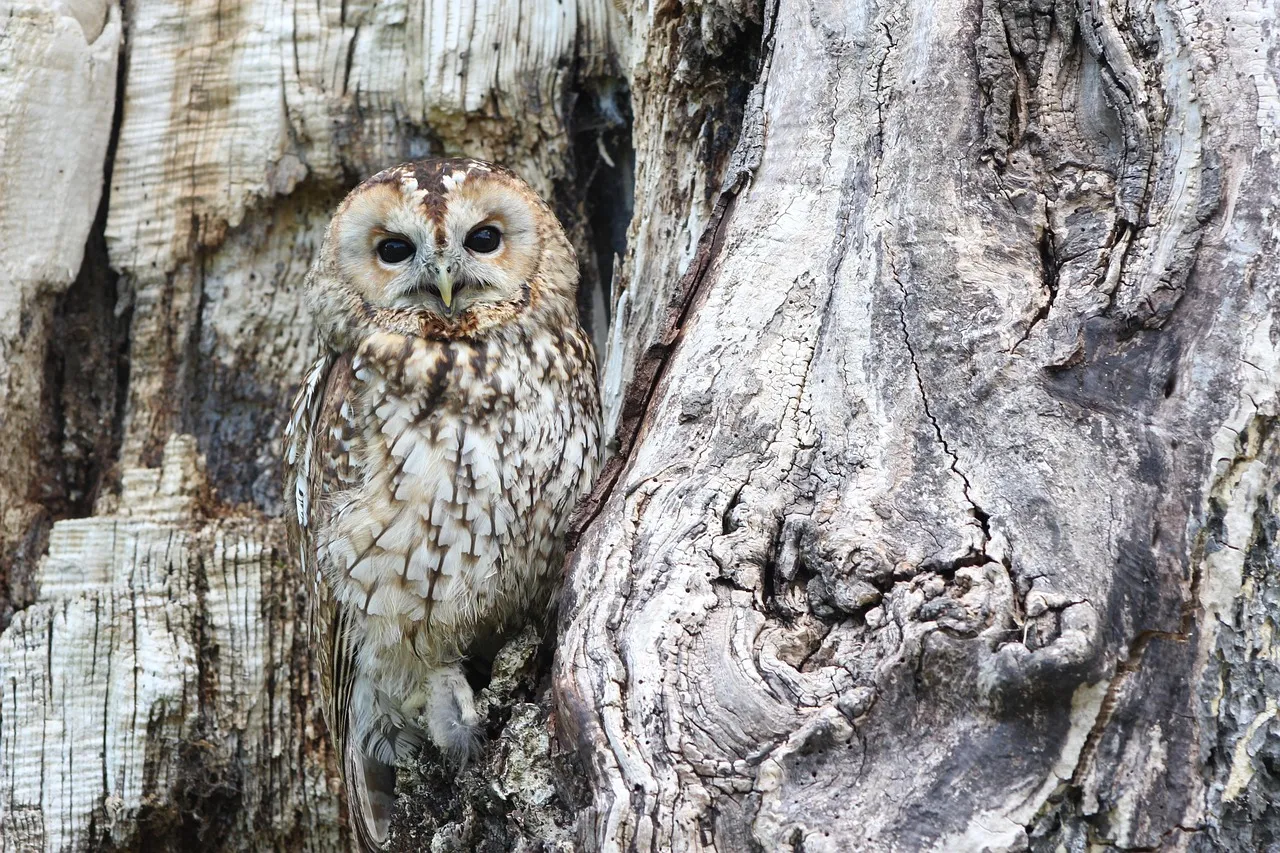
 

owl, camouflage, wildlife, bird of prey, predator, bird, wild, raptor, outdoors, nature, animal, animal world, wildlife photography, owl, owl, owl, owl, owl, camouflage, camouflage, bird

"Owl, camouflage" by WikiImages / Pixabay.  

Many animals have special ways to hide from predators or sneak up on their prey. One of the most important ways is called camouflage. Camouflage is when an animal's colors, patterns, or shapes help it blend in with its surroundings so it is hard to see.

Some animals use coloration to match their environment. For example, an arctic fox has white fur in the winter so it blends in with the snow. In the summer, its fur turns brown or gray to match rocks and plants. Chameleons can change their skin color to hide among leaves or branches. This helps them stay safe from predators that might want to eat them.

Other animals use mimicry. This means they look like something else in nature. For example, a stick insect looks just like a twig, and a leaf insect looks like a green leaf. Predators might not notice them because they think they are just part of the plant.

Some animals have patterns on their bodies that help break up their outline. Tigers have stripes that help them hide in tall grass. The stripes make it hard for other animals to see where the tiger begins and ends.

Adaptation is a change in an animal's body or behavior that helps it survive in its habitat. Camouflage is an adaptation that helps animals avoid danger or catch food. Without camouflage, many animals would not be able to survive in the wild.

There are many types of camouflage in nature. Some animals change color with the seasons. Others stay the same color all year but hide by staying still or choosing the right place to rest. Camouflage helps animals and insects all over the world, from jungles and forests to deserts and the ocean.

Interesting Fact: Some octopuses can change both their color and the texture of their skin to look like rocks, sand, or even coral in just a few seconds!

Comprehension quiz (8 questions)

1. What is camouflage?

Blending in with surroundings
Making loud noises
Hunting at night
Flying quickly

2. Which animal changes fur color by season?

Arctic fox
Tiger
Leaf insect
Octopus

3. What does mimicry mean?

Looking like something else
Changing places
Making loud sounds
Flying fast

4. Why do tigers have stripes?

To help hide in grass
To attract mates
To run faster
To stay warm

5. How can camouflage help animals?

Avoid danger and catch food
Find water
Sing loudly
Build homes

6. If a leaf insect moved a lot, would it be easy to see?

Yes
No
Only at night
Only in winter

7. Camouflage helps animals survive. True or false?

True
False

8. Which word means 'to stay alive'?

Survive
Pattern
Mimicry
Prey
Who it's for

Perfect for the way you teach

Teachers
  • Build comprehension skills
  • Auto-graded quiz
  • Differentiated reading
Parents
  • Read together at home
  • Improve fluency
  • Quiet reading time
Homeschoolers
  • Reading curriculum support
  • Independent practice
  • Track Lexile growth
Topics

Reviews & Ratings

No reviews yet. Be the first to share your experience!

More reading you might love

20 more
Passage
Theory of Evolution  - reading educational content

Theory of Evolution

Reading Passage · MS-LS4-1

$1.50
Passage
Adaptation - reading educational content

Adaptation

Reading Passage · MS-LS4-4

$1.50
Passage
Human Evolution - reading educational content

Human Evolution

Reading Passage · MS-LS4-1

$1.50
Worksheet
Animal adaptation - worksheet educational content

Animal adaptation

Worksheet · NGSS K-LS1-1

$1.50
Passage
Deep-Sea Shrimp Adaptations - reading educational content

Deep-Sea Shrimp Adaptations

Reading Passage · MS-LS4-4

$1.50
Passage
Early Life Forms and Their Adaptations - reading educational content

Early Life Forms and Their Adaptations

Reading Passage · RI.3.3

Free
Passage
Vampire Squid Adaptations - reading educational content

Vampire Squid Adaptations

Reading Passage · MS-LS4-4

$1.50
Passage
Deep-Sea Crab Adaptations - reading educational content

Deep-Sea Crab Adaptations

Reading Passage · MS-LS4-4

$1.50
Passage
Evidence for Evolution: Comparative Anatomy - reading educational content

Evidence for Evolution: Comparative Anatomy

Reading Passage · MS-LS4-2

$1.50
Passage
Blobfish Adaptations to Extreme Pressure - reading educational content

Blobfish Adaptations to Extreme Pressure

Reading Passage

$1.50
Passage
The Nature of Life Science - reading educational content

The Nature of Life Science

Reading Passage · MS-LS1-1

$1.50
Passage
Desert Adaptations for Water Conservation - reading educational content

Desert Adaptations for Water Conservation

Reading Passage

$1.50
Interactive
Animal Adaptations Word Sort - game educational content

Animal Adaptations Word Sort

Game

$1.50
Passage
Herbivore Adaptations - reading educational content

Herbivore Adaptations

Reading Passage

$1.50
Passage
Understanding Biological Evolution and Diversity - reading educational content

Understanding Biological Evolution and Diversity

Reading Passage · RI.3.3

Free
Passage
Whale Blubber: Function and Adaptation - reading educational content

Whale Blubber: Function and Adaptation

Reading Passage

$1.50
Passage
The Giant Isopod: Biological Evolution - reading educational content

The Giant Isopod: Biological Evolution

Reading Passage · MS-LS4-4

Free
Passage
Binturong Adaptations - reading educational content

Binturong Adaptations

Reading Passage

$1.50
Passage
California Condor Adaptation and Survival - reading educational content

California Condor Adaptation and Survival

Reading Passage

$1.50
Passage
Barnacle Biology and Adaptations - reading educational content

Barnacle Biology and Adaptations

Reading Passage

$1.50
Copyright © 2026 Workybooks. Made with ♥ in California.