What Is Ocean Acidification
Interactive passage with audio narration, comprehension questions, and printable PDF.
By completing this purchase you agree to our Terms of Use and Privacy Policy. Your subscription renews automatically until you cancel. You can cancel anytime from your account settings. All sales are final and non-refundable. Digital content is available for download in your account immediately upon purchase.
What's included
What Is Ocean Acidification preview and details
About this printable What Is Ocean Acidification science reading passage, NGSS-aligned (Grades 5-8)
Sample passage and quiz from What Is Ocean Acidification
Reading passage and comprehension quiz preview
What Is Ocean Acidification
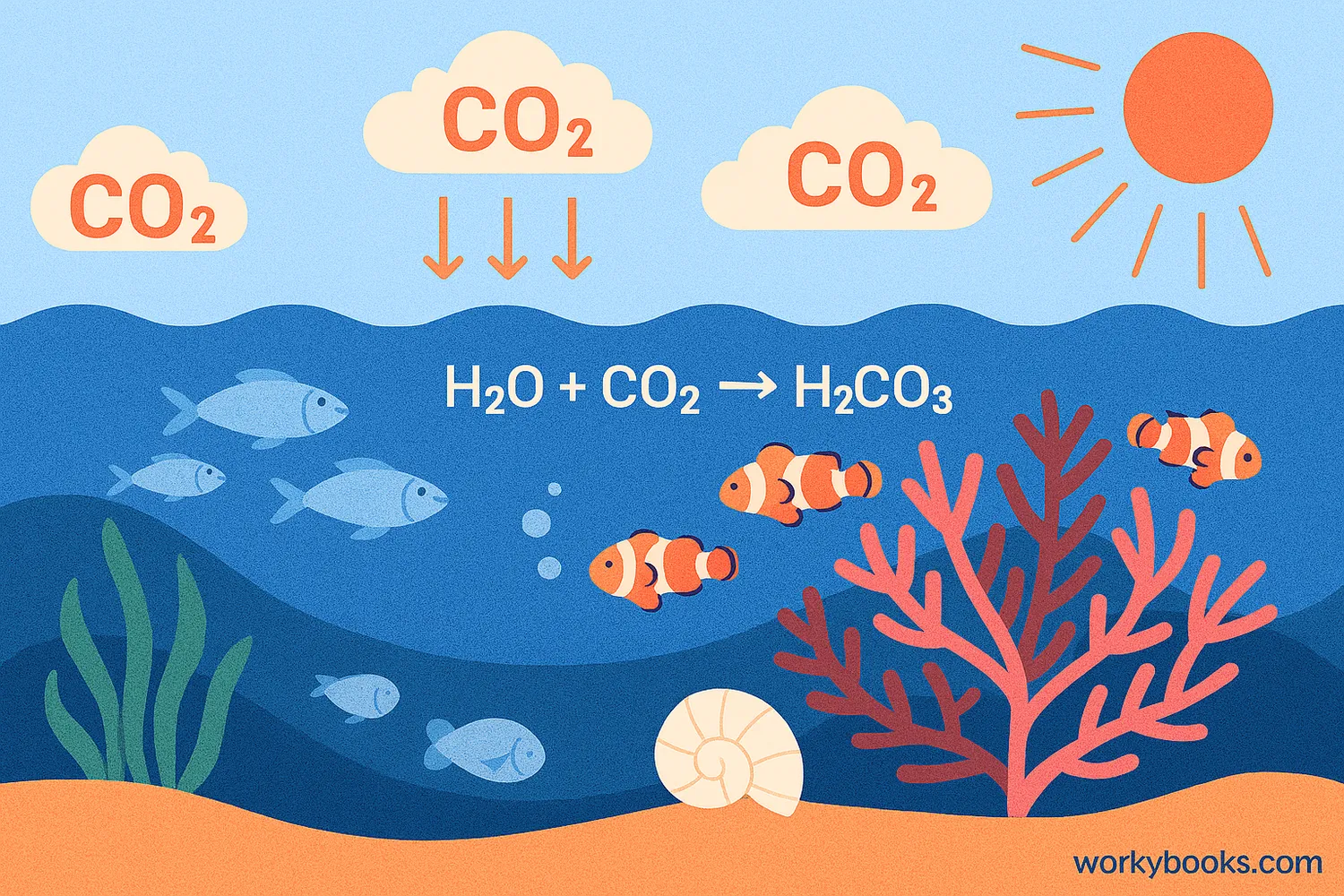
Ocean acidification is a process that happens when the ocean absorbs carbon dioxide from the atmosphere. When carbon dioxide dissolves in seawater, it reacts chemically to form carbonic acid. This weak acid slowly changes the ocean's chemistry. Scientists have measured that ocean water is becoming more acidic than it was in the past.
The chemical process begins when carbon dioxide gas enters the ocean surface. The carbon dioxide reacts with water molecules to create carbonic acid. This acid releases hydrogen ions into the seawater. The extra hydrogen ions lower the ocean's pH level, making it more acidic. Evidence shows that ocean pH has dropped by about 0.1 units since the Industrial Revolution began. This change may seem small, but it represents a 30 percent increase in acidity.
Ocean acidification creates serious problems for marine life that builds shells and skeletons. Corals, clams, oysters, sea snails, and tiny plankton all use calcium carbonate to construct their protective structures. More acidic water makes it harder for these organisms to form calcium carbonate. The acid can even dissolve existing shells and skeletons. Scientists compare this to trying to build with bricks that keep dissolving. These creatures struggle to grow and maintain their structures in increasingly acidic conditions.
The effects reach beyond individual organisms. Many shell-building creatures form the base of ocean food webs. Tiny plankton feed small fish, which feed larger fish. When acidification harms plankton populations, it can affect the entire marine ecosystem. In the Pacific Northwest, oyster hatcheries have experienced massive die-offs of young oysters. Scientists linked these deaths directly to more acidic ocean water upwelling from the deep ocean.
Ocean acidification connects directly to human activities. When we burn fossil fuels, we release carbon dioxide into the atmosphere. The ocean absorbs about one-quarter of this extra carbon dioxide. While this absorption helps slow climate change by removing carbon dioxide from the air, it causes acidification in the ocean. The more carbon dioxide we add to the atmosphere, the more the ocean absorbs, and the more acidic it becomes.
Interesting Fact: Scientists sometimes call ocean acidification climate change's evil twin because both problems stem from the same source: excess carbon dioxide in the atmosphere from burning fossil fuels.
Comprehension quiz (10 questions)
1. What happens when carbon dioxide dissolves in seawater?
2. How much has ocean pH dropped since the Industrial Revolution?
3. What does the term 'pH level' mean in the passage?
4. Which statement best describes what 'calcium carbonate' means in the passage?
5. Why does ocean acidification threaten entire marine food webs?
6. What real-world example does the passage provide about ocean acidification?
7. If ocean acidification continues, what would most likely happen to coral reefs?
8. How does reducing fossil fuel use help address ocean acidification?
9. True or False: The ocean absorbs about one-quarter of the extra carbon dioxide that humans release into the atmosphere.
10. True or False: Ocean acidification only affects large marine animals like whales and sharks.
Perfect for the way you teach
- Build comprehension skills
- Auto-graded quiz
- Differentiated reading
- Read together at home
- Improve fluency
- Quiet reading time
- Reading curriculum support
- Independent practice
- Track Lexile growth