Sea Level Rise and Climate Change
Interactive passage with audio narration, comprehension questions, and printable PDF.
By completing this purchase you agree to our Terms of Use and Privacy Policy. Your subscription renews automatically until you cancel. You can cancel anytime from your account settings. All sales are final and non-refundable. Digital content is available for download in your account immediately upon purchase.
What's included
Sea Level Rise and Climate Change preview and details
About this printable Sea Level Rise and Climate Change science reading passage, NGSS-aligned (Grades 5-8)
Sample passage and quiz from Sea Level Rise and Climate Change
Reading passage and comprehension quiz preview
Sea Level Rise and Climate Change
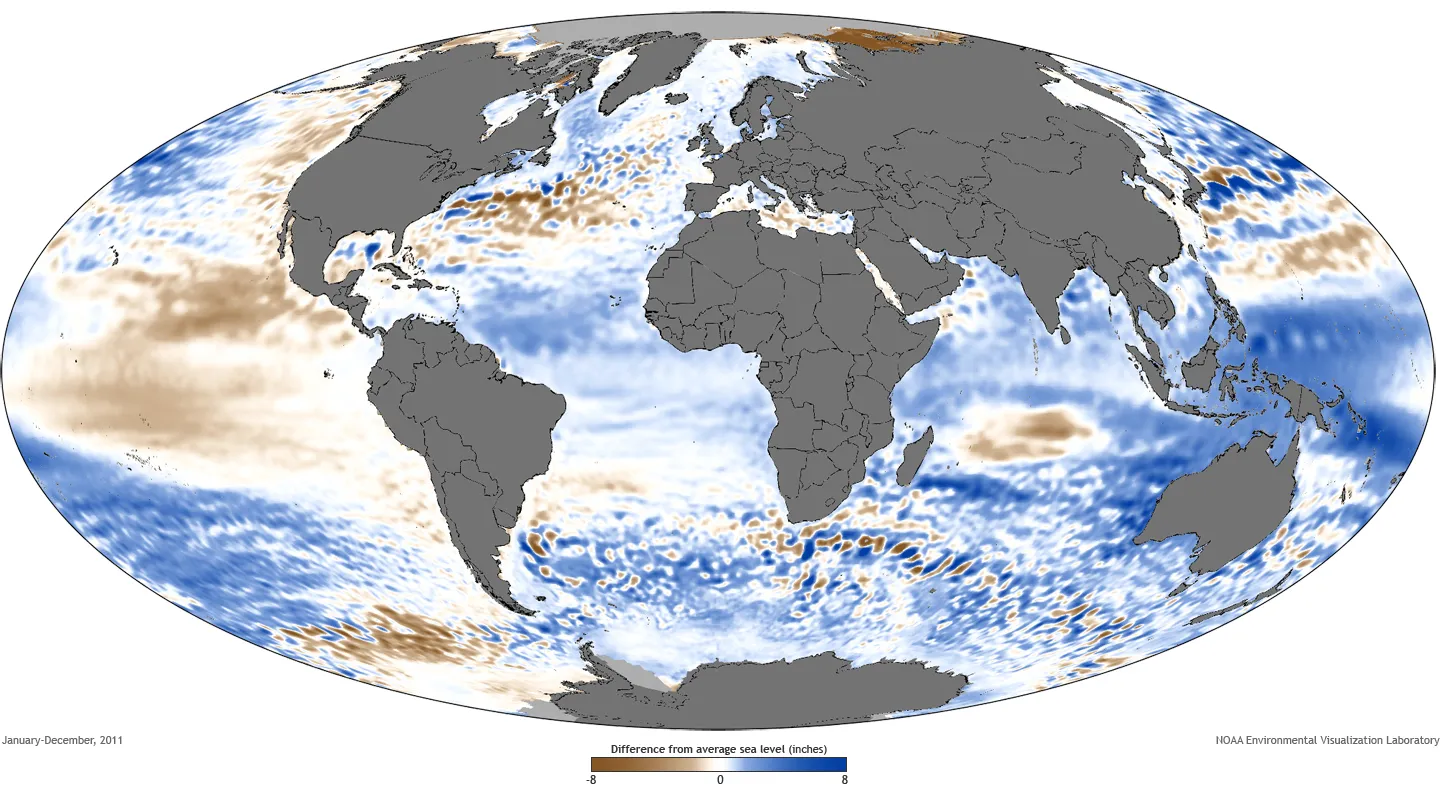
Global map showing where average sea level in 2011 was above or below the long-term average (1993-2011) (NOAA) by Dan Pisut .Even though the oceans are all connected, sea level does not rise or fall uniformly over the planet. The map above shows where average sea level in 2011 was above or below the long-term average. Places where sea level rose up to 8 inches higher than the 1993-2011 average are dark blue, average levels are white, and places where sea level fell below average are brown./ Wikimedia Commons
Why are the oceans rising? Evidence shows that sea levels are climbing higher each year. Scientists explain that two main processes drive this change, and both connect to a warming planet. Understanding these causes helps us predict future impacts on coastal communities around the world.
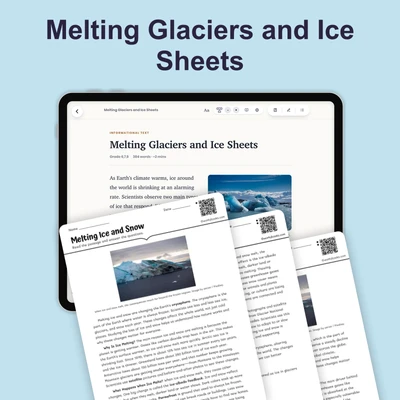
The first cause involves melting land ice. Glaciers on mountains and massive ice sheets covering Greenland and Antarctica are losing ice. When this ice melts, it adds new water directly to the ocean. Scientists observe that ice melt has accelerated in recent decades. The more ice that melts from land, the more water flows into the sea.
The second cause may surprise many people. Water itself expands as it warms, a process called thermal expansion. As ocean temperatures rise, the same amount of water takes up more space. Even a small temperature increase across the vast ocean can raise sea levels significantly. Scientists estimate that thermal expansion accounts for about half of the sea level rise measured over the past century.
These two processes work together, slowly but steadily lifting ocean levels. Evidence shows the rate is speeding up. Since 1880, global sea levels have risen about eight to nine inches. More concerning, the rate of rise has doubled in recent decades compared to earlier periods.
The consequences fall hardest on coastal areas. Higher seas mean more frequent flooding during storms and high tides. Erosion wears away beaches and shorelines faster. Saltwater intrusion occurs when ocean water seeps into underground freshwater supplies, making drinking water salty and unusable. Low-lying cities face increased flood risk. Small island nations in the Pacific Ocean already experience regular flooding that threatens homes and infrastructure.
Sea level rise matters because hundreds of millions of people live in coastal zones. Rising waters can force communities to relocate, damage property, and disrupt ecosystems like coastal wetlands. Understanding the science behind sea level rise helps communities plan for the future and take action to reduce climate change impacts.
Interesting Fact: If all the ice in Greenland melted, global sea levels would rise about 20 feet, enough to submerge many major coastal cities worldwide.
Comprehension quiz (10 questions)
1. What are the two main causes of sea level rise mentioned in the passage?
2. According to the passage, approximately how much have global sea levels risen since 1880?
3. What is thermal expansion?
4. Based on the passage, what does 'saltwater intrusion' mean?
5. Why does melting land ice cause sea levels to rise?
6. Which communities are most threatened by sea level rise according to the passage?
7. Scientists estimate that thermal expansion accounts for about half of sea level rise over the past century.
8. The rate of sea level rise has slowed down in recent decades.
9. What can we infer about the relationship between climate change and sea level rise?
10. If ocean temperatures continue to rise, what would likely happen to sea levels based on the passage?
Perfect for the way you teach
- Build comprehension skills
- Auto-graded quiz
- Differentiated reading
- Read together at home
- Improve fluency
- Quiet reading time
- Reading curriculum support
- Independent practice
- Track Lexile growth