Melting Glaciers and Ice Sheets
Interactive passage with audio narration, comprehension questions, and printable PDF.
By completing this purchase you agree to our Terms of Use and Privacy Policy. Your subscription renews automatically until you cancel. You can cancel anytime from your account settings. All sales are final and non-refundable. Digital content is available for download in your account immediately upon purchase.
What's included
Melting Glaciers and Ice Sheets preview and details
About this printable Melting Glaciers and Ice Sheets science reading passage, NGSS-aligned (Grades 5-8)
Sample passage and quiz from Melting Glaciers and Ice Sheets
Reading passage and comprehension quiz preview
Melting Glaciers and Ice Sheets
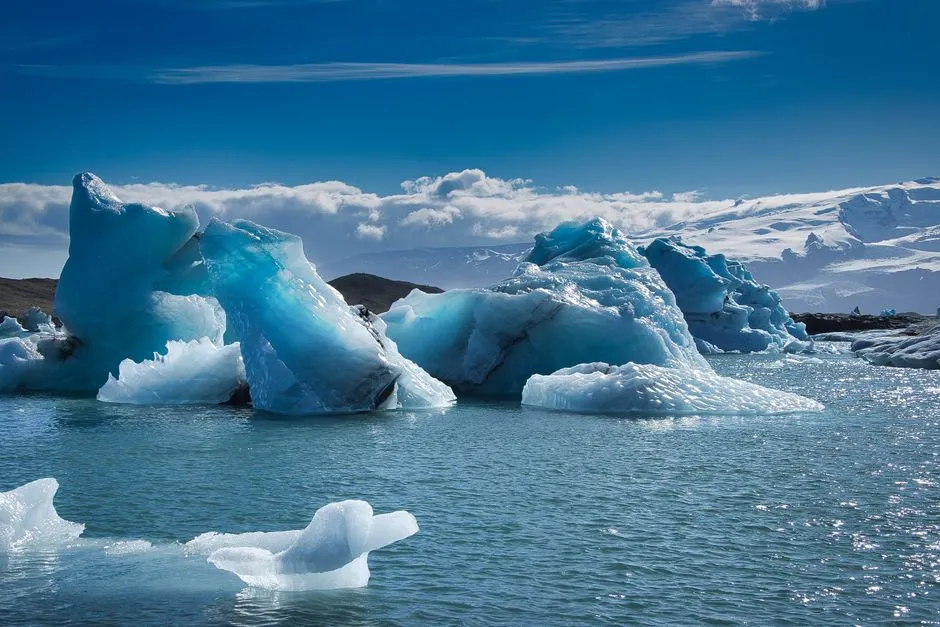
"Breathtaking view of icebergs in a serene lagoon in Iceland, illustrating climate change." by Koen Swiers / Pexels.
As Earth's climate warms, ice around the world is shrinking at an alarming rate. Scientists observe two main types of ice that respond differently to warming temperatures. Understanding these differences helps explain why melting ice matters so much for our planet's future.
The first type includes glaciers in mountain ranges and massive ice sheets covering Greenland and Antarctica. These ice formations sit on solid land. When they melt, the water flows downhill into rivers and eventually reaches the ocean. Evidence shows this process directly raises sea levels because it adds new water to the ocean. The Greenland ice sheet alone contains enough ice to raise global sea levels by about seven meters if it melted completely. Scientists measure glacier thickness and movement to track how much ice is lost each year.
The second type is sea ice, which floats on the Arctic Ocean's surface. When sea ice melts, it does not raise sea levels because the ice was already floating in the water. However, losing sea ice creates a different problem related to albedo, which measures how much sunlight a surface reflects. Bright white ice reflects most sunlight back to space, keeping the planet cooler. Dark ocean water, by contrast, absorbs most sunlight and converts it to heat. When sea ice disappears, the exposed dark water absorbs more solar energy. This process speeds up warming in a cycle scientists call a positive feedback loop.
Mountain glaciers provide another critical concern beyond sea level rise. Many communities depend on glacial meltwater for their freshwater supply. Rivers fed by mountain glaciers provide drinking water and irrigation for millions of people. As glaciers shrink, these water sources may become unreliable, especially during dry seasons when glacier melt traditionally supplements river flow.
The melting of land ice and sea ice demonstrates how Earth's systems connect in complex ways. Both types of melting contribute to climate change, but through different mechanisms. Understanding these processes helps scientists predict future changes and helps communities prepare for impacts like rising seas and changing water availability.
Interesting Fact: Antarctica's ice sheet is so massive that it contains about 90 percent of Earth's ice and 70 percent of its freshwater, all locked up in frozen form.
Comprehension quiz (10 questions)
1. Which type of ice directly causes sea levels to rise when it melts?
2. Why does melting sea ice NOT raise sea levels?
3. What does albedo measure?
4. In the passage, what does the term 'feedback loop' mean?
5. Based on the passage, what happens when white ice is replaced by dark ocean water?
6. How do mountain glaciers affect freshwater supplies for communities?
7. If the Greenland ice sheet melted completely, approximately how much would global sea levels rise?
8. Which statement best describes why both land ice and sea ice matter for climate change?
9. True or False: Antarctica contains about 90 percent of Earth's ice.
10. True or False: When sea ice melts, it adds new water to the ocean and raises sea levels.
Perfect for the way you teach
- Build comprehension skills
- Auto-graded quiz
- Differentiated reading
- Read together at home
- Improve fluency
- Quiet reading time
- Reading curriculum support
- Independent practice
- Track Lexile growth