Animals with Armor
Interactive passage with audio narration, comprehension questions, and printable PDF.
By completing this purchase you agree to our Terms of Use and Privacy Policy. Your subscription renews automatically until you cancel. You can cancel anytime from your account settings. All sales are final and non-refundable. Digital content is available for download in your account immediately upon purchase.
What's included
Animals with Armor preview and details
About this printable Animals with Armor science reading passage, NGSS-aligned (Grades 3-6)
Sample passage and quiz from Animals with Armor
Reading passage and comprehension quiz preview
Animals with Armor
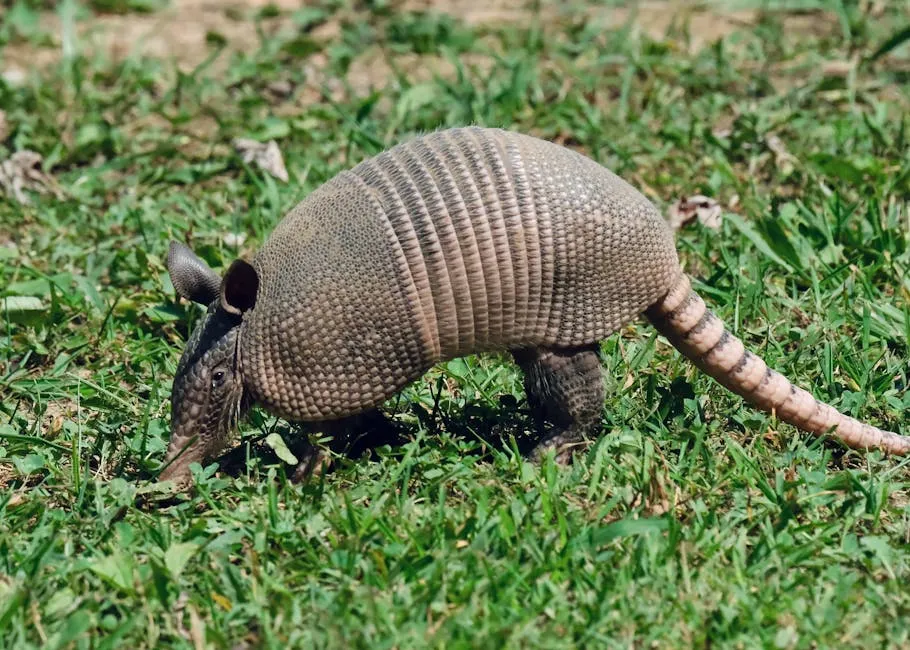
"Armadillo foraging in a grassy field." by A. G. Rosales / Pexels.
Many animals have special body parts that help protect them from danger. These body parts act like armor, keeping animals safe from predators. Armor is a tough outer covering that shields the animal from harm.
One type of animal armor is the shell. Turtles and tortoises have hard shells made of bone and a tough material called keratin. The shell covers their back and belly, making it very hard for predators to bite or hurt them. When turtles sense danger, they pull their heads and legs inside their shells for extra protection.
Another animal with impressive armor is the armadillo. Armadillos have a covering made of hard, bony plates. Some armadillos can even curl up into a tight ball, hiding their soft parts inside their armor.
Porcupines use a different kind of armor called quills. Quills are sharp, stiff hairs that cover a porcupine’s back and tail. If a predator tries to attack, the quills can stick into the attacker, making it think twice about coming back!
Other animals use spines or thick skin for protection. For example, hedgehogs have spines, and rhinoceroses have thick, tough skin that acts like armor. Even some insects, like beetles, have a hard outer layer called an exoskeleton that helps keep them safe.
These body coverings are important adaptations that help animals survive in their habitats. An adaptation is a body part or behavior that helps an animal live and grow in its environment. Armor helps animals avoid being eaten by predators and gives them a better chance to survive and have babies.
Some animals also use camouflage along with their armor. Camouflage helps them blend in with their surroundings, making them harder for predators to find.
Interesting Fact: Some armadillos can hold their breath for up to six minutes while hiding underwater from predators!
Comprehension quiz (8 questions)
1. What is animal armor?
2. Which animal has a shell?
3. What are porcupine quills?
4. Why do turtles hide in their shells?
5. How does camouflage help animals?
6. Which animal can curl into a ball?
7. All animals have hard armor.
8. What does adaptation mean?
Perfect for the way you teach
- Build comprehension skills
- Auto-graded quiz
- Differentiated reading
- Read together at home
- Improve fluency
- Quiet reading time
- Reading curriculum support
- Independent practice
- Track Lexile growth