Anne Frank House Museum
Interactive passage with audio narration, comprehension questions, and printable PDF.
By completing this purchase you agree to our Terms of Use and Privacy Policy. Your subscription renews automatically until you cancel. You can cancel anytime from your account settings. All sales are final and non-refundable. Digital content is available for download in your account immediately upon purchase.
What's included
Anne Frank House Museum preview and details
About this printable Anne Frank House Museum reading passage (Grades 5-8)
Sample passage and quiz from Anne Frank House Museum
Reading passage and comprehension quiz preview
Anne Frank House Museum
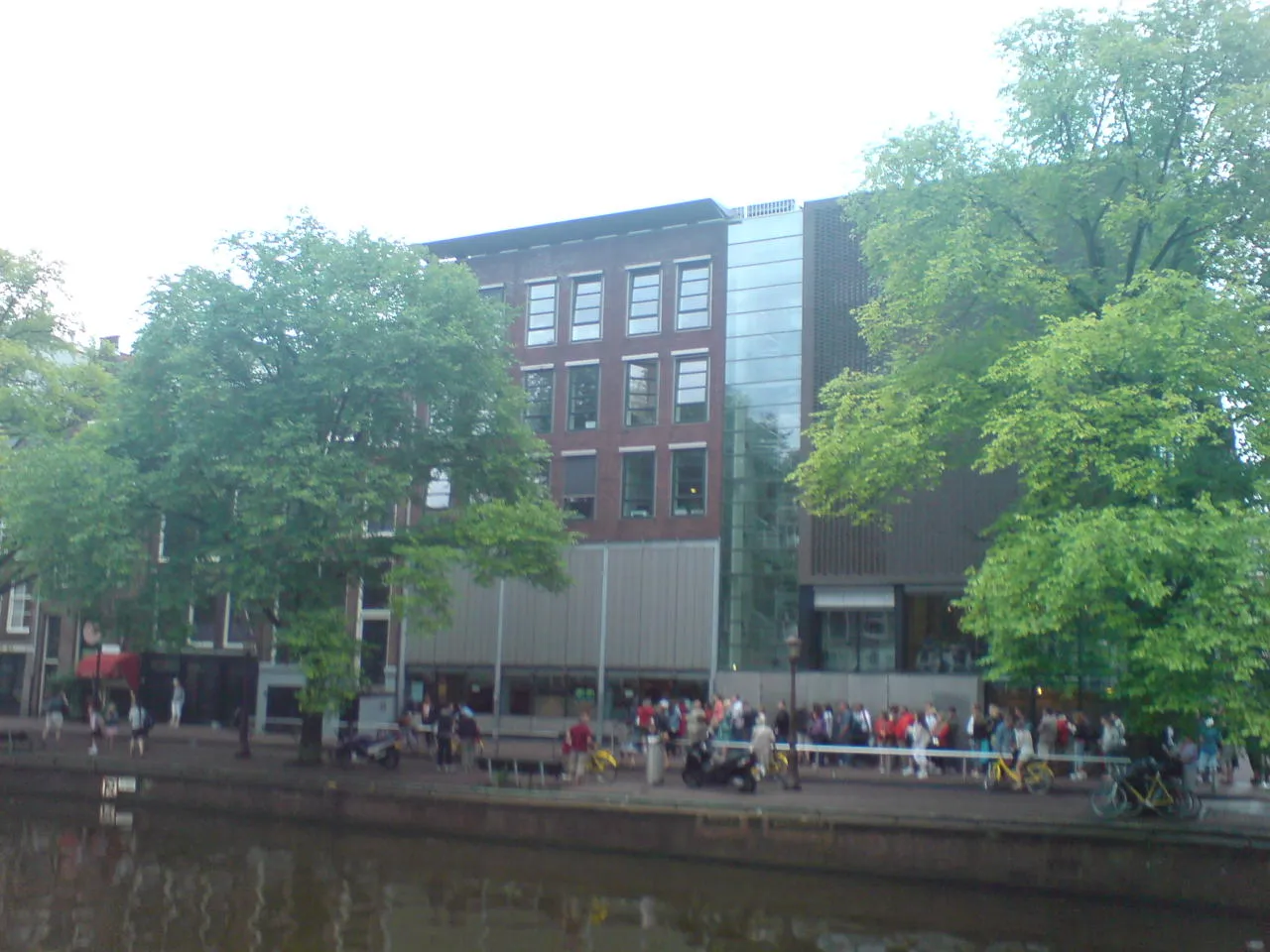
Anne Franks House Wikimedia Commons (Public domain).
The Anne Frank House in Amsterdam stands as a powerful reminder of the impact of World War II on individuals and families. During the Nazi occupation of the Netherlands, Anne Frank, a young Jewish girl, and her family went into hiding to escape persecution. Their hiding place, known as the Secret Annex, has become one of the most visited historic sites in Europe. Today, the Anne Frank House preserves not only the physical space where Anne lived but also her memory and the lessons her story teaches about human rights and tolerance.
Anne Frank was born in Frankfurt, Germany, in 1929, but her family moved to Amsterdam in 1934 to escape rising anti-Jewish laws. When the Nazis invaded the Netherlands in May 1940, new restrictions threatened the safety of Jewish families like the Franks. In July 1942, after Anne’s sister Margot received a call-up notice for a work camp, the Frank family went into hiding in the annex behind Otto Frank’s business at Prinsengracht 263. The annex was concealed by a movable bookcase and shared with another family, the Van Pels, and later Fritz Pfeffer. For over two years, eight people lived in constant fear of discovery, relying on trusted friends such as Miep Gies for food and information.
Life in the Secret Annex was marked by both hardship and hope. Anne kept a diary, writing about daily routines, her dreams, and her frustration with the situation. Her diary is a unique primary source that gives historians insight into the experiences of Jews in hiding. Archaeological evidence, such as preserved wall markings showing the children’s heights and original furniture, helps paint a detailed picture of life inside the Annex. Anne’s diary also records the sounds of bombings and arrests, showing the ever-present sense of danger. Despite the fear, Anne wrote about her hope for a better world and her belief in human goodness.
On August 4, 1944, the hiding place was discovered by the Gestapo, likely due to a tip from an anonymous informant. All eight inhabitants were arrested and deported to concentration camps. Only Otto Frank, Anne’s father, survived the war. After the war, Miep Gies returned Anne’s diary to Otto, who later published it. The diary, first released in Dutch in 1947, has been translated into over 70 languages and is considered one of the most important accounts of the Holocaust. In 1960, the Anne Frank House was opened as a museum after a campaign to save it from demolition. The museum preserves the original rooms, Anne’s diary, and artifacts that help visitors understand the dangers of intolerance and the value of remembering history.
The Anne Frank House continues to educate millions about the effects of discrimination and the importance of standing up for human rights. By studying Anne Frank’s story, students and visitors connect the events of the Holocaust to larger themes of justice and tolerance. The preservation of the house ensures that future generations can learn from the past and work toward a more inclusive world.
The story of Anne Frank and her house connects to broader themes in world history, such as the consequences of prejudice, the significance of primary sources in understanding the past, and the importance of preserving memory for future generations.
Interesting Fact: The original movable bookcase that hid the entrance to the Secret Annex is still on display at the Anne Frank House today.
Comprehension quiz (8 questions)
1. Where is the Anne Frank House?
2. Who survived the Holocaust?
3. What was the hiding place called?
4. Why did the Franks hide?
5. How did Anne record her experiences?
6. What happened in August 1944?
7. The Anne Frank House is now a museum. True or false?
8. What is an artifact?
Perfect for the way you teach
- Build comprehension skills
- Auto-graded quiz
- Differentiated reading
- Read together at home
- Improve fluency
- Quiet reading time
- Reading curriculum support
- Independent practice
- Track Lexile growth