This learning resource is available in interactive and printable formats. The interactive worksheet can be played online and assigned to students. The Printable PDF version can be downloaded and printed for completion by hand.
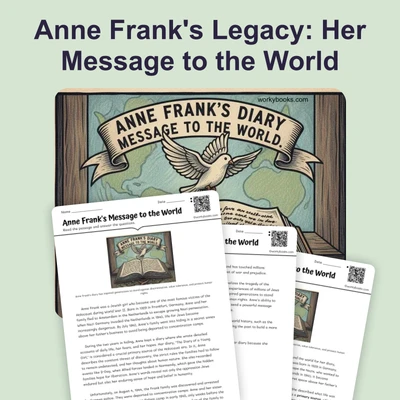
This detailed history passage focuses on the discovery and arrest of Anne Frank and the others hiding with her in the Secret Annex on August 4, 1944, during the Nazi occupation of the Netherlands. The text explores the context of World War II, the oppressive conditions under Nazi rule, and the specific events leading up to and following the arrest. Students will encounter primary source references, such as Anne Frank's diary, and analyze cause-and-effect relationships, human impact, and the significance of this event in Holocaust history. The passage includes rigorous vocabulary, graphic organizers, a quiz, and writing activities to foster historical thinking and critical reading. Spanish translations and read aloud audio support accessibility for all learners. This resource aligns with CA HSS 7.8.5, CCSS.RH.6-8.1, CCSS.RH.6-8.2, and CCSS.WHST.6-8.2.
CONTENT PREVIEW
Expand content preview
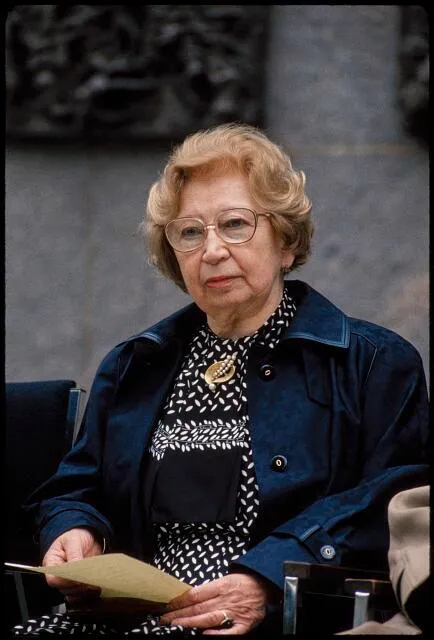
Miep Gies, Austrian who hid Anne Frank from Nazis. Source: Library of Congress - Gotfryd, Bernard
On August 4, 1944, the Secret Annex in Amsterdam, where Anne Frank and her family had hidden for over two years, was discovered by Nazi authorities. This event ended one of the most famous periods of clandestine resistance to Nazi occupation during World War II. The arrest of Anne Frank, her family, and the others in hiding marked a turning point, not only for those involved, but also for how history would remember the Holocaust and its victims.
Anne Frank, her parents Otto and Edith, her sister Margot, and four others—Hermann, Auguste, and Peter van Pels, and Fritz Pfeffer—had been living in secret rooms behind Otto Frank’s business. These rooms, concealed by a bookcase, offered temporary safety from the persecution of Jews by the Nazi regime. The group depended on trusted helpers, including Miep Gies and Victor Kugler, who risked their own lives to provide food, news, and supplies. Anne Frank kept a detailed diary during this time, recording daily life, fears, and hopes. Her writings serve as a crucial primary source for historians studying the Holocaust.
The discovery on August 4 was the result of a betrayal, though the exact identity of the informant remains unknown. That morning, SS-Oberscharführer Karl Silberbauer, accompanied by Dutch police officers, raided the Secret Annex. The residents were taken into custody and interrogated. The Nazi authorities confiscated the family's possessions, including Anne’s diary, which was later saved by Miep Gies. The arrest was part of a broader pattern of Nazi efforts to identify and deport Jews in occupied Europe. In Amsterdam alone, thousands faced similar fates due to a network of informants and systematic searches.
After their arrest, Anne and the others were sent first to Westerbork transit camp, then to Auschwitz, and finally, Anne and Margot to Bergen-Belsen concentration camp. The conditions in these camps were harsh, with overcrowding, disease, and lack of food. Only Otto Frank survived the war. The experience of the Secret Annex shows the danger faced by those targeted by Nazi policies, but also the courage of those who resisted or tried to help. The events demonstrate both the brutality of the regime and the resilience of the human spirit.
The arrest of the Secret Annex residents is significant because it highlights the risks of resistance under totalitarian regimes and the importance of individual choices in times of crisis. Anne Frank’s story, preserved through her diary, provides a voice for millions who were silenced. It reminds us of the value of documenting history and the need to combat intolerance and discrimination in all societies.
This episode connects to broader themes in world history, such as the impact of war on civilians, the dangers of unchecked power, and the enduring importance of human rights.
Interesting Fact: After the arrest, Miep Gies found and preserved Anne Frank’s diary, ensuring that Anne’s story would be told to the world.
Who discovered the Secret Annex?
Nazi authoritiesMiep GiesOtto FrankDutch Resistance
What date was the arrest?
August 4, 1944July 6, 1942June 6, 1944May 8, 1945
Who survived the Holocaust from the group?
Otto FrankAnne FrankMiep GiesKarl Silberbauer
Why did Anne's family hide?
To avoid persecutionTo find treasureTo escape fireTo travel Europe
What role did Miep Gies play?
HelperNazi officerPrison guardFamily member
What happened after the arrest?
Sent to campsReleased homeSent to AmericaBecame soldiers
The Secret Annex was found in 1944.
TrueFalse
What is a primary source?
Original documentMade-up storyModern articleMovie script
Perfect For:
👩🏫 Teachers
• Reading comprehension practice
• Auto-graded assessments
• Literacy skill development
👨👩👧👦 Parents
• Reading practice at home
• Comprehension improvement
• Educational reading time
🏠 Homeschoolers
• Reading curriculum support
• Independent reading practice
• Progress monitoring
Reading Features:
📖
Reading Passage
Engaging fiction or nonfiction text
❓
Comprehension Quiz
Auto-graded questions
📊
Instant Feedback
Immediate results and scoring
📄
Printable Version
Download for offline reading
🔊
Read Aloud
Voice-over with word highlighting
Reviews & Ratings
No reviews yet. Be the first to share your experience!
Related Content
Events Leading to World War II
This passage explores the complex causes of World War II, focusing on the interwar period, the Treaty of Versailles, the...
Causes of World War I
This comprehensive history reading passage explores the complex causes of World War I, focusing on alliances, nationalis...
World War I Impact on America
This engaging history reading passage explores World War I's impact on society and culture, highlighting key changes in ...
Leaders and Decisions in World War II
This passage explores the major leaders of World War II and the critical decisions they made that shaped the course of g...
American Life During World War II
This history reading passage explores life on the home front during World War II, focusing on the experiences of ordinar...
War Bonds: Financing World War II
This passage examines the critical role of war bonds in financing World War II, focusing on how the U.S. government enco...
D2.HIS.2.3-5D2.HIS.3.3-5RI.4.3RI.4.4
Trench Warfare in World War I
This comprehensive history reading passage explores the realities of life in the trenches during World War I, aligned to...
Russia Exits World War I
This comprehensive world history reading passage explores the Russian Revolution and how Russia exited World War I. Stud...
America Enters World War II
This history reading passage analyzes America’s entry into World War II, focusing on the causes, perspectives, and conse...
D2.HIS.2.3-5D2.HIS.3.3-5RI.4.3RI.4.4
World War II Home Front
This rigorous U.S. history reading passage explores the complexities and challenges of the World War II Home Front, focu...
D2.HIS.2.3-5D2.HIS.3.3-5RI.6.3RI.6.4
The Western Front in World War I
This engaging history reading passage explores the major battles of the Western Front during World War I, focusing on th...
Anne Frank's Message to the World
This reading passage explores the life and legacy of Anne Frank, a Jewish teenager who documented her experiences during...
Allied Strategy in the Pacific War
This comprehensive history reading passage dives into the strategic 'island hopping' campaign of World War II in the Pac...
Major Battles Change the War's Course
This engaging history reading passage examines three crucial turning points of World War II: the Battles of Stalingrad, ...
Japan Surrenders: World War II Ends
This comprehensive history reading passage examines the pivotal moment when Japan surrendered in August 1945, bringing W...
D2.HIS.2.3-5D2.HIS.3.3-5RI.4.3RI.4.4
America Enters the War: 1917
This comprehensive history reading passage explores America’s entry into World War I in 1917, examining the causes, even...
Black History Month Word Search
RF.4.3RF.5.3L.4.4L.5.4
Worky World! Capitalize Locations
This capitalization sheet will help students to practice capitalizing geographic locations. Illustrated on the sheet is ...
L.2.2.AL.2.2
Word Families: —ight Words
This word families worksheet focuses on -ight words and is designed to help 4th-grade students practice their reading an...
RF.4.4
The Atomic Bomb Ends the War
This informative passage explores the role of the atomic bomb in ending World War II, focusing on the events leading up ...