This learning resource is available in interactive and printable formats. The interactive worksheet can be played online and assigned to students. The Printable PDF version can be downloaded and printed for completion by hand.
This history reading passage explores the life of Anne Frank, a Jewish teenager whose diary became one of the most important personal accounts of the Holocaust. Students will learn about Anne’s experiences hiding in Amsterdam during Nazi occupation, the historical context of World War II, and the significance of her diary as a primary source. The passage addresses California History-Social Science Standard 7.8.5 and Common Core ELA standards (RI.6-8.1), providing opportunities for students to analyze evidence, understand cause-and-effect relationships, and connect Anne’s story to broader themes of human rights and social justice. Activities include multiple-choice and writing questions, graphic organizers, a timeline, and glossary. Includes read aloud audio and Spanish translation for accessibility. This resource is ideal for building historical thinking, comprehension, and empathy while studying world history and the Holocaust.
CONTENT PREVIEW
Expand content preview
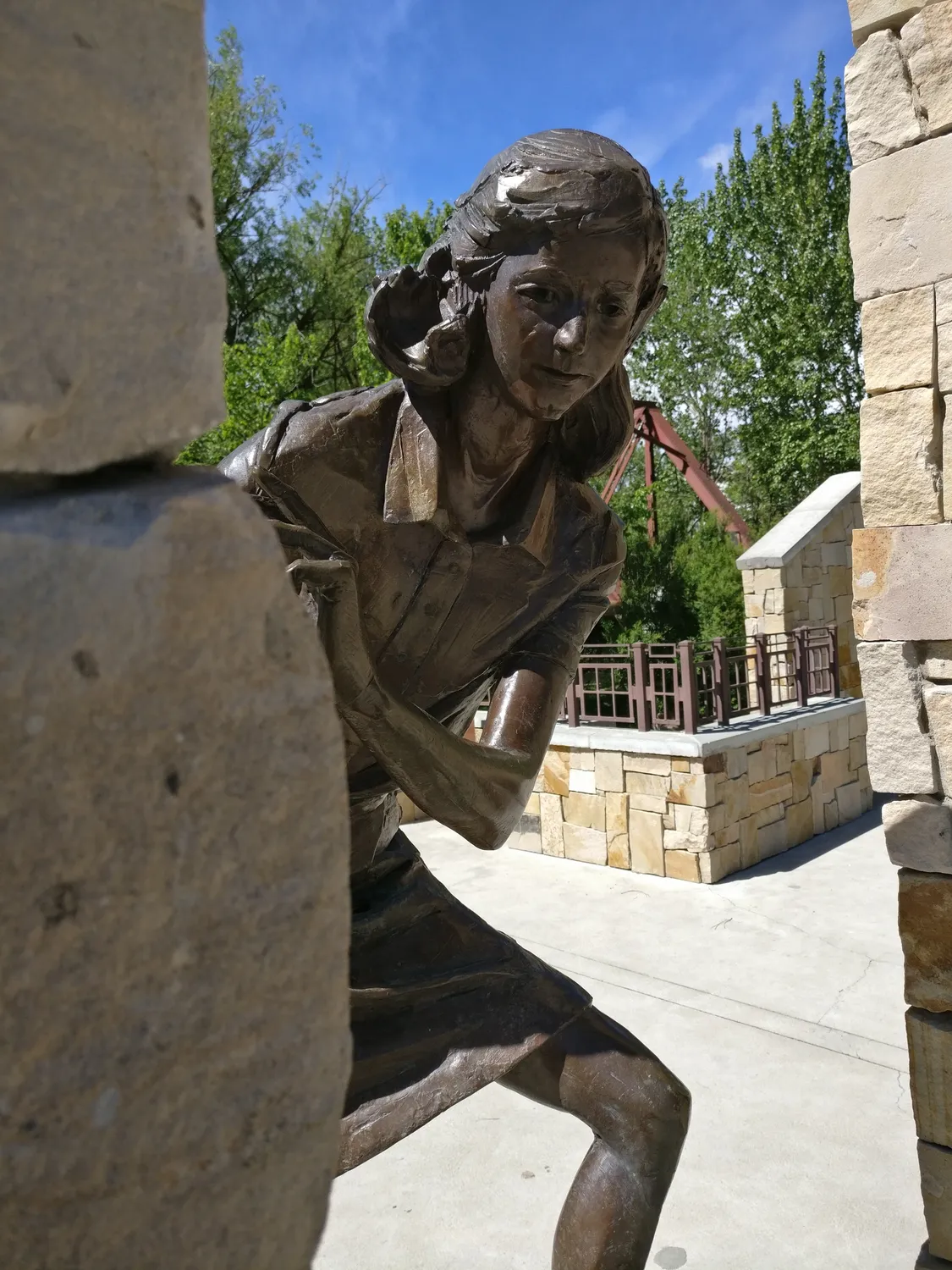
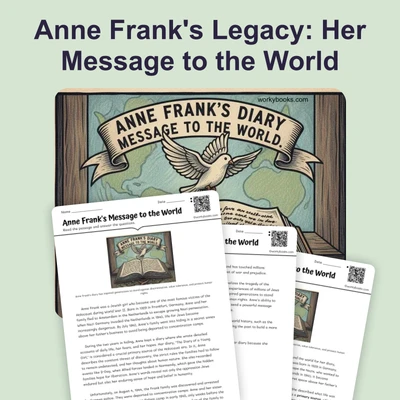
A detail of the Anne Frank cenotaph in Boise, Idaho showing her having drawn an invisible curtain at her family's hiding place Source: Wikimedia Commons - Kencf0618
Anne Frank was a Jewish teenager who became one of the most recognized voices of the Holocaust. Born in 1929 in Frankfurt, Germany, Anne and her family fled to the Netherlands in 1934 to escape the growing danger of Nazi persecution. When the Nazis invaded the Netherlands in 1940, life became dangerous for Jewish families like the Franks. In July 1942, the family went into hiding in a secret annex above her father’s office in Amsterdam.
For over two years, Anne, her parents, her sister Margot, and four others lived in the hidden rooms. Food was scarce, and they lived in constant fear of being discovered. Anne documented her experiences, thoughts, and hopes in a diary she received for her thirteenth birthday. Her writing is a valuable primary source for historians because it offers a personal perspective on daily life during the Holocaust. Anne described both the hardships of hiding and her dreams for the future. She wrote, “I can shake off everything as I write; my sorrows disappear, my courage is reborn.”
The Franks’ hiding place, known as the Secret Annex, was concealed behind a moveable bookcase. Helpers like Miep Gies risked their lives to bring food and news. Despite the danger, Anne continued to study, read, and write. In August 1944, the annex was discovered by the Gestapo (Nazi secret police), and the occupants were arrested. Anne and her sister Margot were eventually transported to the Bergen-Belsen concentration camp, where they died from disease in early 1945. Only Anne’s father, Otto Frank, survived.
After the war, Otto returned to Amsterdam and found Anne’s diary, which had been saved by Miep Gies. He decided to publish it, and it became known as "The Diary of a Young Girl." The diary has been translated into over 70 languages and is read worldwide. As a primary source, Anne’s writing provides direct evidence of the Holocaust’s impact on ordinary people. It also demonstrates the power of individual stories to help us understand major historical events. Anne’s words have inspired generations to fight against prejudice and injustice.
The story of Anne Frank is significant because it puts a human face on the tragedy of the Holocaust. Her diary connects us to the experiences of millions who suffered under Nazi rule. Understanding Anne’s life helps students see how geography, politics, and social conditions shaped people’s lives during World War II. Her courage and hope remind us of the importance of remembering history to prevent similar injustices in the future.
Anne Frank’s story links to broader themes in world history, such as human rights, the effects of war, and the value of preserving historical evidence.
Interesting Fact: In 1957, the Anne Frank House museum opened in Amsterdam, preserving the Secret Annex as a place for education and remembrance.
In which country did Anne go into hiding?
NetherlandsGermanyFrancePoland
What year did the Frank family hide?
1942193319451957
Who survived from Anne’s family?
Otto FrankAnne FrankMargot FrankMiep Gies
Why is Anne’s diary important?
It is a primary sourceIt has recipesIt is fictionIt is about science
Who helped hide the Franks?
Miep GiesGestapoBergen-BelsenOtto Frank
What effect did Nazi persecution have?
Jews went into hidingJews became richJews traveledJews joined Nazis
Anne Frank survived the Holocaust. True or False?
TrueFalse
What does 'prejudice' mean?
Unfair dislikeWriting a diaryA secret roomA police officer
Perfect For:
👩🏫 Teachers
• Reading comprehension practice
• Auto-graded assessments
• Literacy skill development
👨👩👧👦 Parents
• Reading practice at home
• Comprehension improvement
• Educational reading time
🏠 Homeschoolers
• Reading curriculum support
• Independent reading practice
• Progress monitoring
Reading Features:
📖
Reading Passage
Engaging fiction or nonfiction text
❓
Comprehension Quiz
Auto-graded questions
📊
Instant Feedback
Immediate results and scoring
📄
Printable Version
Download for offline reading
🔊
Read Aloud
Voice-over with word highlighting
Reviews & Ratings
No reviews yet. Be the first to share your experience!
Related Content
Events Leading to World War II
This passage explores the complex causes of World War II, focusing on the interwar period, the Treaty of Versailles, the...
Causes of World War I
This comprehensive history reading passage explores the complex causes of World War I, focusing on alliances, nationalis...
World War I Impact on America
This engaging history reading passage explores World War I's impact on society and culture, highlighting key changes in ...
Leaders and Decisions in World War II
This passage explores the major leaders of World War II and the critical decisions they made that shaped the course of g...
American Life During World War II
This history reading passage explores life on the home front during World War II, focusing on the experiences of ordinar...
War Bonds: Financing World War II
This passage examines the critical role of war bonds in financing World War II, focusing on how the U.S. government enco...
D2.HIS.2.3-5D2.HIS.3.3-5RI.4.3RI.4.4
Trench Warfare in World War I
This comprehensive history reading passage explores the realities of life in the trenches during World War I, aligned to...
Russia Exits World War I
This comprehensive world history reading passage explores the Russian Revolution and how Russia exited World War I. Stud...
America Enters World War II
This history reading passage analyzes America’s entry into World War II, focusing on the causes, perspectives, and conse...
D2.HIS.2.3-5D2.HIS.3.3-5RI.4.3RI.4.4
World War II Home Front
This rigorous U.S. history reading passage explores the complexities and challenges of the World War II Home Front, focu...
D2.HIS.2.3-5D2.HIS.3.3-5RI.6.3RI.6.4
The Western Front in World War I
This engaging history reading passage explores the major battles of the Western Front during World War I, focusing on th...
Anne Frank's Message to the World
This reading passage explores the life and legacy of Anne Frank, a Jewish teenager who documented her experiences during...
Allied Strategy in the Pacific War
This comprehensive history reading passage dives into the strategic 'island hopping' campaign of World War II in the Pac...
Major Battles Change the War's Course
This engaging history reading passage examines three crucial turning points of World War II: the Battles of Stalingrad, ...
Japan Surrenders: World War II Ends
This comprehensive history reading passage examines the pivotal moment when Japan surrendered in August 1945, bringing W...
D2.HIS.2.3-5D2.HIS.3.3-5RI.4.3RI.4.4
America Enters the War: 1917
This comprehensive history reading passage explores America’s entry into World War I in 1917, examining the causes, even...
Black History Month Word Search
RF.4.3RF.5.3L.4.4L.5.4
Worky World! Capitalize Locations
This capitalization sheet will help students to practice capitalizing geographic locations. Illustrated on the sheet is ...
L.2.2.AL.2.2
Word Families: —ight Words
This word families worksheet focuses on -ight words and is designed to help 4th-grade students practice their reading an...
RF.4.4
The Atomic Bomb Ends the War
This informative passage explores the role of the atomic bomb in ending World War II, focusing on the events leading up ...