Reading Passage

Bird Beaks

Interactive passage with audio narration, comprehension questions, and printable PDF.

No ratings yet|
36
Grades 3–6ScienceElaEnglish · SpanishInteractive · Printable

What's included

Reading passage
Audio narration
Comprehension quiz
Writing activity
Glossary & flashcards
Differentiated version
Spanish translation

Bird Beaks preview and details

About this printable Bird Beaks science reading passage, NGSS-aligned (Grades 3-6)

This engaging science passage explores how bird beaks are uniquely adapted to help birds eat different types of food. Aligned with NGSS standards for general science, the passage explains important vocabulary like adaptation, habitat, and species, while providing real-world examples such as woodpeckers, hummingbirds, and eagles. The resource features a glossary, multiple-choice quiz, writing activities, and a full Spanish translation. Students will learn about the connection between beak shape and diet, and why these adaptations help birds survive in their environments. This content is ideal for Grade 4-5 students and supports reading comprehension, vocabulary development, and scientific thinking. Audio integration makes it accessible for all learners. Keywords: bird beaks, adaptation, science passage, grade 4, grade 5, NGSS, animal adaptations, feeding, ecosystems.
Written by Workybooks TeamPublished by Workybooks
Preview

Sample passage and quiz from Bird Beaks

Reading passage and comprehension quiz preview

Bird Beaks
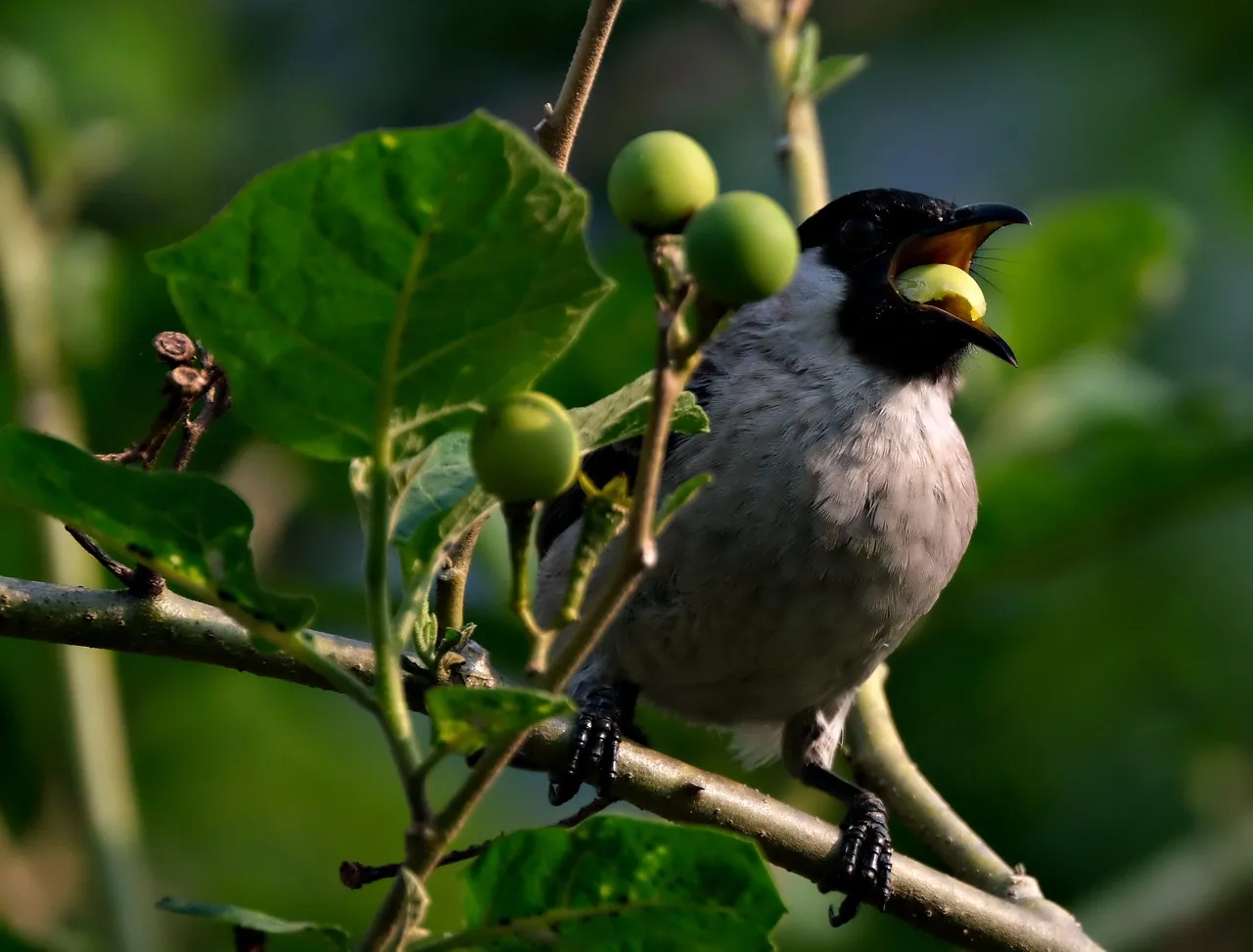
sooty head bulbul, bird, animal, foraging, branch, nature, eat, avian

"A beak is used for pecking, grasping, and holding (in probing for food, eating, manipulating and carrying objects, killing prey, or fighting)" by WikiImages / Pixabay.  

Birds have different types of beaks that help them eat the food they like best. A beak is the hard, pointed part of a bird’s mouth. The shape and size of a bird’s beak are special adaptations that help each bird survive in its habitat.

An adaptation is a body part or behavior that helps an animal live in its environment. Birds that eat seeds, like finches, have short, thick beaks. These strong beaks are perfect for cracking open hard seeds. Hummingbirds have long, thin beaks that let them reach deep into flowers to drink nectar. Woodpeckers have sharp, chisel-like beaks for pecking holes in trees to find insects.

Some birds eat fish. Herons have long, pointed beaks to catch slippery fish in the water. Eagles and hawks are predators. They have sharp, hooked beaks to tear meat from their prey. Ducks have flat, wide beaks for scooping up plants and small animals from the water.

Each bird’s beak is designed for the food it eats. This helps birds find enough food to stay healthy and strong. If a bird’s food changes or disappears, it might have a hard time surviving. That is why beak shape is important for a bird’s survival. Scientists can learn about a bird’s diet just by looking at its beak.

Interesting Fact: Some birds, like crossbills, have beaks that cross at the tip. This helps them open tough pine cones to eat the seeds inside!

Comprehension quiz (8 questions)

1. What is a beak?

A bird’s hard mouth part
A bird’s wing
A bird’s tail
A bird’s feather

2. Which bird has a long, thin beak?

Hummingbird
Duck
Eagle
Finch

3. What do woodpecker beaks help them do?

Peck holes for insects
Crack seeds
Scoop water
Eat nectar

4. Why do eagles have sharp, hooked beaks?

To tear meat
To scoop water
To drink nectar
To crack seeds

5. What might happen if a bird's food disappears?

It has trouble surviving
It grows bigger
It eats more nectar
It flies faster

6. Which beak shape is best for eating seeds?

Short and thick
Long and thin
Flat and wide
Hooked and sharp

7. All birds have the same beak shape.

True
False

8. What does 'adaptation' mean?

A helpful body part or behavior
A kind of food
A place to live
A type of bird
Who it's for

Perfect for the way you teach

Teachers
  • Build comprehension skills
  • Auto-graded quiz
  • Differentiated reading
Parents
  • Read together at home
  • Improve fluency
  • Quiet reading time
Homeschoolers
  • Reading curriculum support
  • Independent practice
  • Track Lexile growth
Topics

Reviews & Ratings

No reviews yet. Be the first to share your experience!

More reading you might love

20 more
Passage
Theory of Evolution  - reading educational content

Theory of Evolution

Reading Passage · MS-LS4-1

$1.50
Passage
Adaptation - reading educational content

Adaptation

Reading Passage · MS-LS4-4

$1.50
Passage
Human Evolution - reading educational content

Human Evolution

Reading Passage · MS-LS4-1

$1.50
Worksheet
Animal adaptation - worksheet educational content

Animal adaptation

Worksheet · NGSS K-LS1-1

$1.50
Passage
Deep-Sea Shrimp Adaptations - reading educational content

Deep-Sea Shrimp Adaptations

Reading Passage · MS-LS4-4

$1.50
Passage
Early Life Forms and Their Adaptations - reading educational content

Early Life Forms and Their Adaptations

Reading Passage · RI.3.3

Free
Passage
Vampire Squid Adaptations - reading educational content

Vampire Squid Adaptations

Reading Passage · MS-LS4-4

$1.50
Passage
Deep-Sea Crab Adaptations - reading educational content

Deep-Sea Crab Adaptations

Reading Passage · MS-LS4-4

$1.50
Passage
Evidence for Evolution: Comparative Anatomy - reading educational content

Evidence for Evolution: Comparative Anatomy

Reading Passage · MS-LS4-2

$1.50
Passage
Blobfish Adaptations to Extreme Pressure - reading educational content

Blobfish Adaptations to Extreme Pressure

Reading Passage

$1.50
Passage
The Nature of Life Science - reading educational content

The Nature of Life Science

Reading Passage · MS-LS1-1

$1.50
Passage
Desert Adaptations for Water Conservation - reading educational content

Desert Adaptations for Water Conservation

Reading Passage

$1.50
Interactive
Animal Adaptations Word Sort - game educational content

Animal Adaptations Word Sort

Game

$1.50
Passage
Herbivore Adaptations - reading educational content

Herbivore Adaptations

Reading Passage

$1.50
Passage
Understanding Biological Evolution and Diversity - reading educational content

Understanding Biological Evolution and Diversity

Reading Passage · RI.3.3

Free
Passage
Whale Blubber: Function and Adaptation - reading educational content

Whale Blubber: Function and Adaptation

Reading Passage

$1.50
Passage
The Giant Isopod: Biological Evolution - reading educational content

The Giant Isopod: Biological Evolution

Reading Passage · MS-LS4-4

Free
Passage
Binturong Adaptations - reading educational content

Binturong Adaptations

Reading Passage

$1.50
Passage
California Condor Adaptation and Survival - reading educational content

California Condor Adaptation and Survival

Reading Passage

$1.50
Passage
Barnacle Biology and Adaptations - reading educational content

Barnacle Biology and Adaptations

Reading Passage

$1.50
Copyright © 2026 Workybooks. Made with ♥ in California.