How Earth's Features Connect
Interactive passage with audio narration, comprehension questions, and printable PDF.
By completing this purchase you agree to our Terms of Use and Privacy Policy. Your subscription renews automatically until you cancel. You can cancel anytime from your account settings. All sales are final and non-refundable. Digital content is available for download in your account immediately upon purchase.
What's included
How Earth's Features Connect preview and details
About this printable How Earth's Features Connect science reading passage, NGSS-aligned (Grades 3-6)
Sample passage and quiz from How Earth's Features Connect
Reading passage and comprehension quiz preview
How Earth's Features Connect
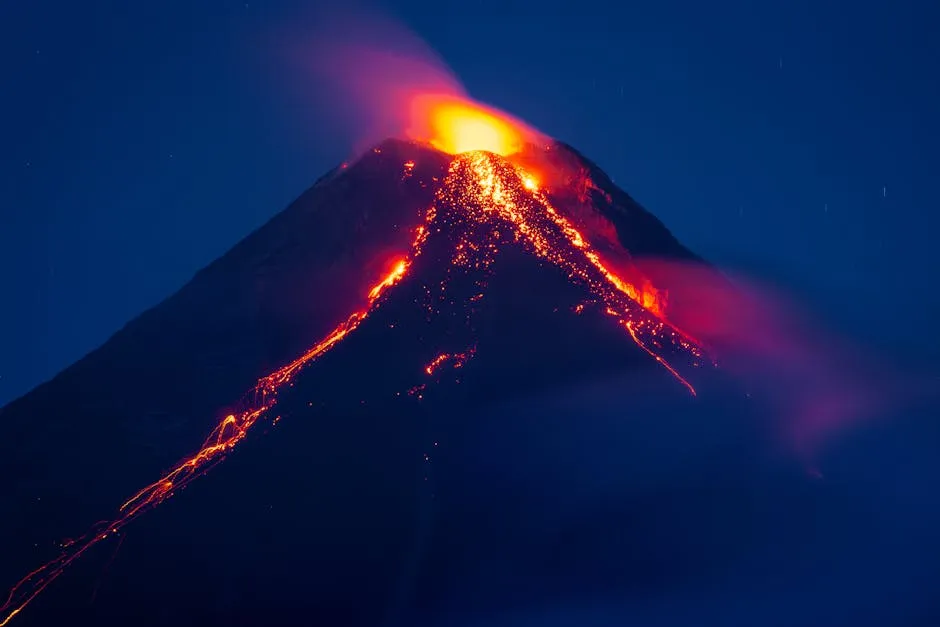
"Fiery eruption of Mayon Volcano in the Bicol region, showcasing a stunning natural phenomenon." Image Credit Sergey Guk / Pexels.
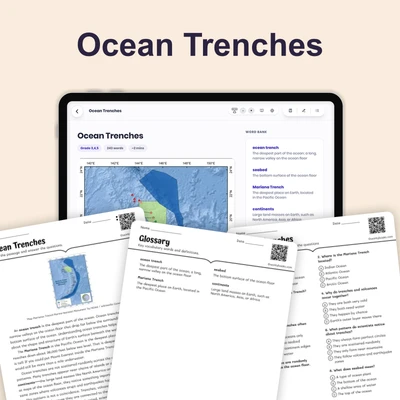
Patterns are things that repeat in a predictable way. Scientists have discovered that Earth's major features follow clear patterns. Mountains are tall landforms that rise high above the surrounding land. Volcanoes are openings in Earth's surface where hot melted rock can erupt. Earthquakes are shakings of the ground caused by movement in Earth's crust. Ocean trenches are deep valleys on the ocean floor. These features matter because understanding where they appear helps scientists predict where natural events might happen.
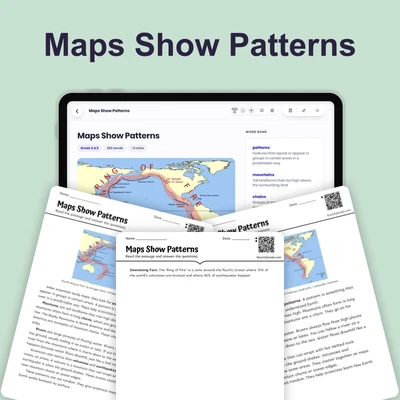
When scientists look at world maps, they notice something interesting. Mountains, volcanoes, earthquakes, and ocean trenches do not appear randomly across Earth. Instead, they cluster together in the same zones, which are specific areas or regions. Mountain ranges often run along the edges of continents. Volcanoes and earthquakes happen in the same belts around the world. Ocean trenches sit near chains of volcanic islands. This is like how all the playground equipment at your school is grouped in one area rather than scattered everywhere.
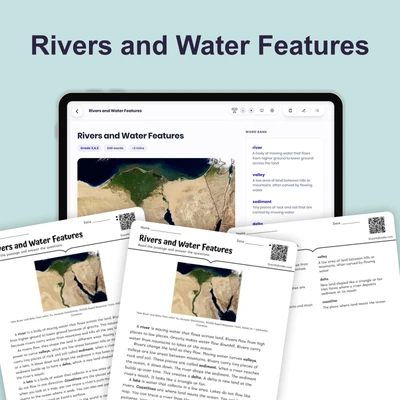
Rivers also follow patterns. They flow from mountains through valleys down to the sea. Earth's features connect to each other in ways scientists can observe and map. Understanding these patterns helps us know what to expect in different parts of our planet.
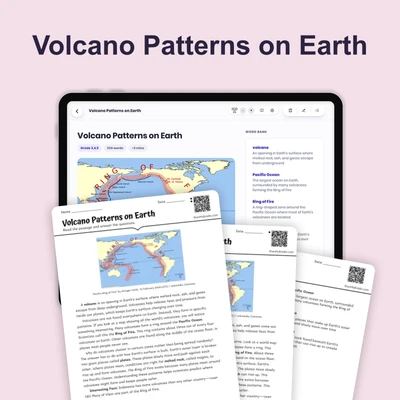
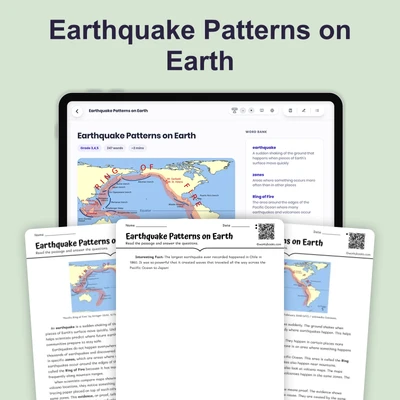
Interesting Fact: The "Ring of Fire" is a huge zone around the Pacific Ocean where about 75% of Earth's volcanoes and 90% of earthquakes occur!
Comprehension quiz (8 questions)
1. What are patterns?
2. Where do mountain ranges often run?
3. What are ocean trenches?
4. Why do volcanoes and earthquakes cluster?
5. Where do rivers flow?
6. How are Earth's features distributed?
7. Earth's features appear randomly across the planet.
8. What does the word zones mean?
Perfect for the way you teach
- Build comprehension skills
- Auto-graded quiz
- Differentiated reading
- Read together at home
- Improve fluency
- Quiet reading time
- Reading curriculum support
- Independent practice
- Track Lexile growth