Challenges of Renewable Energy — Reading Comprehension
Rate this|
1
Premium Resource
Present
Present in classroom. No work saved
Assign
Classroom with student accounts, Track progress
Quick Play
No student accounts, assign with a link
Grades
3
4
5
Standards
NGSS 4-ESS3-1
PRINT+DIGITAL RESOURCE
This learning resource is available in interactive and printable formats. The interactive worksheet can be played online and assigned to students. The Printable PDF version can be downloaded and printed for completion by hand.
This 250-word reading passage introduces fourth-grade students to the challenges of renewable energy sources, aligned with NGSS standard 4-ESS3-1 (ESS3.A: Natural Resources). Students learn about renewable energy sources like solar and wind power and discover why these clean alternatives face practical challenges. The passage explains how weather conditions affect energy production, why location matters for renewable energy facilities, the high initial costs of setup, and timing issues when energy production doesn't match energy needs. Written at a Grade 4 reading level, this passage uses accessible language and real-world examples to help students understand that while renewable energy offers environmental benefits, it also presents challenges that scientists and engineers work to solve. The passage includes bolded vocabulary terms with immediate definitions and relatable analogies. Audio integration supports diverse learners. Accompanying activities include comprehension questions, writing prompts, and graphic organizers that help students analyze advantages and disadvantages of renewable energy and compare different energy sources. This resource builds foundational understanding of energy resources and prepares students for deeper investigation into sustainable solutions.
CONTENT PREVIEW
Expand content preview
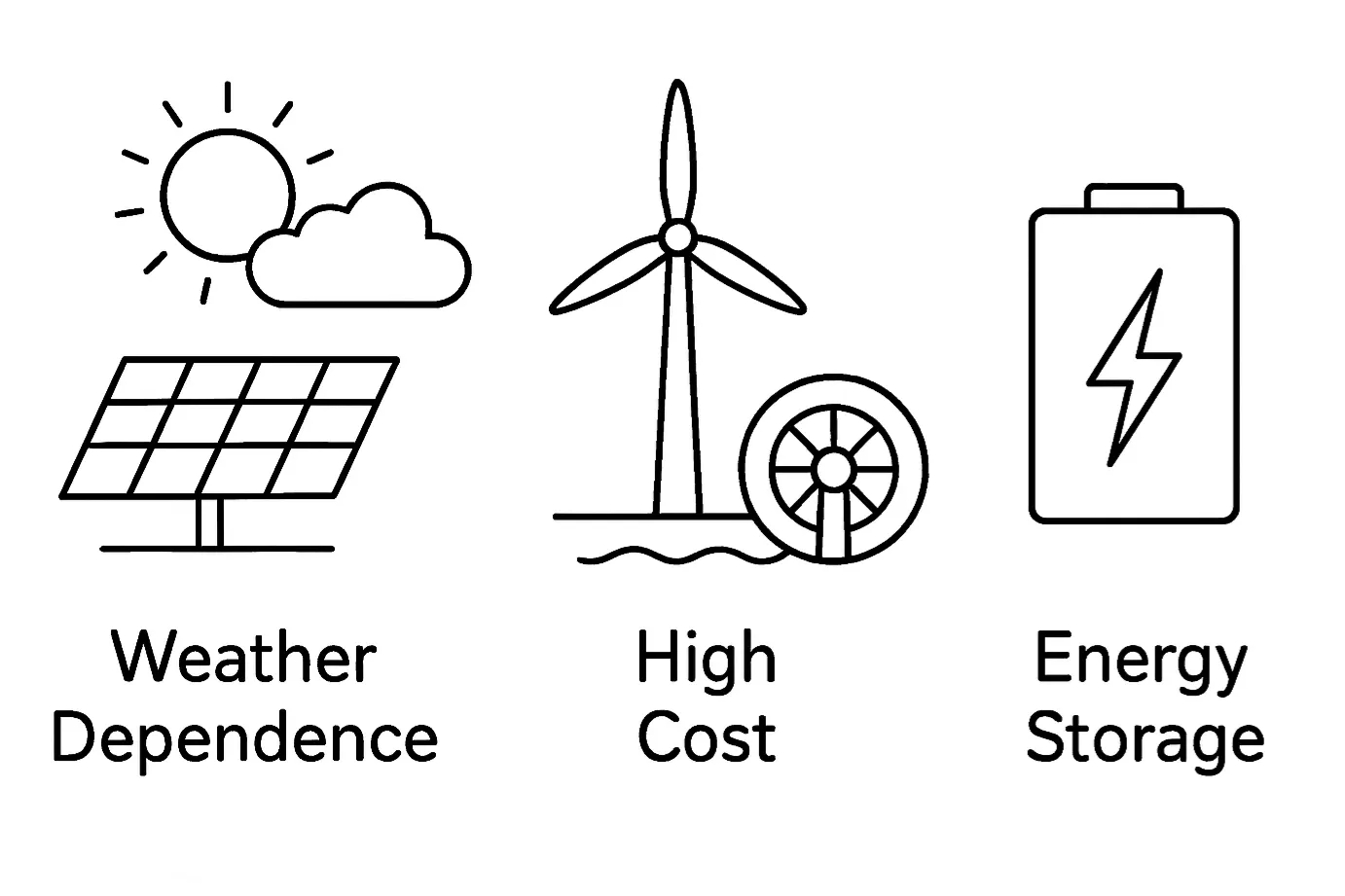
Renewable energy faces weather limits, high costs, and storage issues.
Renewable energy is energy that comes from sources that won't run out, like sunlight, wind, and water. These energy sources are important because they don't pollute the air like burning coal or oil does. However, renewable energy faces several challenges that make it harder to use.
One major challenge is that renewable energy depends on weather and location. Solar panels need sunny days to make electricity. On cloudy days, they produce much less energy. Wind turbines need steady wind to spin their blades. If the wind stops blowing, the turbines stop making power. This is like trying to ride a bike uphill—you need constant effort to keep moving. Also, some places get more sun or wind than others. A solar farm works great in sunny Arizona but not as well in cloudy Seattle.
Another challenge is cost. Building solar farms or wind turbines is expensive. The equipment costs a lot of money to buy and install. Even though these sources save money over time, the starting cost can be very high.
Finally, renewable energy sources don't always produce energy when people need it most. The sun doesn't shine at night, but people still use electricity after dark. Wind doesn't blow on a schedule. Scientists are working on better ways to store energy in batteries so it can be used later when needed.
What is renewable energy?
Energy from sources that won't run outEnergy that costs no moneyEnergy that only works at nightEnergy from burning coal and oil
What do solar panels need to work?
Cloudy daysSunny daysRainy daysSnowy days
Why does location matter for renewable energy?
All places get the same weatherEquipment costs less in some placesSome places get more sun or windPeople use less energy in some places
What happens to wind turbines when wind stops?
They make more powerThey stop making powerThey use solar energy insteadThey store energy for later
Why is cost a challenge for renewable energy?
It saves money over timeEquipment is cheap to buyStarting costs are very highIt doesn't need any equipment
What timing problem does renewable energy have?
It always works when people need itIt doesn't produce energy when neededIt only works in the morningIt produces too much energy at night
Renewable energy sources pollute the air.
TrueFalse
What does 'store energy' mean?
To waste energyTo save energy for later useTo buy energy at a storeTo make energy from the sun
Perfect For:
👩🏫 Teachers
• Reading comprehension practice
• Auto-graded assessments
• Literacy skill development
👨👩👧👦 Parents
• Reading practice at home
• Comprehension improvement
• Educational reading time
🏠 Homeschoolers
• Reading curriculum support
• Independent reading practice
• Progress monitoring
Reading Features:
📖
Reading Passage
Engaging fiction or nonfiction text
❓
Comprehension Quiz
Auto-graded questions
📊
Instant Feedback
Immediate results and scoring
📄
Printable Version
Download for offline reading
🔊
Read Aloud
Voice-over with word highlighting
Reviews & Ratings
No reviews yet. Be the first to share your experience!
Related Content
How Hydropower Works
This engaging 250-word science passage explains how hydropower works for Grade 4-5 students. Aligned with NGSS 4-ESS3-1,...
NGSS 4-ESS3-1
Reducing Air Pollution
This engaging 250-word science passage introduces Grade 4-5 students to the technology used to reduce air pollution from...
NGSS 4-ESS3-1
How We Can Use Less Energy
This engaging 250-word science passage for Grade 4-5 students explores how people can reduce the environmental impact of...
NGSS 4-ESS3-1
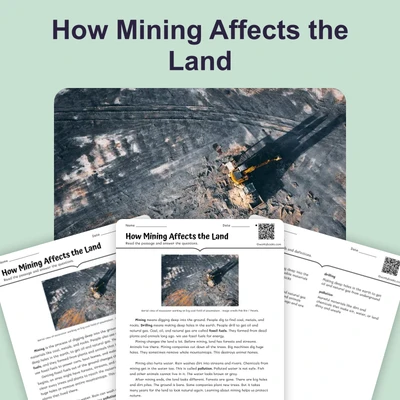
How Mining Affects the Land
This comprehensive 250-word reading passage helps Grade 4-5 students understand the environmental impacts of mining oper...
NGSS 4-ESS3-1
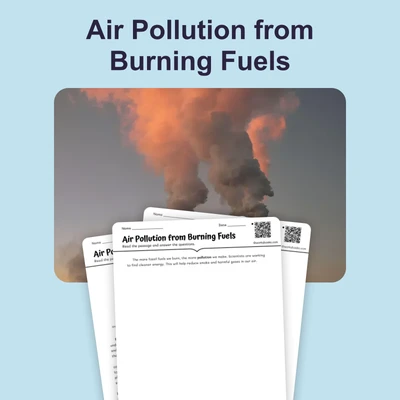
Air Pollution from Burning Fuels
This comprehensive science passage on air pollution is designed for Grade 4-5 students and aligns with NGSS 4-ESS3-1 sta...
NGSS 4-ESS3-1
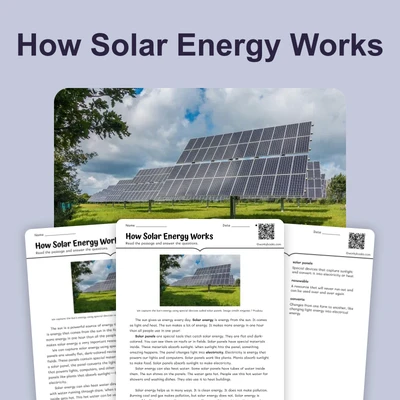
How Solar Energy Works
This engaging 250-word science passage explains how solar energy works for Grade 4-5 students. The reading explores how ...
NGSS 4-ESS3-1
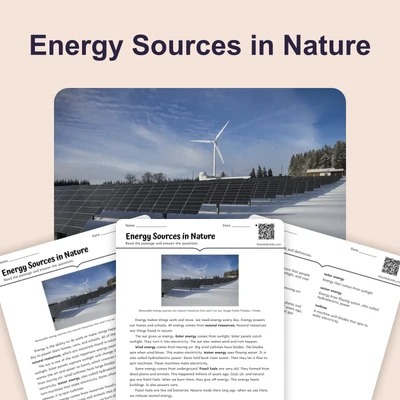
Energy Sources in Nature
This engaging 250-word science passage for Grade 4-5 students explores Energy Sources in Nature, aligned with NGSS stand...
NGSS 4-ESS3-1
What Is Fuel
This engaging 250-word science passage introduces Grade 4-5 students to the concept of fuel as any material that stores ...
NGSS 4-ESS3-1
Renewable vs Nonrenewable
This comprehensive 250-word passage helps Grade 4-5 students understand the critical difference between renewable and no...
NGSS 4-ESS3-1
How We Use Coal for Energy
This comprehensive 250-word reading passage introduces fourth-grade students to coal as an energy resource, aligned with...
NGSS 4-ESS3-1
Biomass Energy
This engaging Grade 4-5 science passage explains biomass energy and how it works as a renewable energy source. Students ...
NGSS 4-ESS3-1
How Wind Energy Works
This 250-word reading passage introduces fourth-grade students to wind energy and how it works, aligned with NGSS standa...
NGSS 4-ESS3-1
How We Use Oil for Energy
This 250-word reading passage aligns with NGSS standard 4-ESS3-1 and introduces fourth-grade students to oil as a vital ...
NGSS 4-ESS3-1
How We Use Natural Gas for Energy
This 250-word reading passage introduces fourth-grade students to natural gas as an important energy resource. Aligned w...
NGSS 4-ESS3-1
How Are Fossil Fuels Formed
This 250-word reading passage introduces fourth-grade students to the formation of fossil fuels, aligned with NGSS stand...
NGSS 4-ESS3-1
Where Do We Find Fossil Fuels
This Grade 4 Earth Science reading passage aligns with NGSS standard 4-ESS3-1 and introduces students to the locations a...
NGSS 4-ESS3-1
Why Fossil Fuels Run Out
This 250-word reading passage introduces fourth-grade students to the concept of nonrenewable energy resources, specific...
NGSS 4-ESS3-1
Benefits of Renewable Energy
This 250-word reading passage introduces fourth-grade students to the benefits of renewable energy sources aligned with ...
NGSS 4-ESS3-1
How Energy Use Affects the Environment
This 250-word informational reading passage aligns with NGSS standard 4-ESS3-1 and introduces fourth-grade students to t...