Where Do We Find Fossil Fuels โ Reading Comprehension
Rate this
Premium Resource
Present
Present in classroom. No work saved
Assign
Classroom with student accounts, Track progress
Quick Play
No student accounts, assign with a link
Grades
3
4
5
Standards
NGSS 4-ESS3-1
PRINT+DIGITAL RESOURCE
This learning resource is available in interactive and printable formats. The interactive worksheet can be played online and assigned to students. The Printable PDF version can be downloaded and printed for completion by hand.
This Grade 4 Earth Science reading passage aligns with NGSS standard 4-ESS3-1 and introduces students to the locations and extraction methods of fossil fuels. The passage explains how coal is found in layers underground and extracted through mining, while oil and natural gas are trapped in porous rock formations deep below the surface and removed through drilling. Students discover why different regions of the world have different fossil fuel deposits based on their geological history. The passage also introduces the technology required for extraction and briefly mentions environmental impacts. Audio-integrated features support diverse learners by providing text-to-speech options. This foundational lesson prepares students for hands-on investigations about natural resources and energy. The reading uses age-appropriate vocabulary and real-world examples to build understanding of how humans obtain energy resources from Earth. Comprehension activities, writing prompts, and graphic organizers reinforce key concepts about fossil fuel locations and extraction methods.
CONTENT PREVIEW
Expand content preview
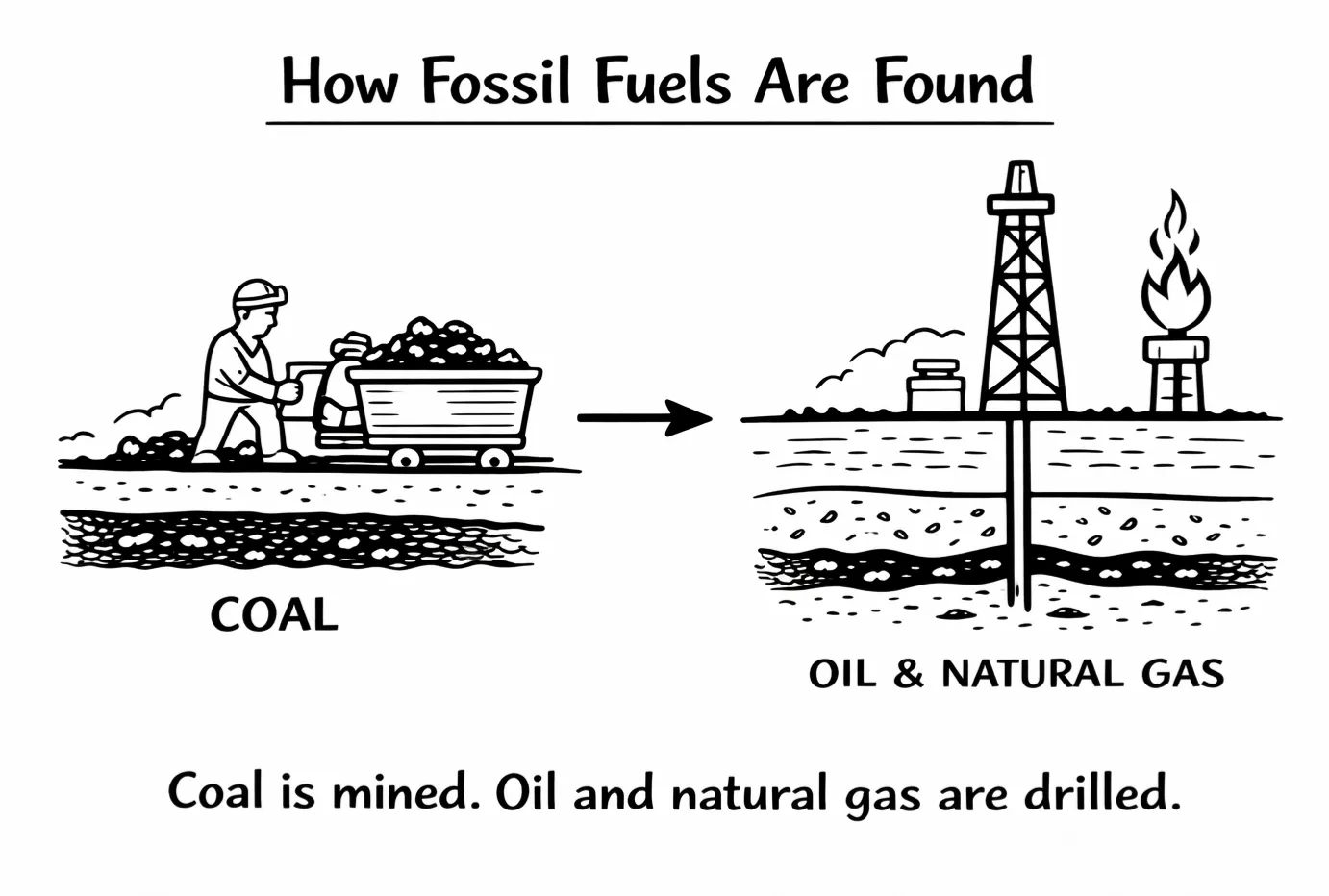
Coal is mined, while oil and natural gas are drilled.
Fossil fuels are energy sources formed from the remains of plants and animals that lived millions of years ago. These fuels include coal, oil, and natural gas. We find them underground in specific places called geological formations, which are layers and structures of rock that formed over time. Understanding where fossil fuels are located helps us obtain the energy we need for electricity, transportation, and heating.
Coal is found in layers deep in the earth. These layers formed when ancient plants died and were buried under mud and water. Over millions of years, heat and pressure turned these plant remains into coal. People extract coal through mining, which means digging it out of the ground. Some mines go deep underground, while others remove layers of soil from the surface to reach the coal below.
Oil and natural gas form differently than coal. They come from tiny sea creatures that died and settled on ocean floors long ago. These remains got trapped in porous rock, which is rock with tiny holes like a sponge. The oil and gas fill these holes deep underground. To get them out, workers use drilling, which means making deep holes in the ground with special equipment. The oil and gas then flow up through pipes.
Different parts of the world have different amounts of fossil fuels. This depends on what happened in that area millions of years ago. Places that once had large forests may have coal. Areas that were once covered by ancient oceans may have oil and gas. Finding and removing fossil fuels requires advanced technology and can affect the environment around the extraction sites.
What are fossil fuels made from?
Rocks and minerals onlyDead plants and animalsWater and airSoil and sand
How is coal removed from the ground?
Through drillingThrough miningThrough pumpingThrough filtering
Where are oil and gas trapped underground?
In solid rockIn porous rockIn coal layersIn mud
Why do different regions have different fossil fuels?
Because of current weather patternsBecause of their geological historyBecause of population sizeBecause of modern technology
What method extracts oil and natural gas?
MiningDiggingDrillingScooping
Coal formed from ancient sea creatures only.
TrueFalse
What does porous mean in the passage?
Very hard and solidHaving tiny holes like a spongeVery smooth and flatMade of metal
Extracting fossil fuels requires what kind of tools?
Simple hand tools onlyNo tools at allAdvanced technologyKitchen equipment
Perfect For:
๐ฉโ๐ซ Teachers
โข Reading comprehension practice
โข Auto-graded assessments
โข Literacy skill development
๐จโ๐ฉโ๐งโ๐ฆ Parents
โข Reading practice at home
โข Comprehension improvement
โข Educational reading time
๐ Homeschoolers
โข Reading curriculum support
โข Independent reading practice
โข Progress monitoring
Reading Features:
๐
Reading Passage
Engaging fiction or nonfiction text
โ
Comprehension Quiz
Auto-graded questions
๐
Instant Feedback
Immediate results and scoring
๐
Printable Version
Download for offline reading
๐
Read Aloud
Voice-over with word highlighting
Reviews & Ratings
No reviews yet. Be the first to share your experience!
Related Content
How Hydropower Works
This engaging 250-word science passage explains how hydropower works for Grade 4-5 students. Aligned with NGSS 4-ESS3-1,...
NGSS 4-ESS3-1
Reducing Air Pollution
This engaging 250-word science passage introduces Grade 4-5 students to the technology used to reduce air pollution from...
NGSS 4-ESS3-1
How We Can Use Less Energy
This engaging 250-word science passage for Grade 4-5 students explores how people can reduce the environmental impact of...
NGSS 4-ESS3-1
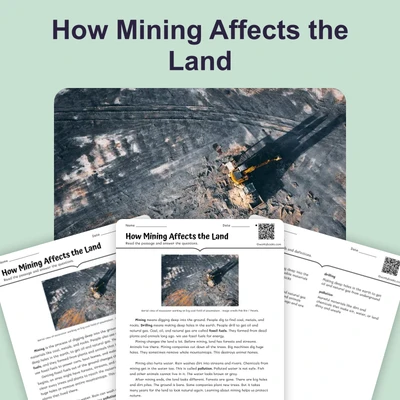
How Mining Affects the Land
This comprehensive 250-word reading passage helps Grade 4-5 students understand the environmental impacts of mining oper...
NGSS 4-ESS3-1
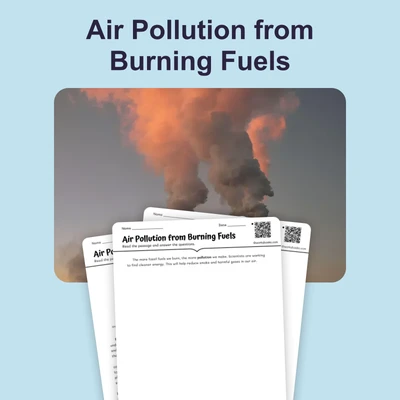
Air Pollution from Burning Fuels
This comprehensive science passage on air pollution is designed for Grade 4-5 students and aligns with NGSS 4-ESS3-1 sta...
NGSS 4-ESS3-1
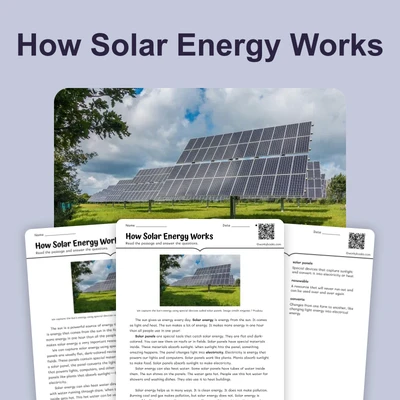
How Solar Energy Works
This engaging 250-word science passage explains how solar energy works for Grade 4-5 students. The reading explores how ...
NGSS 4-ESS3-1
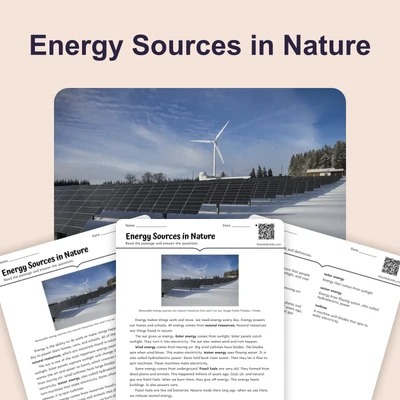
Energy Sources in Nature
This engaging 250-word science passage for Grade 4-5 students explores Energy Sources in Nature, aligned with NGSS stand...
NGSS 4-ESS3-1
What Is Fuel
This engaging 250-word science passage introduces Grade 4-5 students to the concept of fuel as any material that stores ...
NGSS 4-ESS3-1
Renewable vs Nonrenewable
This comprehensive 250-word passage helps Grade 4-5 students understand the critical difference between renewable and no...
NGSS 4-ESS3-1
How We Use Coal for Energy
This comprehensive 250-word reading passage introduces fourth-grade students to coal as an energy resource, aligned with...
NGSS 4-ESS3-1
Biomass Energy
This engaging Grade 4-5 science passage explains biomass energy and how it works as a renewable energy source. Students ...
NGSS 4-ESS3-1
How Wind Energy Works
This 250-word reading passage introduces fourth-grade students to wind energy and how it works, aligned with NGSS standa...
NGSS 4-ESS3-1
How We Use Oil for Energy
This 250-word reading passage aligns with NGSS standard 4-ESS3-1 and introduces fourth-grade students to oil as a vital ...
NGSS 4-ESS3-1
How We Use Natural Gas for Energy
This 250-word reading passage introduces fourth-grade students to natural gas as an important energy resource. Aligned w...
NGSS 4-ESS3-1
How Are Fossil Fuels Formed
This 250-word reading passage introduces fourth-grade students to the formation of fossil fuels, aligned with NGSS stand...
NGSS 4-ESS3-1
Why Fossil Fuels Run Out
This 250-word reading passage introduces fourth-grade students to the concept of nonrenewable energy resources, specific...
NGSS 4-ESS3-1
Benefits of Renewable Energy
This 250-word reading passage introduces fourth-grade students to the benefits of renewable energy sources aligned with ...
NGSS 4-ESS3-1
Challenges of Renewable Energy
This 250-word reading passage introduces fourth-grade students to the challenges of renewable energy sources, aligned wi...
NGSS 4-ESS3-1
How Energy Use Affects the Environment
This 250-word informational reading passage aligns with NGSS standard 4-ESS3-1 and introduces fourth-grade students to t...