How Mining Affects the Land โ Reading Comprehension
Rate this
Premium Resource
Present
Present in classroom. No work saved
Assign
Classroom with student accounts, Track progress
Quick Play
No student accounts, assign with a link
Grades
3
4
5
Standards
NGSS 4-ESS3-1
PRINT+DIGITAL RESOURCE
This learning resource is available in interactive and printable formats. The interactive worksheet can be played online and assigned to students. The Printable PDF version can be downloaded and printed for completion by hand.
This comprehensive 250-word reading passage helps Grade 4-5 students understand the environmental impacts of mining operations. Aligned with NGSS 4-ESS3-1, the passage explains how mining for coal and uranium damages land by removing soil and rock, creating large pits and waste rock piles. Students learn about surface mining and how it destroys habitats, as well as underground mining's effects including land subsidence and water pollution. The content includes audio-integrated features for enhanced accessibility and engagement. Through concrete examples and clear cause-and-effect relationships, students discover how extracting fossil fuels dramatically changes landscapes. The passage uses age-appropriate vocabulary while introducing key scientific terms like surface mining, underground mining, habitat, and subsidence. Supplementary activities include multiple-choice questions testing recall and comprehension, writing prompts requiring students to explain mining impacts, and graphic organizers comparing mining types and analyzing cause-and-effect relationships. Spanish translations are provided for both the main and simplified passages, supporting English language learners. This resource helps students understand human impacts on Earth's systems and the environmental consequences of resource extraction, preparing them for more advanced environmental science concepts.
CONTENT PREVIEW
Expand content preview
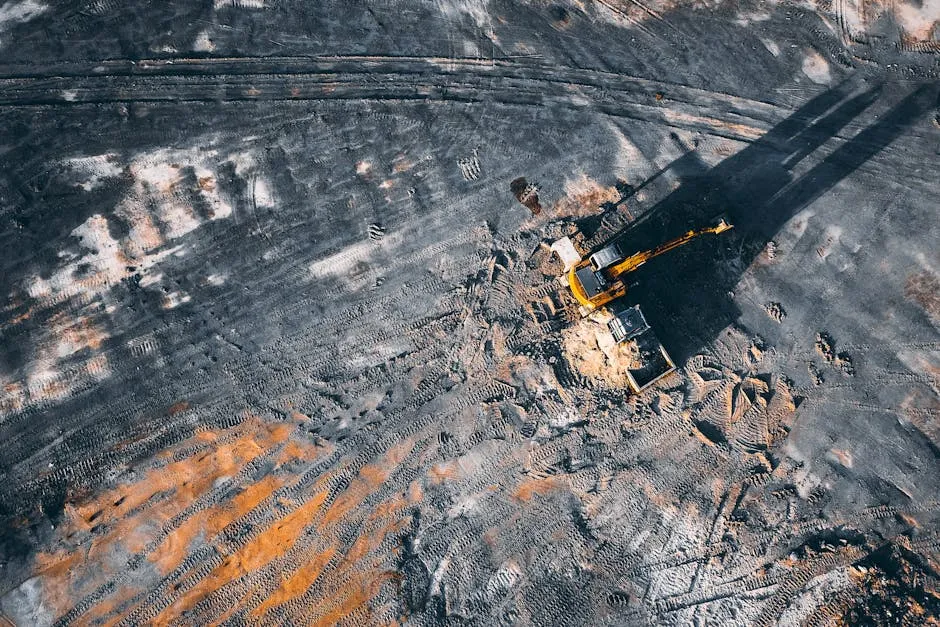
Aerial view of excavator working on big coal field of powerplant . image credit Pok Rie / Pexels.
Mining is the process of digging deep into the ground to remove valuable materials like coal, metals, and rocks. People also use drilling, which means making deep holes in the earth, to get oil and natural gas. These materials are called fossil fuels, and they formed from plants and animals that lived millions of years ago. We use fossil fuels to power cars, heat homes, and make electricity.
Getting fossil fuels out of the ground changes the land in big ways. Before mining begins, an area might have forests, streams, and wildlife. Mining companies must clear away trees and plants to reach the materials underground. Large machines dig huge holes or remove entire mountaintops. This destroys the homes of animals and plants that lived there.
Mining also affects water. Rain can wash dirt and chemicals from mining sites into nearby streams and rivers, causing pollution. This makes the water unsafe for fish, other animals, and sometimes people too. The dirty water looks brown or gray instead of clear.
After mining is finished, the land looks very different. Where forests once stood, there may be large pits, piles of dirt, or flat areas of bare ground. Some mining companies try to replant trees and restore the land, but it takes many years for the area to recover. Understanding how mining changes the land helps us make better choices about using natural resources.
What is mining?
Planting trees in forestsDigging deep to remove materialsBuilding houses on landCleaning water in streams
What are fossil fuels made from?
Rocks and dirt onlyWater and airDead plants and animalsTrees and grass
How does mining affect forests?
It makes forests grow fasterIt clears away trees and plantsIt adds more animalsIt creates new streams
Why does mining make water unsafe?
It makes water too coldIt removes all the waterDirt and chemicals wash into waterIt makes water flow faster
What happens to animal homes during mining?
They become bigger and betterThey stay exactly the sameThey get destroyed by machinesThey move to new locations
How does land look after mining ends?
Exactly like it did beforeWith big holes and bare groundWith more trees than beforeCovered with clean water
Mining always helps the environment.
TrueFalse
What does pollution mean?
Making something cleanerHarmful materials making things unsafePlanting new treesBuilding new homes
Perfect For:
๐ฉโ๐ซ Teachers
โข Reading comprehension practice
โข Auto-graded assessments
โข Literacy skill development
๐จโ๐ฉโ๐งโ๐ฆ Parents
โข Reading practice at home
โข Comprehension improvement
โข Educational reading time
๐ Homeschoolers
โข Reading curriculum support
โข Independent reading practice
โข Progress monitoring
Reading Features:
๐
Reading Passage
Engaging fiction or nonfiction text
โ
Comprehension Quiz
Auto-graded questions
๐
Instant Feedback
Immediate results and scoring
๐
Printable Version
Download for offline reading
๐
Read Aloud
Voice-over with word highlighting
Reviews & Ratings
No reviews yet. Be the first to share your experience!
Related Content
How Hydropower Works
This engaging 250-word science passage explains how hydropower works for Grade 4-5 students. Aligned with NGSS 4-ESS3-1,...
NGSS 4-ESS3-1
Reducing Air Pollution
This engaging 250-word science passage introduces Grade 4-5 students to the technology used to reduce air pollution from...
NGSS 4-ESS3-1
How We Can Use Less Energy
This engaging 250-word science passage for Grade 4-5 students explores how people can reduce the environmental impact of...
NGSS 4-ESS3-1
Air Pollution from Burning Fuels
This comprehensive science passage on air pollution is designed for Grade 4-5 students and aligns with NGSS 4-ESS3-1 sta...
NGSS 4-ESS3-1
How Solar Energy Works
This engaging 250-word science passage explains how solar energy works for Grade 4-5 students. The reading explores how ...
NGSS 4-ESS3-1
Energy Sources in Nature
This engaging 250-word science passage for Grade 4-5 students explores Energy Sources in Nature, aligned with NGSS stand...
NGSS 4-ESS3-1
What Is Fuel
This engaging 250-word science passage introduces Grade 4-5 students to the concept of fuel as any material that stores ...
NGSS 4-ESS3-1
Renewable vs Nonrenewable
This comprehensive 250-word passage helps Grade 4-5 students understand the critical difference between renewable and no...
NGSS 4-ESS3-1
How We Use Coal for Energy
This comprehensive 250-word reading passage introduces fourth-grade students to coal as an energy resource, aligned with...
NGSS 4-ESS3-1
Biomass Energy
This engaging Grade 4-5 science passage explains biomass energy and how it works as a renewable energy source. Students ...
NGSS 4-ESS3-1
How Wind Energy Works
This 250-word reading passage introduces fourth-grade students to wind energy and how it works, aligned with NGSS standa...
NGSS 4-ESS3-1
How We Use Oil for Energy
This 250-word reading passage aligns with NGSS standard 4-ESS3-1 and introduces fourth-grade students to oil as a vital ...
NGSS 4-ESS3-1
How We Use Natural Gas for Energy
This 250-word reading passage introduces fourth-grade students to natural gas as an important energy resource. Aligned w...
NGSS 4-ESS3-1
How Are Fossil Fuels Formed
This 250-word reading passage introduces fourth-grade students to the formation of fossil fuels, aligned with NGSS stand...
NGSS 4-ESS3-1
Where Do We Find Fossil Fuels
This Grade 4 Earth Science reading passage aligns with NGSS standard 4-ESS3-1 and introduces students to the locations a...
NGSS 4-ESS3-1
Why Fossil Fuels Run Out
This 250-word reading passage introduces fourth-grade students to the concept of nonrenewable energy resources, specific...
NGSS 4-ESS3-1
Benefits of Renewable Energy
This 250-word reading passage introduces fourth-grade students to the benefits of renewable energy sources aligned with ...
NGSS 4-ESS3-1
Challenges of Renewable Energy
This 250-word reading passage introduces fourth-grade students to the challenges of renewable energy sources, aligned wi...
NGSS 4-ESS3-1
How Energy Use Affects the Environment
This 250-word informational reading passage aligns with NGSS standard 4-ESS3-1 and introduces fourth-grade students to t...