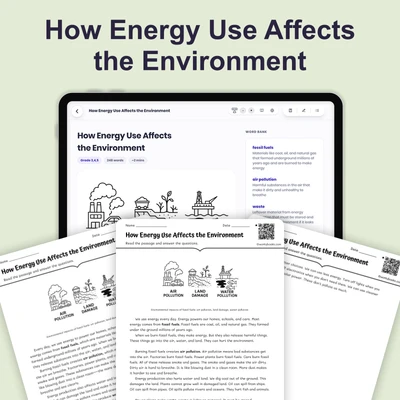
How We Use Natural Gas for Energy
Interactive passage with audio narration, comprehension questions, and printable PDF.
By completing this purchase you agree to our Terms of Use and Privacy Policy. Your subscription renews automatically until you cancel. You can cancel anytime from your account settings. All sales are final and non-refundable. Digital content is available for download in your account immediately upon purchase.
What's included
How We Use Natural Gas for Energy preview and details
About this printable How We Use Natural Gas for Energy science reading passage, NGSS-aligned (Grades 3-5)
Sample passage and quiz from How We Use Natural Gas for Energy
Reading passage and comprehension quiz preview
How We Use Natural Gas for Energy
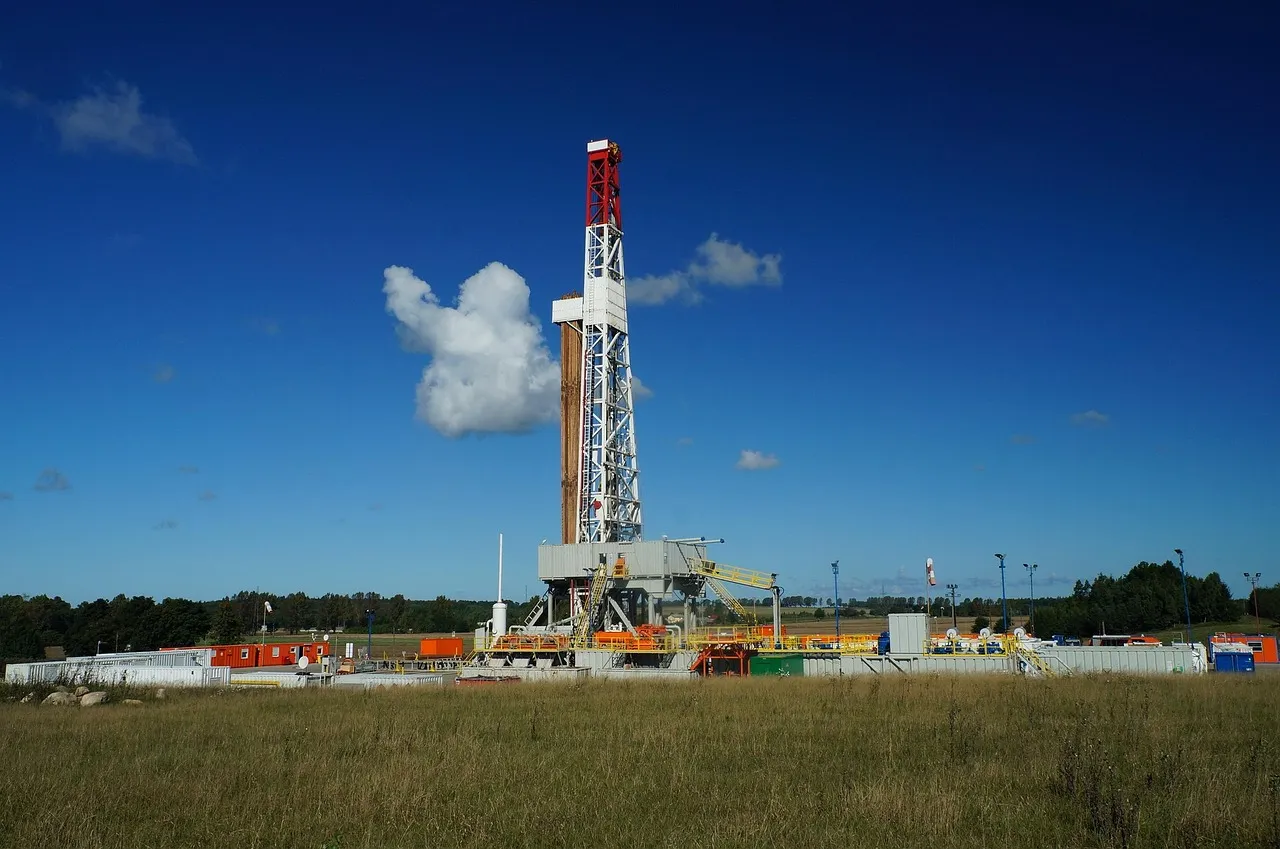
A natural gas drilling rig extracting fuel from deep underground to supply energy for everyday use. Image Credit by anita_starzycka / Pixabay.
Natural gas is an important energy source that people use every day. Natural gas is a fuel that burns easily and gives off heat and light. It is found deep underground in layers of rock.
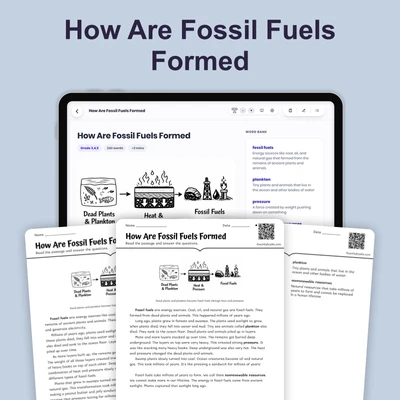
Natural gas formed millions of years ago. Tiny plants and animals died and sank to the bottom of ancient oceans. Over time, layers of sand and mud covered them. Heat and pressure from the Earth slowly changed these remains into natural gas and oil. This is why natural gas is called a fossil fuel—a fuel made from the remains of living things from long ago. Natural gas is often found near oil deposits, which are underground pools of oil.
People must drill deep into the ground to reach natural gas. Once brought to the surface, the gas travels through underground pipelines—long tubes that carry the gas from place to place.
Natural gas has three main uses. First, many homes use natural gas for cooking. The blue flame you see on a gas stove comes from burning natural gas. Second, natural gas heats homes and buildings during cold weather. Third, power plants burn natural gas to make electricity. The heat from burning gas turns water into steam, which spins machines called turbines to generate electricity.
Natural gas is a valuable resource because it provides energy for cooking, heating, and electricity that millions of people depend on daily.
Comprehension quiz (8 questions)
1. Where is natural gas found?
2. How did natural gas form?
3. What carries natural gas from place to place?
4. Why do power plants use natural gas?
5. What happens at a power plant?
6. Natural gas is often found near what?
7. Natural gas formed millions of years ago.
8. What is a fossil fuel?
Perfect for the way you teach
- Build comprehension skills
- Auto-graded quiz
- Differentiated reading
- Read together at home
- Improve fluency
- Quiet reading time
- Reading curriculum support
- Independent practice
- Track Lexile growth