Why Fossil Fuels Run Out
Interactive passage with audio narration, comprehension questions, and printable PDF.
By completing this purchase you agree to our Terms of Use and Privacy Policy. Your subscription renews automatically until you cancel. You can cancel anytime from your account settings. All sales are final and non-refundable. Digital content is available for download in your account immediately upon purchase.
What's included
Why Fossil Fuels Run Out preview and details
About this printable Why Fossil Fuels Run Out science reading passage, NGSS-aligned (Grades 3-5)
Sample passage and quiz from Why Fossil Fuels Run Out
Reading passage and comprehension quiz preview
Why Fossil Fuels Run Out
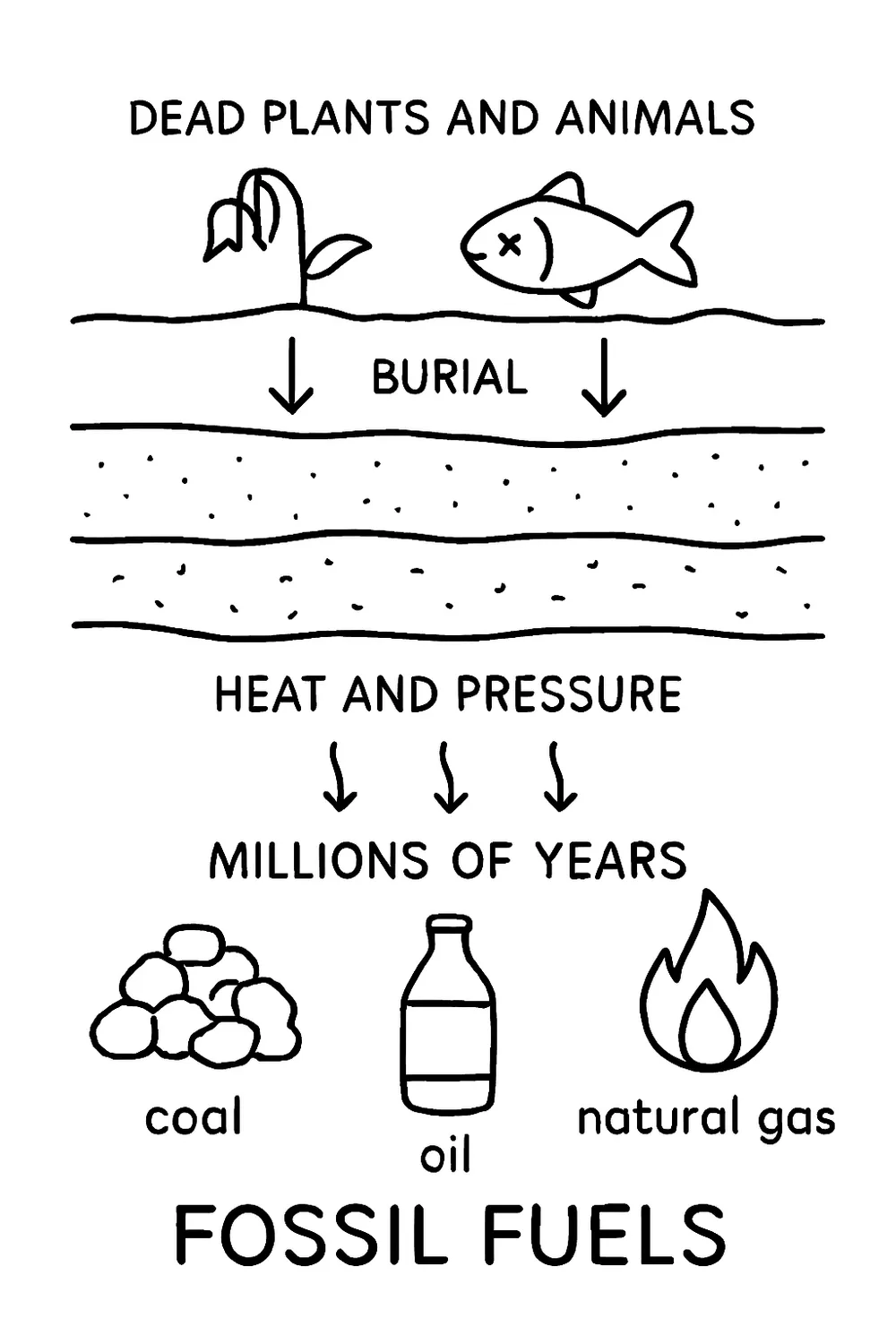
Fossil fuels are energy sources that formed from plants and animals that lived millions of years ago. The three main types are coal, oil, and natural gas. We use these fuels to power cars, heat homes, and make electricity.
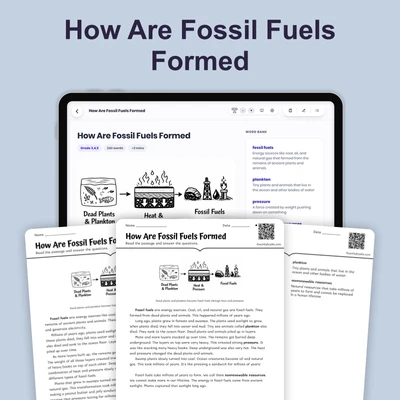
When ancient plants and animals died, they were buried under layers of dirt, sand, and rock. Over millions of years, heat and pressure from the earth changed these remains into fossil fuels. This process took so long that scientists measure it in millions of years, not hundreds or thousands.
Fossil fuels are called nonrenewable resources because they cannot be replaced once we use them. A nonrenewable resource is something that takes so long to form that we cannot get more of it in our lifetime. Think of it like a cookie jar that takes a million years to refill. Once you eat all the cookies, the jar stays empty for your entire life.
Every time we drive a car or turn on lights powered by fossil fuels, we use up some of these resources. Since it took millions of years for them to form, we cannot make more fossil fuels to replace what we use. When they are gone, they are gone forever. This is why scientists and engineers work to find other energy sources that can be replaced, like wind and solar power.
Comprehension quiz (8 questions)
1. What are the three main fossil fuels?
2. How long did fossil fuels take to form?
3. What formed fossil fuels long ago?
4. Why can't fossil fuels be replaced quickly?
5. What changed dead plants into fossil fuels?
6. What can replace fossil fuels in the future?
7. Fossil fuels can be replaced in our lifetime.
8. What does nonrenewable mean?
Perfect for the way you teach
- Build comprehension skills
- Auto-graded quiz
- Differentiated reading
- Read together at home
- Improve fluency
- Quiet reading time
- Reading curriculum support
- Independent practice
- Track Lexile growth