How Are Fossil Fuels Formed — Reading Comprehension
Rate this
Present
Present in classroom. No work saved
Assign
Classroom with student accounts, Track progress
Quick Play
No student accounts, assign with a link
Grades
3
4
5
Standards
NGSS 4-ESS3-1
PRINT+DIGITAL RESOURCE
This learning resource is available in interactive and printable formats. The interactive worksheet can be played online and assigned to students. The Printable PDF version can be downloaded and printed for completion by hand.
This 250-word reading passage introduces fourth-grade students to the formation of fossil fuels, aligned with NGSS standard 4-ESS3-1 and the Disciplinary Core Idea ESS3.A. Students discover how coal, oil, and natural gas formed from the remains of ancient plants and animals that lived millions of years ago. The passage explains the process of decomposition, burial, and transformation through heat and pressure deep underground. Students learn why fossil fuels are considered nonrenewable resources and understand the connection between ancient sunlight energy captured by plants through photosynthesis and the energy stored in fossil fuels today. Written at a fourth-grade reading level, the passage uses accessible language and relatable examples to build foundational understanding. Audio integration supports diverse learners by providing multiple ways to access the content. The passage is accompanied by differentiated versions, Spanish translations, vocabulary glossary, comprehension questions, writing activities, and graphic organizers to reinforce learning and support various learning styles in the elementary science classroom.
CONTENT PREVIEW
Expand content preview
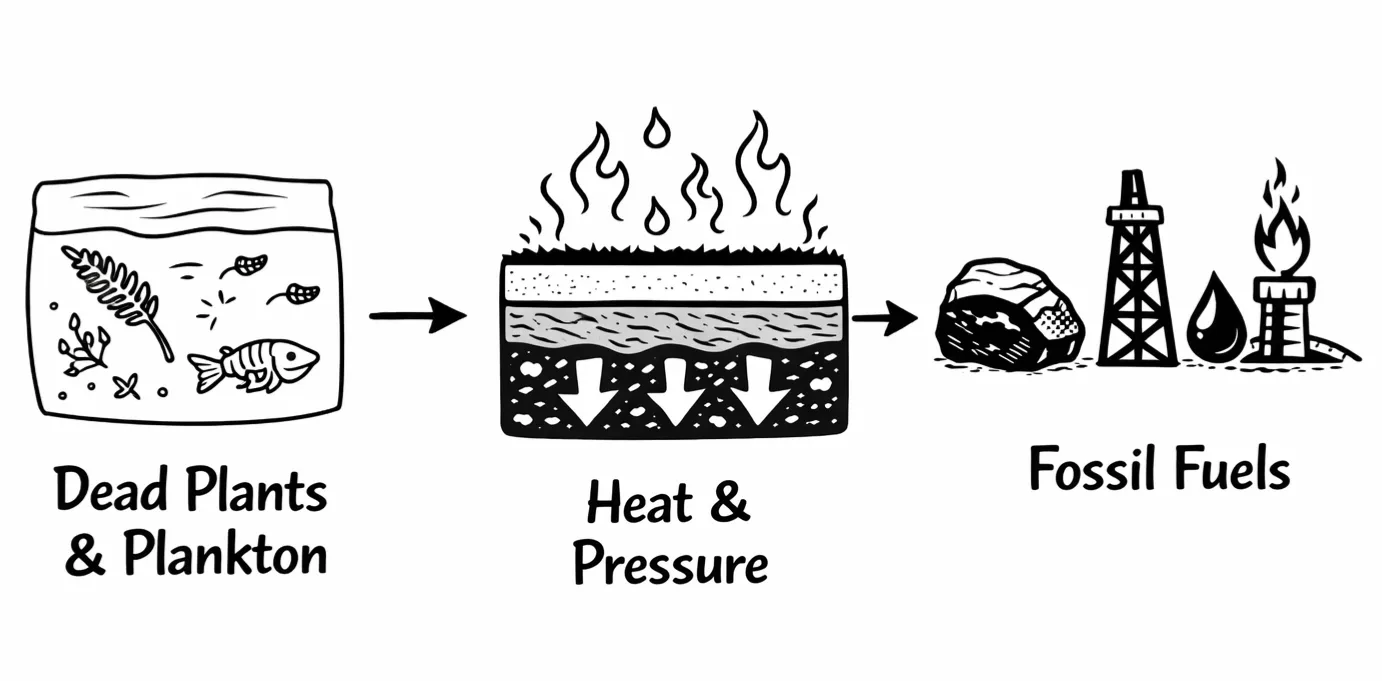
Dead plants and plankton become fossil fuels through heat and pressure.
Fossil fuels are energy sources like coal, oil, and natural gas that formed from the remains of ancient plants and animals. These fuels power our cars, heat our homes, and generate electricity.
Millions of years ago, plants used sunlight to grow in forests and swamps. When these plants died, they fell into water and mud. Tiny sea creatures called plankton also died and sank to the ocean floor. Layer after layer of dead plants and animals piled up over time.
As more layers built up, the remains got buried deeper and deeper underground. The weight of all those layers created tremendous pressure, like stacking hundreds of heavy books on top of each other. Deep underground, it also became very hot. This combination of heat and pressure slowly changed the plant and animal remains into different types of fossil fuels.
Plants that grew in swamps turned into coal. Tiny ocean creatures became oil and natural gas. This transformation took millions of years to complete. Think of it like making a peanut butter and jelly sandwich and pressing it in your lunchbox—but imagine that pressure lasting for millions of years!
Because fossil fuels take millions of years to form, they are called nonrenewable resources. Once we use them up, we cannot make more in our lifetime. The energy in fossil fuels originally came from ancient sunlight that plants captured long ago.
What are fossil fuels made from?
Rocks and mineralsAncient plants and animalsSand and waterModern trees and grass
Which is NOT a fossil fuel?
CoalOilWaterNatural gas
How long does it take to form?
A few daysA few yearsHundreds of yearsMillions of years
Why are fossil fuels called nonrenewable?
They are too expensiveThey take millions of years to formThey are found only undergroundThey pollute the environment
What helps turn remains into fossil fuels?
Wind and rainHeat and pressureIce and snowLight and air
What did swamp plants become?
Natural gasOilCoalWater
Fossil fuels originally came from ancient sunlight.
TrueFalse
What are plankton?
Large ocean fishTiny sea creaturesTypes of rocksUnderground plants
Perfect For:
👩🏫 Teachers
• Reading comprehension practice
• Auto-graded assessments
• Literacy skill development
👨👩👧👦 Parents
• Reading practice at home
• Comprehension improvement
• Educational reading time
🏠 Homeschoolers
• Reading curriculum support
• Independent reading practice
• Progress monitoring
Reading Features:
📖
Reading Passage
Engaging fiction or nonfiction text
❓
Comprehension Quiz
Auto-graded questions
📊
Instant Feedback
Immediate results and scoring
📄
Printable Version
Download for offline reading
🔊
Read Aloud
Voice-over with word highlighting
Reviews & Ratings
No reviews yet. Be the first to share your experience!
Related Content
How Hydropower Works
This engaging 250-word science passage explains how hydropower works for Grade 4-5 students. Aligned with NGSS 4-ESS3-1,...
NGSS 4-ESS3-1
Reducing Air Pollution
This engaging 250-word science passage introduces Grade 4-5 students to the technology used to reduce air pollution from...
NGSS 4-ESS3-1
How We Can Use Less Energy
This engaging 250-word science passage for Grade 4-5 students explores how people can reduce the environmental impact of...
NGSS 4-ESS3-1
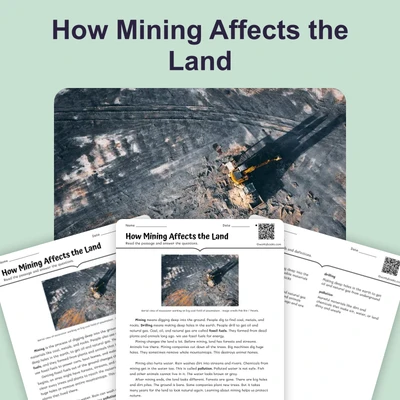
How Mining Affects the Land
This comprehensive 250-word reading passage helps Grade 4-5 students understand the environmental impacts of mining oper...
NGSS 4-ESS3-1
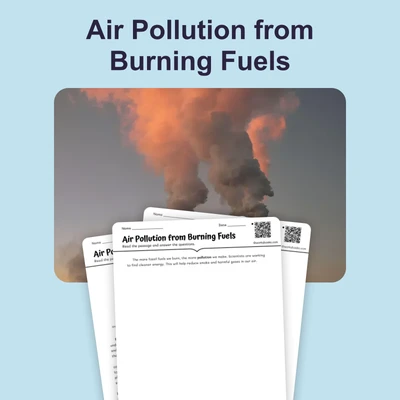
Air Pollution from Burning Fuels
This comprehensive science passage on air pollution is designed for Grade 4-5 students and aligns with NGSS 4-ESS3-1 sta...
NGSS 4-ESS3-1
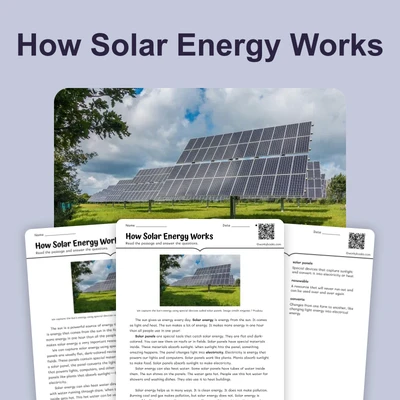
How Solar Energy Works
This engaging 250-word science passage explains how solar energy works for Grade 4-5 students. The reading explores how ...
NGSS 4-ESS3-1
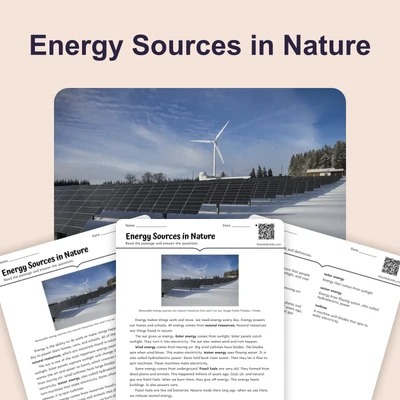
Energy Sources in Nature
This engaging 250-word science passage for Grade 4-5 students explores Energy Sources in Nature, aligned with NGSS stand...
NGSS 4-ESS3-1
What Is Fuel
This engaging 250-word science passage introduces Grade 4-5 students to the concept of fuel as any material that stores ...
NGSS 4-ESS3-1
Renewable vs Nonrenewable
This comprehensive 250-word passage helps Grade 4-5 students understand the critical difference between renewable and no...
NGSS 4-ESS3-1
How We Use Coal for Energy
This comprehensive 250-word reading passage introduces fourth-grade students to coal as an energy resource, aligned with...
NGSS 4-ESS3-1
Biomass Energy
This engaging Grade 4-5 science passage explains biomass energy and how it works as a renewable energy source. Students ...
NGSS 4-ESS3-1
How Wind Energy Works
This 250-word reading passage introduces fourth-grade students to wind energy and how it works, aligned with NGSS standa...
NGSS 4-ESS3-1
How We Use Oil for Energy
This 250-word reading passage aligns with NGSS standard 4-ESS3-1 and introduces fourth-grade students to oil as a vital ...
NGSS 4-ESS3-1
How We Use Natural Gas for Energy
This 250-word reading passage introduces fourth-grade students to natural gas as an important energy resource. Aligned w...
NGSS 4-ESS3-1
Where Do We Find Fossil Fuels
This Grade 4 Earth Science reading passage aligns with NGSS standard 4-ESS3-1 and introduces students to the locations a...
NGSS 4-ESS3-1
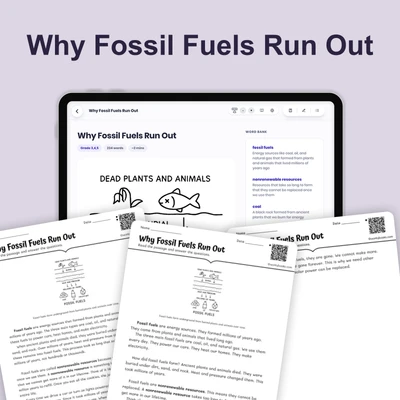
Why Fossil Fuels Run Out
This 250-word reading passage introduces fourth-grade students to the concept of nonrenewable energy resources, specific...
NGSS 4-ESS3-1
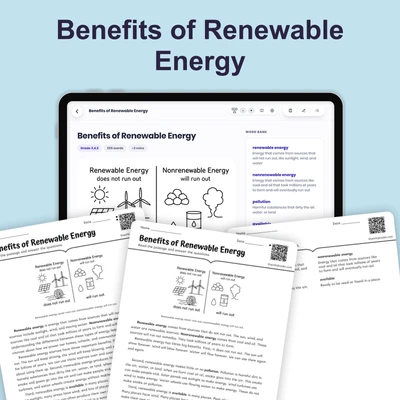
Benefits of Renewable Energy
This 250-word reading passage introduces fourth-grade students to the benefits of renewable energy sources aligned with ...
NGSS 4-ESS3-1
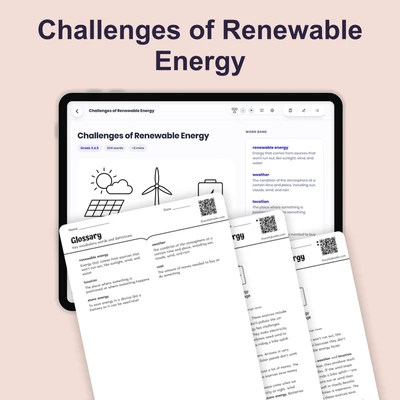
Challenges of Renewable Energy
This 250-word reading passage introduces fourth-grade students to the challenges of renewable energy sources, aligned wi...
NGSS 4-ESS3-1
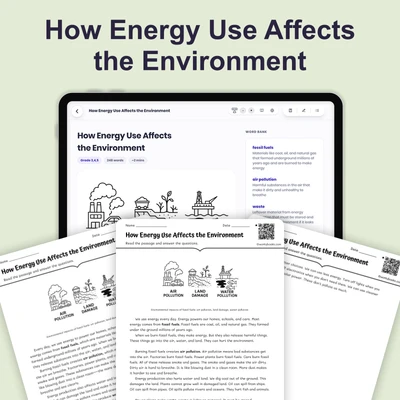
How Energy Use Affects the Environment
This 250-word informational reading passage aligns with NGSS standard 4-ESS3-1 and introduces fourth-grade students to t...