This learning resource is available in interactive and printable formats. The interactive worksheet can be played online and assigned to students. The Printable PDF version can be downloaded and printed for completion by hand.
This engaging 250-word science passage explains how hydropower works for Grade 4-5 students. Aligned with NGSS 4-ESS3-1, the passage describes how hydropower uses the energy of moving water to spin turbines and generate electricity at dams and rivers. Students learn how water stored behind dams has potential energy that converts to kinetic energy as it flows through turbines. The passage connects these concepts to real-world examples of huge dams holding back water and releasing it through turbines to make electricity for millions of people. The content includes audio integration, interactive activities, and differentiated versions to support all learners. Key vocabulary terms including hydropower, turbines, potential energy, kinetic energy, and hydroelectric are clearly defined. Students complete comprehension questions, writing activities, and graphic organizers to deepen their understanding of this important renewable energy source.
CONTENT PREVIEW
Expand content preview
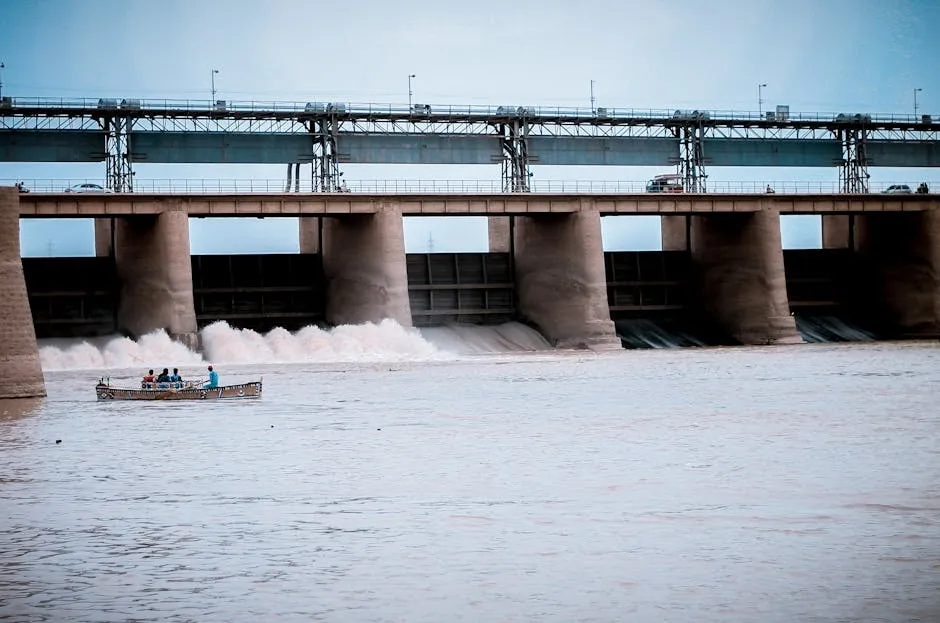
Hydropower is a way to make electricity using the energy of moving water. Image credit Ali Madad Sakhirani / Pexels.
Hydropower is a way to make electricity using moving water. This method helps provide power to millions of homes, schools, and businesses without burning fuel.
Moving water has energy because of its motion and force. When water flows downhill in a river or is released from behind a dam, it moves with great power. A dam is a large wall built across a river that holds back water in a lake called a reservoir. The water stored high up in the reservoir has energy waiting to be used, like a ball at the top of a hill ready to roll down.
To generate electricity, the water is allowed to flow through large pipes in the dam. As the water rushes down, it hits the blades of a machine called a turbine. A turbine is like a giant fan that spins when water pushes against it. The spinning turbine is connected to a generator, which is a machine that changes the spinning motion into electricity. The generator works similarly to how pedaling a bicycle can power a light on the bike.
The electricity created travels through power lines to homes and schools. Hydropower is a renewable energy source because water keeps moving through the water cycle. Rain refills rivers and reservoirs, so we can continue using this clean energy source for a long time.
What is hydropower used to make?
ElectricityWaterFuelWind
What is a dam?
A spinning machineA large wall across a riverA type of electricityA water pipe
Where is water stored behind a dam?
In a turbineIn a generatorIn a reservoirIn power lines
What makes the turbine spin?
Wind pushing the bladesElectricity from power linesMoving water hitting the bladesPeople turning a handle
What does a generator do?
Stores water in a lakeChanges spinning motion into electricityBuilds dams across riversPumps water uphill
Why is hydropower renewable energy?
It uses fuel that burnsIt only works onceWater keeps moving through water cycleIt makes water disappear
Hydropower burns fuel to make electricity.
TrueFalse
What does reservoir mean?
A spinning bladeA lake behind a damA type of electricityA power line
Perfect For:
๐ฉโ๐ซ Teachers
โข Reading comprehension practice
โข Auto-graded assessments
โข Literacy skill development
๐จโ๐ฉโ๐งโ๐ฆ Parents
โข Reading practice at home
โข Comprehension improvement
โข Educational reading time
๐ Homeschoolers
โข Reading curriculum support
โข Independent reading practice
โข Progress monitoring
Reading Features:
๐
Reading Passage
Engaging fiction or nonfiction text
โ
Comprehension Quiz
Auto-graded questions
๐
Instant Feedback
Immediate results and scoring
๐
Printable Version
Download for offline reading
๐
Read Aloud
Voice-over with word highlighting
Reviews & Ratings
No reviews yet. Be the first to share your experience!
Related Content
Reducing Air Pollution
This engaging 250-word science passage introduces Grade 4-5 students to the technology used to reduce air pollution from...
NGSS 4-ESS3-1
How We Can Use Less Energy
This engaging 250-word science passage for Grade 4-5 students explores how people can reduce the environmental impact of...
NGSS 4-ESS3-1
How Mining Affects the Land
This comprehensive 250-word reading passage helps Grade 4-5 students understand the environmental impacts of mining oper...
NGSS 4-ESS3-1
Air Pollution from Burning Fuels
This comprehensive science passage on air pollution is designed for Grade 4-5 students and aligns with NGSS 4-ESS3-1 sta...
NGSS 4-ESS3-1
How Solar Energy Works
This engaging 250-word science passage explains how solar energy works for Grade 4-5 students. The reading explores how ...
NGSS 4-ESS3-1
Energy Sources in Nature
This engaging 250-word science passage for Grade 4-5 students explores Energy Sources in Nature, aligned with NGSS stand...
NGSS 4-ESS3-1
What Is Fuel
This engaging 250-word science passage introduces Grade 4-5 students to the concept of fuel as any material that stores ...
NGSS 4-ESS3-1
Renewable vs Nonrenewable
This comprehensive 250-word passage helps Grade 4-5 students understand the critical difference between renewable and no...
NGSS 4-ESS3-1
How We Use Coal for Energy
This comprehensive 250-word reading passage introduces fourth-grade students to coal as an energy resource, aligned with...
NGSS 4-ESS3-1
Biomass Energy
This engaging Grade 4-5 science passage explains biomass energy and how it works as a renewable energy source. Students ...
NGSS 4-ESS3-1
How Wind Energy Works
This 250-word reading passage introduces fourth-grade students to wind energy and how it works, aligned with NGSS standa...
NGSS 4-ESS3-1
How We Use Oil for Energy
This 250-word reading passage aligns with NGSS standard 4-ESS3-1 and introduces fourth-grade students to oil as a vital ...
NGSS 4-ESS3-1
How We Use Natural Gas for Energy
This 250-word reading passage introduces fourth-grade students to natural gas as an important energy resource. Aligned w...
NGSS 4-ESS3-1
How Are Fossil Fuels Formed
This 250-word reading passage introduces fourth-grade students to the formation of fossil fuels, aligned with NGSS stand...
NGSS 4-ESS3-1
Where Do We Find Fossil Fuels
This Grade 4 Earth Science reading passage aligns with NGSS standard 4-ESS3-1 and introduces students to the locations a...
NGSS 4-ESS3-1
Why Fossil Fuels Run Out
This 250-word reading passage introduces fourth-grade students to the concept of nonrenewable energy resources, specific...
NGSS 4-ESS3-1
Benefits of Renewable Energy
This 250-word reading passage introduces fourth-grade students to the benefits of renewable energy sources aligned with ...
NGSS 4-ESS3-1
Challenges of Renewable Energy
This 250-word reading passage introduces fourth-grade students to the challenges of renewable energy sources, aligned wi...
NGSS 4-ESS3-1
How Energy Use Affects the Environment
This 250-word informational reading passage aligns with NGSS standard 4-ESS3-1 and introduces fourth-grade students to t...