Renewable vs Nonrenewable โ Reading Comprehension
Rate this
Premium Resource
Present
Present in classroom. No work saved
Assign
Classroom with student accounts, Track progress
Quick Play
No student accounts, assign with a link
Grades
3
4
5
Standards
NGSS 4-ESS3-1
PRINT+DIGITAL RESOURCE
This learning resource is available in interactive and printable formats. The interactive worksheet can be played online and assigned to students. The Printable PDF version can be downloaded and printed for completion by hand.
This comprehensive 250-word passage helps Grade 4-5 students understand the critical difference between renewable and nonrenewable energy resources. Aligned with NGSS 4-ESS3-1, the passage explains how energy resources are classified based on whether they can be replaced quickly or take millions of years to form. Students explore concrete examples including solar power, wind energy, coal, and oil while learning why this classification matters for Earth's future. The passage includes audio integration for accessibility, a simplified differentiated version for diverse learners, and Spanish translations. Through engaging activities including multiple-choice questions, writing prompts, and graphic organizers, students discover why scientists work to develop renewable energy sources as nonrenewable fuels become scarcer. The content uses age-appropriate language and relatable analogies to make abstract concepts tangible, helping students understand the importance of sustainable energy choices for future generations.
CONTENT PREVIEW
Expand content preview
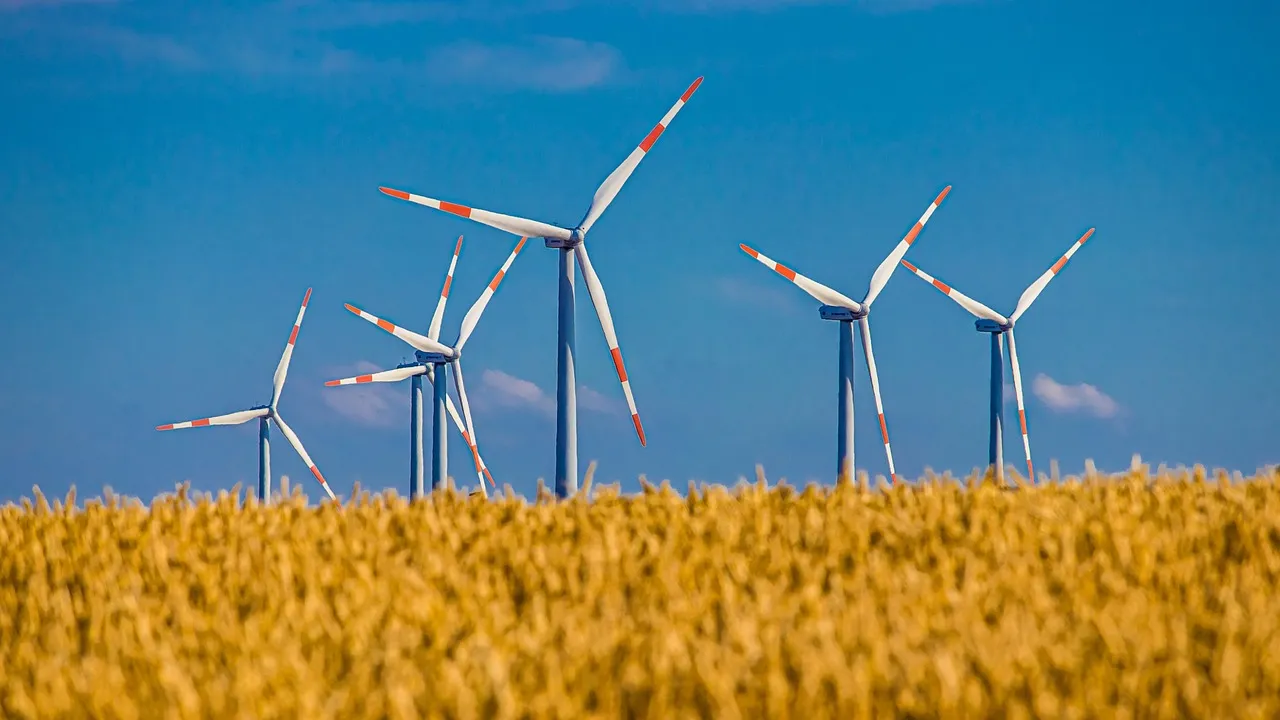
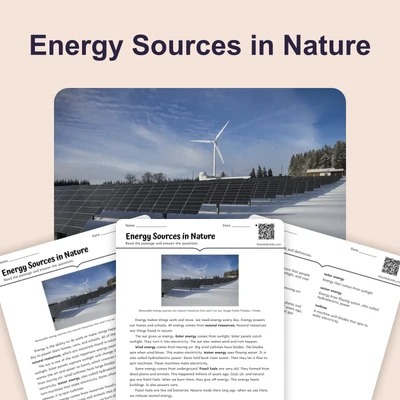
Windmill a Renewable resources are energy sources that can be replaced quickly. Image Credit Al3xanderD / Pixabay.
Earth provides many natural resources that people use every day. Natural resources are materials from Earth that we use to meet our needs. Scientists group these resources into two main categories based on how quickly they can be replaced.
Renewable resources are materials that can be replaced naturally in a short amount of time. Sunlight is a perfect example of a renewable resource. The sun shines every day, and we will never run out of it. Wind and water are also renewable resources. We can use them over and over again because nature replaces them quickly. Trees can be renewable too, if we plant new ones to replace the trees we cut down.
Nonrenewable resources are materials that take millions of years to form and cannot be replaced quickly. Coal is a nonrenewable resource that formed from ancient plants buried deep underground. Oil and natural gas are also nonrenewable resources. They formed from tiny sea creatures that died millions of years ago. Once we use up these resources, they are gone forever.
Understanding the difference between renewable and nonrenewable resources helps us make smart choices. When we use renewable resources like solar and wind energy, we protect Earth's limited supply of nonrenewable resources. This ensures that future generations will have the resources they need.
What are natural resources?
Materials from Earth we useOnly water and airThings made in factoriesFood from grocery stores
Which resource is renewable?
CoalOilSunlightNatural gas
How long does coal take to form?
A few daysOne yearMillions of yearsTen years
Why are renewable resources better for Earth?
They cost less moneyThey can be replaced quicklyThey are easier to findThey work better than coal
What did oil form from?
Ancient treesRocks and mineralsTiny sea creaturesDinosaur bones
Trees can be renewable if we plant new ones.
TrueFalse
Using renewable resources helps protect what?
Limited nonrenewable resourcesMoney in banksAnimals in zoosBuildings in cities
What does 'nonrenewable' mean in this passage?
Can be replaced quicklyTakes millions of years to formComes from the sunMade by people
Perfect For:
๐ฉโ๐ซ Teachers
โข Reading comprehension practice
โข Auto-graded assessments
โข Literacy skill development
๐จโ๐ฉโ๐งโ๐ฆ Parents
โข Reading practice at home
โข Comprehension improvement
โข Educational reading time
๐ Homeschoolers
โข Reading curriculum support
โข Independent reading practice
โข Progress monitoring
Reading Features:
๐
Reading Passage
Engaging fiction or nonfiction text
โ
Comprehension Quiz
Auto-graded questions
๐
Instant Feedback
Immediate results and scoring
๐
Printable Version
Download for offline reading
๐
Read Aloud
Voice-over with word highlighting
Reviews & Ratings
No reviews yet. Be the first to share your experience!
Related Content
How Hydropower Works
This engaging 250-word science passage explains how hydropower works for Grade 4-5 students. Aligned with NGSS 4-ESS3-1,...
NGSS 4-ESS3-1
Reducing Air Pollution
This engaging 250-word science passage introduces Grade 4-5 students to the technology used to reduce air pollution from...
NGSS 4-ESS3-1
How We Can Use Less Energy
This engaging 250-word science passage for Grade 4-5 students explores how people can reduce the environmental impact of...
NGSS 4-ESS3-1
How Mining Affects the Land
This comprehensive 250-word reading passage helps Grade 4-5 students understand the environmental impacts of mining oper...
NGSS 4-ESS3-1
Air Pollution from Burning Fuels
This comprehensive science passage on air pollution is designed for Grade 4-5 students and aligns with NGSS 4-ESS3-1 sta...
NGSS 4-ESS3-1
How Solar Energy Works
This engaging 250-word science passage explains how solar energy works for Grade 4-5 students. The reading explores how ...
NGSS 4-ESS3-1
Energy Sources in Nature
This engaging 250-word science passage for Grade 4-5 students explores Energy Sources in Nature, aligned with NGSS stand...
NGSS 4-ESS3-1
What Is Fuel
This engaging 250-word science passage introduces Grade 4-5 students to the concept of fuel as any material that stores ...
NGSS 4-ESS3-1
How We Use Coal for Energy
This comprehensive 250-word reading passage introduces fourth-grade students to coal as an energy resource, aligned with...
NGSS 4-ESS3-1
Biomass Energy
This engaging Grade 4-5 science passage explains biomass energy and how it works as a renewable energy source. Students ...
NGSS 4-ESS3-1
How Wind Energy Works
This 250-word reading passage introduces fourth-grade students to wind energy and how it works, aligned with NGSS standa...
NGSS 4-ESS3-1
How We Use Oil for Energy
This 250-word reading passage aligns with NGSS standard 4-ESS3-1 and introduces fourth-grade students to oil as a vital ...
NGSS 4-ESS3-1
How We Use Natural Gas for Energy
This 250-word reading passage introduces fourth-grade students to natural gas as an important energy resource. Aligned w...
NGSS 4-ESS3-1
How Are Fossil Fuels Formed
This 250-word reading passage introduces fourth-grade students to the formation of fossil fuels, aligned with NGSS stand...
NGSS 4-ESS3-1
Where Do We Find Fossil Fuels
This Grade 4 Earth Science reading passage aligns with NGSS standard 4-ESS3-1 and introduces students to the locations a...
NGSS 4-ESS3-1
Why Fossil Fuels Run Out
This 250-word reading passage introduces fourth-grade students to the concept of nonrenewable energy resources, specific...
NGSS 4-ESS3-1
Benefits of Renewable Energy
This 250-word reading passage introduces fourth-grade students to the benefits of renewable energy sources aligned with ...
NGSS 4-ESS3-1
Challenges of Renewable Energy
This 250-word reading passage introduces fourth-grade students to the challenges of renewable energy sources, aligned wi...
NGSS 4-ESS3-1
How Energy Use Affects the Environment
This 250-word informational reading passage aligns with NGSS standard 4-ESS3-1 and introduces fourth-grade students to t...