This learning resource is available in interactive and printable formats. The interactive worksheet can be played online and assigned to students. The Printable PDF version can be downloaded and printed for completion by hand.
This engaging 250-word science passage introduces Grade 4-5 students to the technology used to reduce air pollution from power plants. Students learn how scrubbers and filters work to remove pollutants from emissions before they enter the atmosphere. The passage explains pollution control technology in age-appropriate language, using concrete examples and clear cause-and-effect relationships. Students discover that while cleaner technology helps reduce the environmental impact of burning fossil fuels, it cannot eliminate all pollution. The passage connects to the broader understanding that switching to renewable energy sources is the most effective way to reduce air pollution. Aligned with NGSS 4-ESS3-1 standards, this resource includes audio integration for enhanced accessibility, a simplified differentiated version for struggling readers, Spanish translations of both versions, comprehensive glossary, multiple-choice quiz testing recall and comprehension, writing activities requiring application of concepts, and graphic organizers including a problem-solution table and advantages-disadvantages comparison. The content uses familiar analogies and concrete examples to make abstract scientific concepts tangible for elementary students while building essential vocabulary around emissions, pollution control, and environmental technology.
CONTENT PREVIEW
Expand content preview
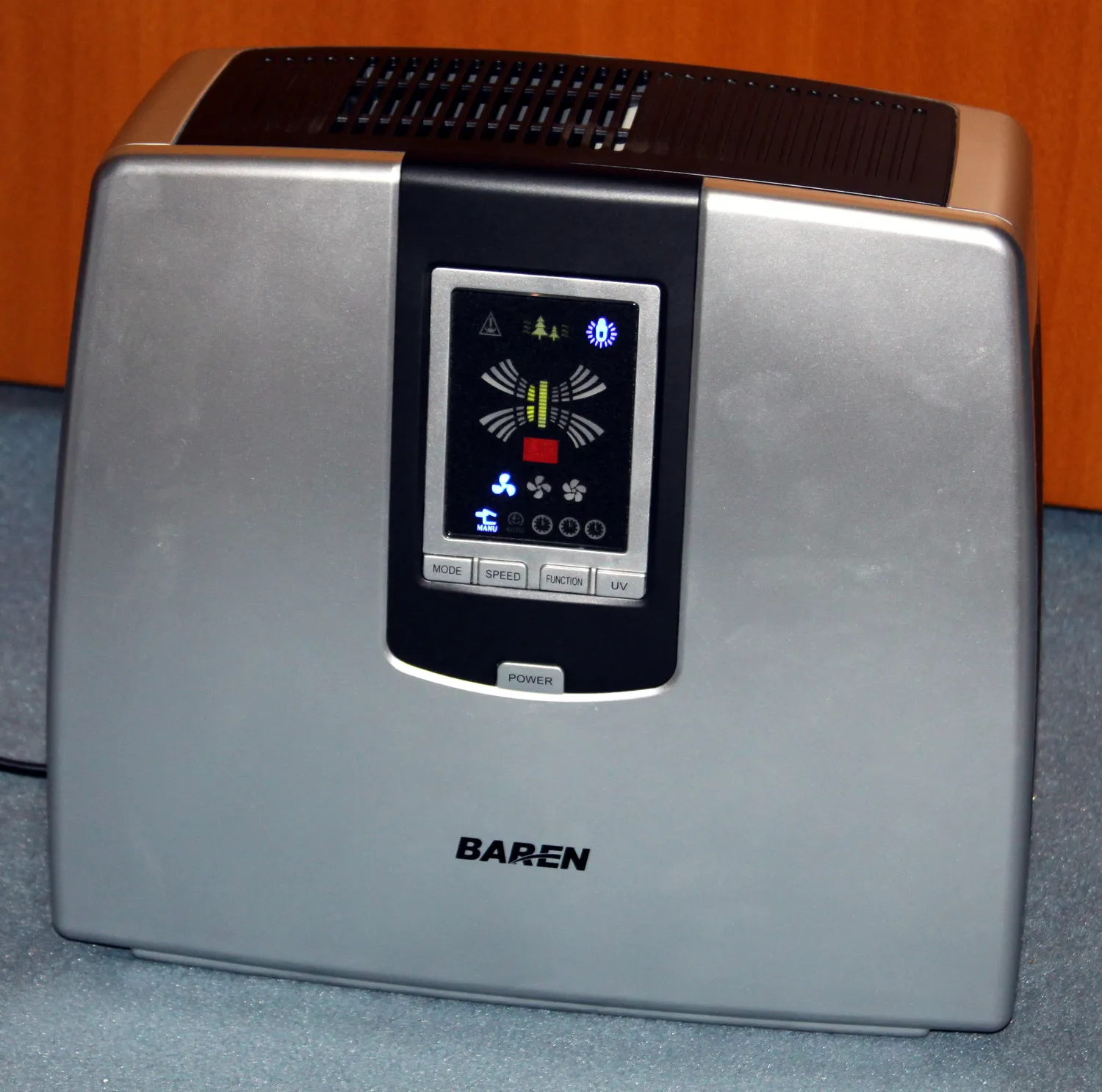
An air purifier cleans indoor air by pulling it through filters. Image credit Morn / Wikimedia Commons
Pollution is harmful materials that get into the air, water, or land. Pollution can make people sick and hurt plants and animals. The good news is that people can make choices to reduce pollution and protect our environment.
One important way to reduce pollution is by using cleaner energy sources. Energy sources are things that give us power to run cars, heat homes, and make electricity. Some energy sources, like coal and gasoline, create a lot of pollution when we burn them. Renewable energy sources like solar power (from the sun) and wind power create much less pollution. When people choose to use solar panels on their homes or support wind farms, they help reduce air pollution.
Another way to reduce pollution is by improving technology. Engineers design better machines and vehicles that produce fewer emissions, which are gases and particles released into the air. For example, newer cars use less gasoline and release less pollution than older cars. Factories can also use special filters to clean smoke before it goes into the air.
People can also reduce pollution by making smart choices about waste. Reducing means using less stuff in the first place. Reusing means using things again instead of throwing them away. Recycling means turning old materials into new products. When we reduce, reuse, and recycle, less trash ends up in landfills and oceans, which helps keep our planet cleaner and healthier for everyone.
What is pollution?
Harmful materials in air, water, or landClean energy from the sunA type of renewable energyA way to recycle materials
Which energy source creates less pollution?
Coal and gasolineSolar and wind powerOld cars and trucksFactory smoke
What are emissions?
Special filters for factoriesSolar panels on homesGases and particles released into airMaterials we can recycle
How does improved technology reduce pollution?
It makes cars use more gasolineIt creates more emissions from factoriesIt makes machines produce fewer emissionsIt increases the amount of trash
Why does recycling help reduce pollution?
It uses more energy sourcesIt keeps trash out of landfillsIt creates more emissionsIt makes pollution worse
What happens when people use solar panels?
They create more air pollutionThey use more coal and gasolineThey help reduce air pollutionThey make more trash
Renewable energy sources will eventually run out.
TrueFalse
What does reducing mean?
Turning old materials into new productsUsing things again instead of throwing awayUsing less stuff in the first placeCleaning smoke from factories
Perfect For:
๐ฉโ๐ซ Teachers
โข Reading comprehension practice
โข Auto-graded assessments
โข Literacy skill development
๐จโ๐ฉโ๐งโ๐ฆ Parents
โข Reading practice at home
โข Comprehension improvement
โข Educational reading time
๐ Homeschoolers
โข Reading curriculum support
โข Independent reading practice
โข Progress monitoring
Reading Features:
๐
Reading Passage
Engaging fiction or nonfiction text
โ
Comprehension Quiz
Auto-graded questions
๐
Instant Feedback
Immediate results and scoring
๐
Printable Version
Download for offline reading
๐
Read Aloud
Voice-over with word highlighting
Reviews & Ratings
No reviews yet. Be the first to share your experience!
Related Content
How Hydropower Works
This engaging 250-word science passage explains how hydropower works for Grade 4-5 students. Aligned with NGSS 4-ESS3-1,...
NGSS 4-ESS3-1
How We Can Use Less Energy
This engaging 250-word science passage for Grade 4-5 students explores how people can reduce the environmental impact of...
NGSS 4-ESS3-1
How Mining Affects the Land
This comprehensive 250-word reading passage helps Grade 4-5 students understand the environmental impacts of mining oper...
NGSS 4-ESS3-1
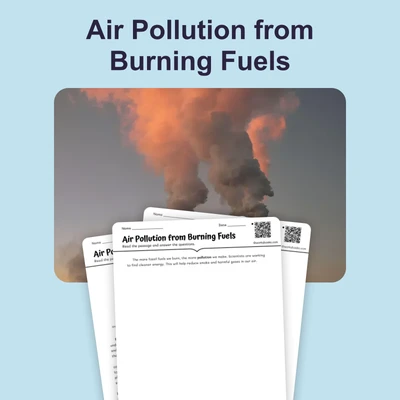
Air Pollution from Burning Fuels
This comprehensive science passage on air pollution is designed for Grade 4-5 students and aligns with NGSS 4-ESS3-1 sta...
NGSS 4-ESS3-1
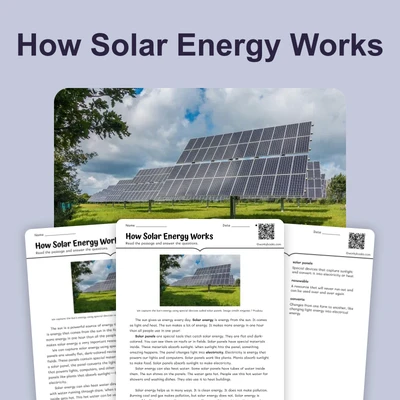
How Solar Energy Works
This engaging 250-word science passage explains how solar energy works for Grade 4-5 students. The reading explores how ...
NGSS 4-ESS3-1
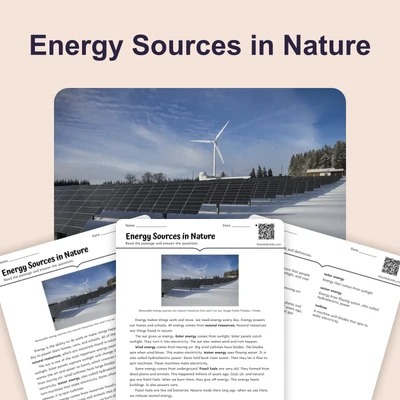
Energy Sources in Nature
This engaging 250-word science passage for Grade 4-5 students explores Energy Sources in Nature, aligned with NGSS stand...
NGSS 4-ESS3-1
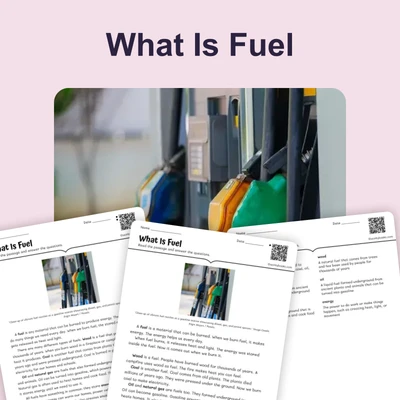
What Is Fuel
This engaging 250-word science passage introduces Grade 4-5 students to the concept of fuel as any material that stores ...
NGSS 4-ESS3-1
Renewable vs Nonrenewable
This comprehensive 250-word passage helps Grade 4-5 students understand the critical difference between renewable and no...
NGSS 4-ESS3-1
How We Use Coal for Energy
This comprehensive 250-word reading passage introduces fourth-grade students to coal as an energy resource, aligned with...
NGSS 4-ESS3-1
Biomass Energy
This engaging Grade 4-5 science passage explains biomass energy and how it works as a renewable energy source. Students ...
NGSS 4-ESS3-1
How Wind Energy Works
This 250-word reading passage introduces fourth-grade students to wind energy and how it works, aligned with NGSS standa...
NGSS 4-ESS3-1
How We Use Oil for Energy
This 250-word reading passage aligns with NGSS standard 4-ESS3-1 and introduces fourth-grade students to oil as a vital ...
NGSS 4-ESS3-1
How We Use Natural Gas for Energy
This 250-word reading passage introduces fourth-grade students to natural gas as an important energy resource. Aligned w...
NGSS 4-ESS3-1
How Are Fossil Fuels Formed
This 250-word reading passage introduces fourth-grade students to the formation of fossil fuels, aligned with NGSS stand...
NGSS 4-ESS3-1
Where Do We Find Fossil Fuels
This Grade 4 Earth Science reading passage aligns with NGSS standard 4-ESS3-1 and introduces students to the locations a...
NGSS 4-ESS3-1
Why Fossil Fuels Run Out
This 250-word reading passage introduces fourth-grade students to the concept of nonrenewable energy resources, specific...
NGSS 4-ESS3-1
Benefits of Renewable Energy
This 250-word reading passage introduces fourth-grade students to the benefits of renewable energy sources aligned with ...
NGSS 4-ESS3-1
Challenges of Renewable Energy
This 250-word reading passage introduces fourth-grade students to the challenges of renewable energy sources, aligned wi...
NGSS 4-ESS3-1
How Energy Use Affects the Environment
This 250-word informational reading passage aligns with NGSS standard 4-ESS3-1 and introduces fourth-grade students to t...