Climate Change in Sub-Saharan Africa
Interactive passage with audio narration, comprehension questions, and printable PDF.
By completing this purchase you agree to our Terms of Use and Privacy Policy. Your subscription renews automatically until you cancel. You can cancel anytime from your account settings. All sales are final and non-refundable. Digital content is available for download in your account immediately upon purchase.
What's included
Climate Change in Sub-Saharan Africa preview and details
About this printable Climate Change in Sub-Saharan Africa science reading passage, NGSS-aligned (Grades 5-8)
Sample passage and quiz from Climate Change in Sub-Saharan Africa
Reading passage and comprehension quiz preview
Climate Change in Sub-Saharan Africa
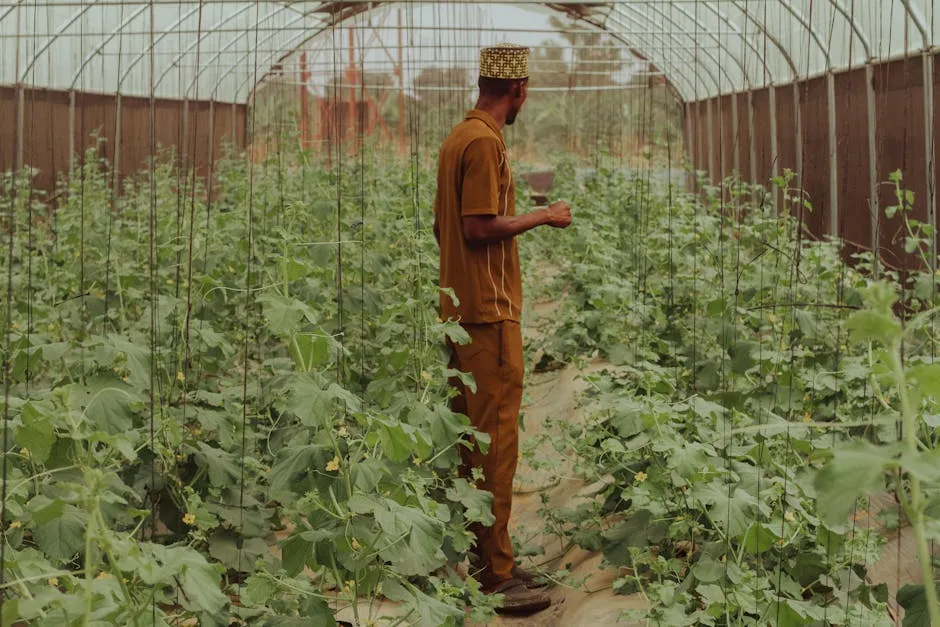
"A man inspects the growth of plants in a modern greenhouse in Zaria, Nigeria." by Muhammad Zubair / Pexels.
Sub-Saharan Africa produces less than four percent of global greenhouse gas emissions, yet the region experiences some of the most severe impacts of climate change. Evidence shows that rising temperatures and shifting weather patterns threaten millions of people across this vast region. Scientists observe that this creates a significant imbalance between who causes climate change and who suffers most from its effects.
Much of Sub-Saharan Africa depends on rain-fed agriculture, meaning farmers rely entirely on seasonal rains rather than irrigation systems. When rainfall patterns shift or fail, crops cannot grow properly. The Sahel region, a semi-arid belt stretching across Africa just south of the Sahara Desert, faces particularly harsh challenges. Droughts in this area can last for months or even years. Rising temperatures make these dry periods worse by increasing water evaporation from soil and plants. These changes reduce crop yields and threaten food security for communities that depend on farming for survival.
Climate change also affects water supplies across the region. Many communities rely on rivers, lakes, and seasonal rainfall for drinking water and livestock. When droughts extend longer than usual, water sources dry up. This forces people to travel farther for water or migrate to areas with better resources. In 2011, severe drought across the Horn of Africa affected more than 13 million people. Scientists explain that climate change can increase the frequency and intensity of such extreme weather events.
Despite these challenges, Sub-Saharan Africa demonstrates remarkable resilience and innovation. Farmers across the region plant drought-resistant crop varieties that need less water. Community groups lead large-scale tree-planting projects to restore degraded land and improve soil quality. These trees help hold moisture in the ground and provide shade that cools the surrounding area. Additionally, many African nations invest in solar energy and other renewable power sources. Solar panels work especially well in regions with abundant sunlight, providing clean energy without producing greenhouse gases.
Understanding climate change in Sub-Saharan Africa matters because it shows how environmental problems affect different regions unequally. The people who contribute least to global emissions face some of the greatest risks. However, their innovative responses offer valuable lessons in adaptation and sustainability. These solutions can help communities worldwide prepare for a changing climate.
Interesting Fact: The Great Green Wall project aims to plant a 8,000-kilometer belt of trees across Africa's Sahel region. This ambitious effort can restore 100 million hectares of degraded land and help millions of people adapt to climate change.
Comprehension quiz (10 questions)
1. What percentage of global greenhouse gas emissions does Sub-Saharan Africa produce?
2. What does rain-fed agriculture mean?
3. How did the 2011 drought in the Horn of Africa demonstrate climate change impacts?
4. Based on the passage, what is one way communities in Sub-Saharan Africa are adapting to climate change?
5. What does the word 'resilience' mean in the context of this passage?
6. Why does rising temperature make droughts worse in the Sahel region?
7. What can you infer about the relationship between greenhouse gas emissions and climate impacts based on this passage?
8. How might the Great Green Wall project help communities adapt to climate change?
9. True or False: Solar energy works especially well in Sub-Saharan Africa because the region has abundant sunlight.
10. True or False: The passage suggests that Sub-Saharan Africa has no solutions to climate change and can only wait for help from other regions.
Perfect for the way you teach
- Build comprehension skills
- Auto-graded quiz
- Differentiated reading
- Read together at home
- Improve fluency
- Quiet reading time
- Reading curriculum support
- Independent practice
- Track Lexile growth