Coastal Communities and Sea Level Rise
Interactive passage with audio narration, comprehension questions, and printable PDF.
By completing this purchase you agree to our Terms of Use and Privacy Policy. Your subscription renews automatically until you cancel. You can cancel anytime from your account settings. All sales are final and non-refundable. Digital content is available for download in your account immediately upon purchase.
What's included
Coastal Communities and Sea Level Rise preview and details
About this printable Coastal Communities and Sea Level Rise science reading passage, NGSS-aligned (Grades 5-8)
Sample passage and quiz from Coastal Communities and Sea Level Rise
Reading passage and comprehension quiz preview
Coastal Communities and Sea Level Rise
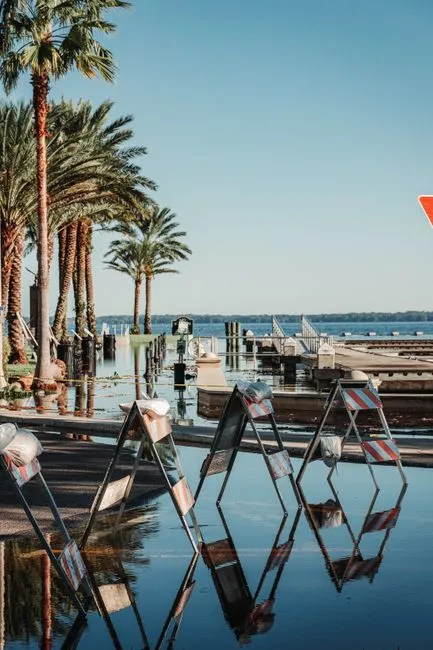
Rising seas create multiple problems for coastal areas. Higher water levels cause more frequent flooding during normal high tides. Image by Connor Scott McManus / Pexels.
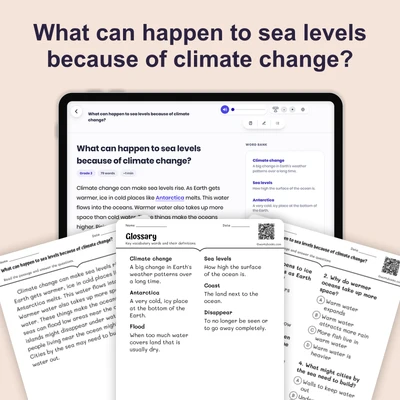
Hundreds of millions of people live in coastal communities around the world. These communities face a growing challenge as ocean levels continue to rise. Sea level rise occurs when ocean water expands as it warms and when glaciers and ice sheets melt. Evidence shows that global sea levels have risen about eight inches since 1880. Scientists explain that this rise is accelerating due to climate change.
Rising seas create multiple problems for coastal areas. Higher water levels cause more frequent flooding during normal high tides. Coastal erosion speeds up as waves reach farther inland and wear away beaches and cliffs. Storm surges, the abnormal rise in water during storms, can now push much deeper into communities. Salt water may also seep into underground freshwater supplies through a process called saltwater intrusion. When this happens, drinking water becomes contaminated and farmland can no longer support crops.
Communities must make difficult decisions about how to respond. One approach involves building walls, levees, and other barriers to hold back the ocean. This strategy can protect valuable property but requires significant money and ongoing maintenance. A second option is adaptation, where people raise buildings on stilts, improve drainage systems, and modify structures to withstand flooding. The third choice, called managed retreat, involves moving people and buildings away from the coast entirely. This option can be emotionally difficult because people must leave their homes and communities.
The impacts of sea level rise affect different populations unequally. Low-lying Pacific Island nations like Tuvalu and Kiribati face the possibility that rising water may cover much of their land. In Bangladesh, millions of people live in coastal areas less than ten feet above sea level. Poorer communities often lack the resources to build protective barriers or relocate. Scientists observe that these vulnerable populations contribute least to climate change but experience its effects most severely.
Understanding sea level rise matters because coastal zones are home to major cities, important ecosystems, and critical infrastructure. The choices communities make today will shape how millions of people live in the future. Addressing this challenge requires combining scientific knowledge with careful planning and consideration of social justice.
Interesting Fact: Some coastal cities are exploring floating architecture and amphibious buildings that can rise and fall with water levels, providing a new way to adapt to changing seas.
Comprehension quiz (10 questions)
1. What are the two main causes of sea level rise mentioned in the passage?
2. According to the passage, how much have global sea levels risen since 1880?
3. What is saltwater intrusion?
4. Which term describes the planned relocation of people away from coastal areas?
5. Why does the passage suggest that sea level rise affects populations unequally?
6. What is one way communities can adapt to rising sea levels without moving away?
7. Based on the passage, what can be inferred about the relationship between climate change and sea level rise?
8. Which countries mentioned in the passage face the possibility of being covered by rising water?
9. True or False: Building protective barriers is an inexpensive solution that requires little maintenance.
10. True or False: The passage states that vulnerable coastal populations often contribute the least to climate change but experience its effects most severely.
Perfect for the way you teach
- Build comprehension skills
- Auto-graded quiz
- Differentiated reading
- Read together at home
- Improve fluency
- Quiet reading time
- Reading curriculum support
- Independent practice
- Track Lexile growth