What Is Complex Inheritance
Interactive passage with audio narration, comprehension questions, and printable PDF.
By completing this purchase you agree to our Terms of Use and Privacy Policy. Your subscription renews automatically until you cancel. You can cancel anytime from your account settings. All sales are final and non-refundable. Digital content is available for download in your account immediately upon purchase.
What's included
What Is Complex Inheritance preview and details
About this printable What Is Complex Inheritance science reading passage, NGSS-aligned (Grades 5-8)
Sample passage and quiz from What Is Complex Inheritance
Reading passage and comprehension quiz preview
Complex Inheritance Patterns
Inheritance is the process by which traits are passed from parents to offspring. While simple inheritance, like Mendel’s experiments with pea plants, follows clear dominant and recessive rules, many traits in nature do not fit this pattern. Scientists discovered complex inheritance patterns when they noticed that some offspring had traits that were blended, mixed, or varied in unexpected ways. Understanding these patterns helps us explain the diversity we observe in plants, animals, and humans.
Mechanisms of Complex Inheritance
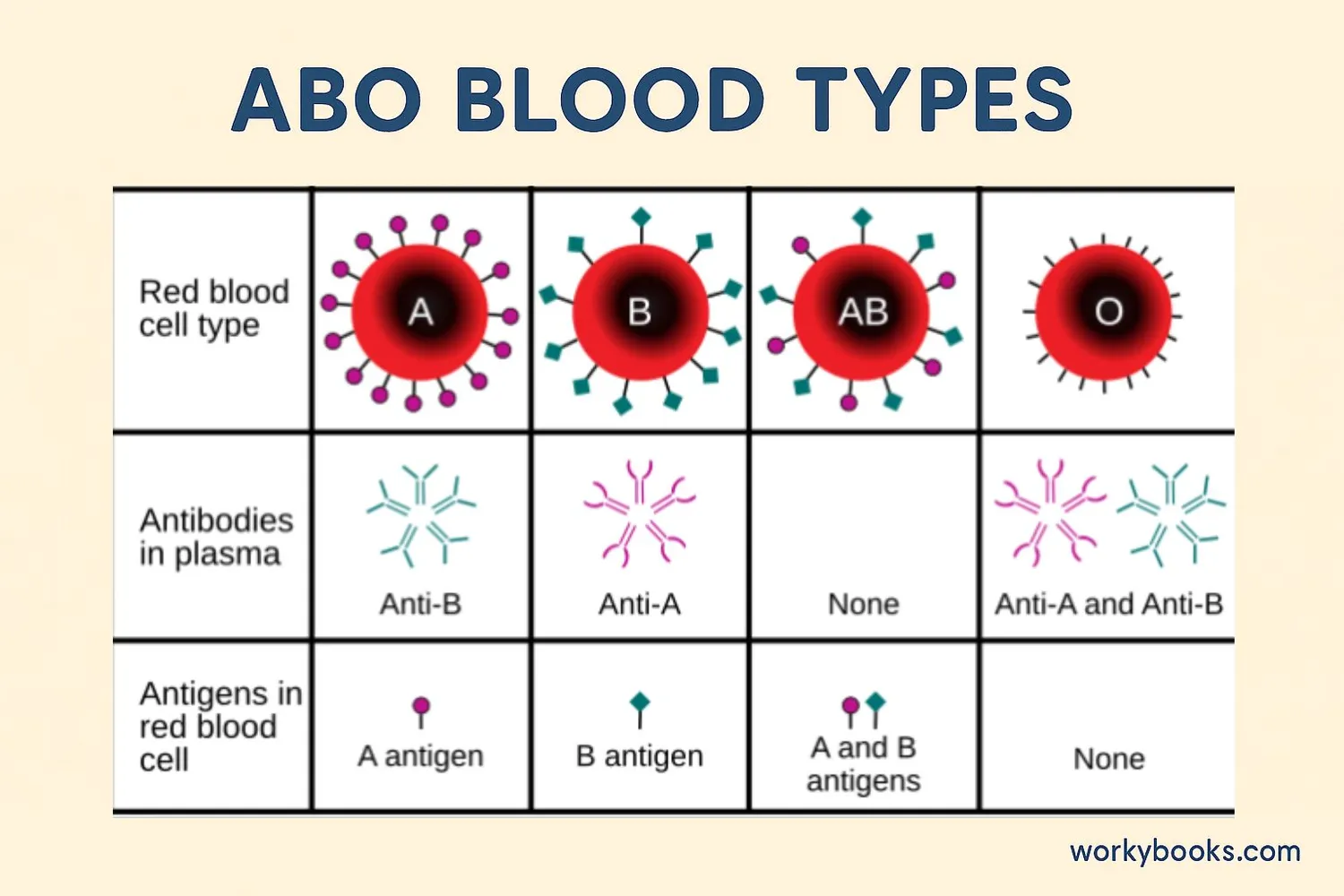
One type of complex inheritance is incomplete dominance. In incomplete dominance, neither allele is completely dominant. Instead, the heterozygote shows a blended phenotype. For example, when a red-flowered plant is crossed with a white-flowered plant, the offspring may have pink flowers. This blending occurs because both alleles partially contribute to the final trait. Another pattern is codominance, where both alleles are fully expressed in the heterozygote. In roan cattle, for instance, animals have both red and white hairs rather than a blend, resulting in a speckled appearance. Human blood type is another example. People with both A and B alleles (type AB) express both proteins equally on their red blood cells.
Multiple Alleles, Polygenic Traits, and Sex-Linkage
Some traits are controlled by multiple alleles. Although an individual has only two alleles for each gene, populations can have more than two forms. Human blood type is controlled by three alleles: A, B, and O. This creates four possible blood types: A, B, AB, and O. Some traits, like height, skin color, and eye color, are polygenic traits. These are influenced by several genes working together, resulting in a wide range of possible outcomes. Polygenic traits often show continuous variation, such as the many shades of human skin color. Another complex pattern is sex-linked inheritance. Some genes are located on the X chromosome. Since males have one X and one Y chromosome, they are more likely to express traits like color blindness and hemophilia if they inherit a single copy of the affected gene.
Real-World Applications and Broader Connections
Understanding complex inheritance patterns is important in medicine, agriculture, and society. Genetic counselors use this knowledge to help families understand inherited conditions. Plant breeders use incomplete dominance and codominance to create new flower colors or crop varieties. In humans, recognizing polygenic traits helps scientists study diseases influenced by multiple genes, such as diabetes. These patterns show how interactions between genes and chromosomes create the diversity of life. They also demonstrate how scientific thinking and research have expanded our understanding of genetics far beyond Mendel’s original observations.
Recognizing complex inheritance patterns allows scientists to predict traits more accurately and to develop new technologies for health and agriculture. These discoveries connect to the broader principle that biological systems are shaped by interactions among many parts, rather than by single genes acting alone.
Interesting Fact: The human ABO blood type system is used worldwide in medicine. About 40% of people have type O blood, which is considered a universal donor for transfusions.
Comprehension quiz (10 questions)
1. What is incomplete dominance?
2. Which statement best describes codominance?
3. What are multiple alleles?
4. Which example best shows a polygenic trait?
5. What is sex-linked inheritance?
6. What does the term 'heterozygote' mean in the passage?
7. Why do males have a higher chance of showing sex-linked traits like color blindness?
8. If a red-flowered plant and a white-flowered plant produce pink flowers, which inheritance pattern is this?
9. True or False: Polygenic traits are controlled by only one gene.
10. True or False: About 40% of people have type O blood.
Perfect for the way you teach
- Build comprehension skills
- Auto-graded quiz
- Differentiated reading
- Read together at home
- Improve fluency
- Quiet reading time
- Reading curriculum support
- Independent practice
- Track Lexile growth