Theory of Plate Tectonics
Interactive passage with audio narration, comprehension questions, and printable PDF.
By completing this purchase you agree to our Terms of Use and Privacy Policy. Your subscription renews automatically until you cancel. You can cancel anytime from your account settings. All sales are final and non-refundable. Digital content is available for download in your account immediately upon purchase.
What's included
Theory of Plate Tectonics preview and details
About this printable Theory of Plate Tectonics science reading passage, NGSS-aligned (Grades 5-8)
Sample passage and quiz from Theory of Plate Tectonics
Reading passage and comprehension quiz preview
Theory of Plate Tectonics
Earthquakes shake cities, volcanoes erupt, and mountain ranges rise high above the land. These dramatic changes to Earth’s surface are explained by the modern Theory of Plate Tectonics. Plate tectonics is the unifying theory in earth science that describes how Earth's outer shell, the lithosphere, is divided into a set of rigid plates. Understanding this theory helps scientists explain the locations of continents, the formation of oceans, and where most geologic activity occurs.
How Plates Move: Mechanisms and Interactions
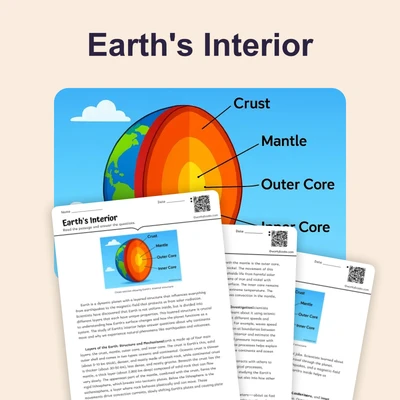
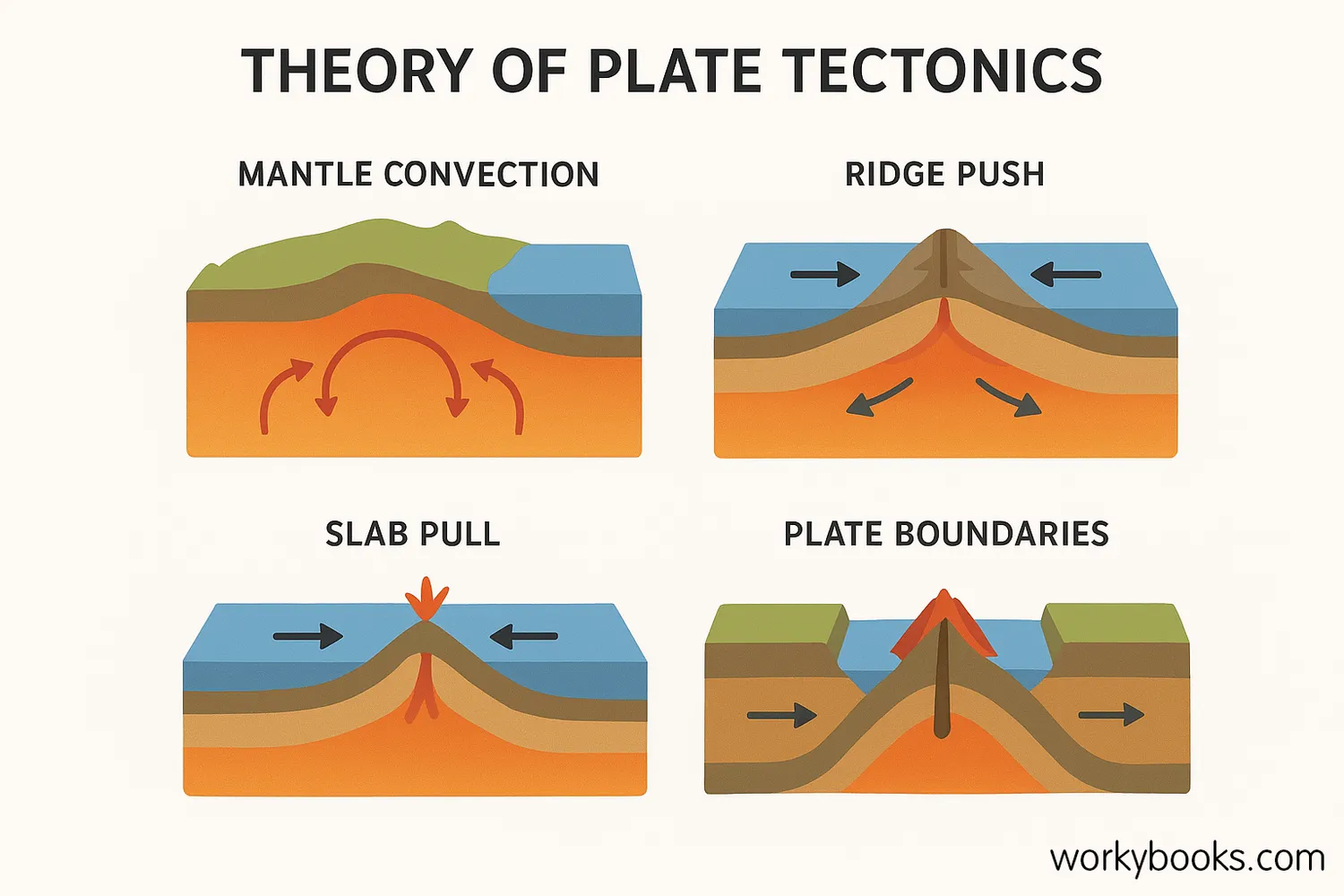
Earth’s lithosphere consists of the crust and the uppermost mantle, forming a layer about 100 kilometers thick. This layer is broken into approximately 15 major tectonic plates and many smaller ones. These plates “float” on the softer, hotter asthenosphere beneath them. The plates move slowly—typically 2 to 10 centimeters per year—about as fast as your fingernails grow. Plate motion is driven by several connected forces. Mantle convection occurs as heat from Earth’s interior causes hot rock to rise and cooler rock to sink, creating slow-moving currents. These currents drag plates along. At mid-ocean ridges, newly formed, hot, and less dense rock pushes plates apart in a process called ridge push. Where plates sink back into the mantle at subduction zones, the dense, cold edge of a plate pulls the rest down behind it—this is called slab pull.
Plate Boundaries: Where the Action Happens
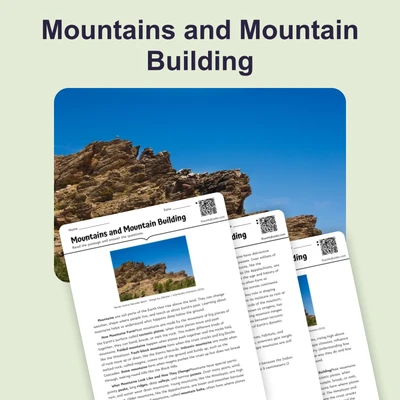
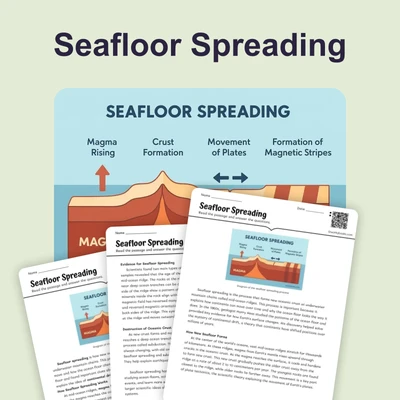
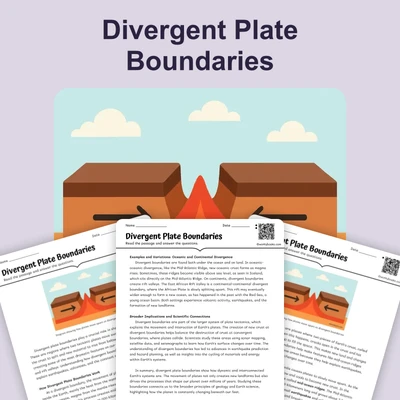
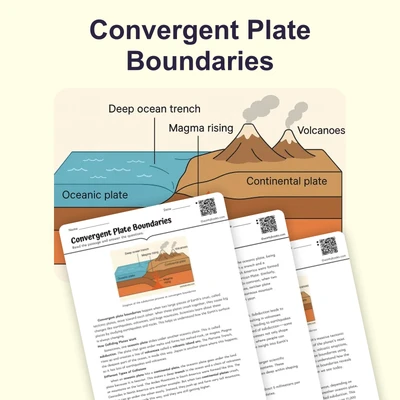
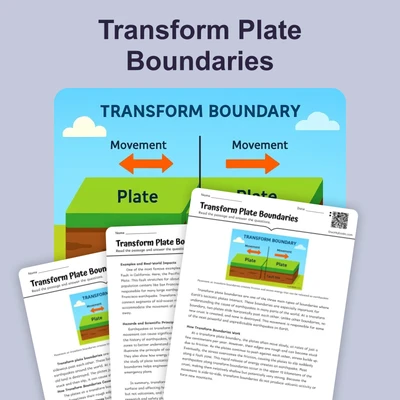
Most of Earth’s geologic activity is concentrated along plate boundaries, the edges where two plates meet. There are three main types: divergent boundaries, where plates move apart (like at the Mid-Atlantic Ridge, forming new ocean floor); convergent boundaries, where plates collide, causing mountain building or subduction (like the Andes Mountains or the Pacific Ring of Fire’s volcanoes); and transform boundaries, where plates slide past each other, often causing earthquakes (such as California’s San Andreas Fault). The distribution of earthquakes and volcanoes around the world matches up with plate boundaries, providing strong evidence for this theory. Scientists use GPS measurements, seismic data, and satellite images to track plate movements and study how plates interact.
Impacts and Importance of Plate Tectonics
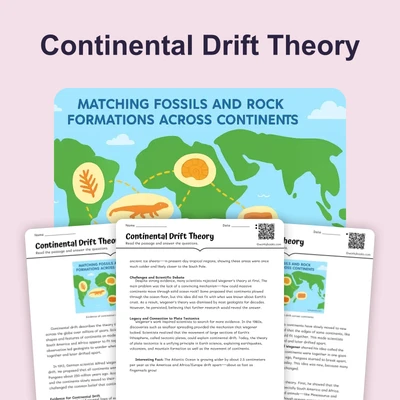
Plate tectonics is crucial for understanding Earth's history and predicting future changes. It explains why continents drift, how ocean basins open and close, and why mountain ranges form and erode. This theory also helps geologists locate valuable natural resources like minerals and fossil fuels that are often found near active plate boundaries. Plate tectonics connects with other earth systems, influencing climate over millions of years and shaping habitats for life. It also highlights the importance of scientific inquiry: the theory developed from clues like the fit of the continents, fossil records, and patterns of earthquakes and volcanoes. Scientific models and technology continue to improve our understanding of this dynamic planet.
Plate tectonics unifies ideas about how Earth changes over time. By revealing the hidden motion beneath our feet, it helps explain past events and prepares us for future geologic hazards. The study of plate tectonics is a powerful example of how scientific thinking can transform our understanding of the natural world.
Interesting Fact: The Himalayas, the world’s tallest mountains, are still rising by about 5 millimeters each year as the Indian and Eurasian plates continue to collide!
Comprehension quiz (10 questions)
1. What is the lithosphere made of?
2. How fast do tectonic plates typically move?
3. What does the process of mantle convection do?
4. What happens at a convergent plate boundary?
5. What is a slab pull?
6. What is the main cause of earthquakes along plate boundaries?
7. Which boundary creates new ocean floor?
8. Which of the following best describes the asthenosphere?
9. Plate tectonics explains the locations of continents. (True/False)
10. All geologic activity takes place far from plate boundaries. (True/False)
Perfect for the way you teach
- Build comprehension skills
- Auto-graded quiz
- Differentiated reading
- Read together at home
- Improve fluency
- Quiet reading time
- Reading curriculum support
- Independent practice
- Track Lexile growth