Reading PassagePremium

Could There Be Life on Mars

Interactive passage with audio narration, comprehension questions, and printable PDF.

No ratings yet
Grades 5–8ScienceElaEnglish · SpanishInteractive · Printable
Aligned toMS-ESS1-1
Just this resource
$1.50
One-time purchase
Best value
Unlock everything
$49.99$29.99/yr
40% off until Aug 1 — 10,000+ resources
Renews at $49.99/year.
Unlock above to use these actions

What's included

Reading passage
Audio narration
Comprehension quiz
Writing activity
Glossary & flashcards
Differentiated version
Spanish translation

Could There Be Life on Mars preview and details

About this printable Could There Be Life on Mars science reading passage, NGSS-aligned (Grades 5-8)

science,ela
Written by Workybooks TeamPublished by Workybooks
Preview

Sample passage and quiz from Could There Be Life on Mars

Reading passage and comprehension quiz preview

Could There Be Life on Mars
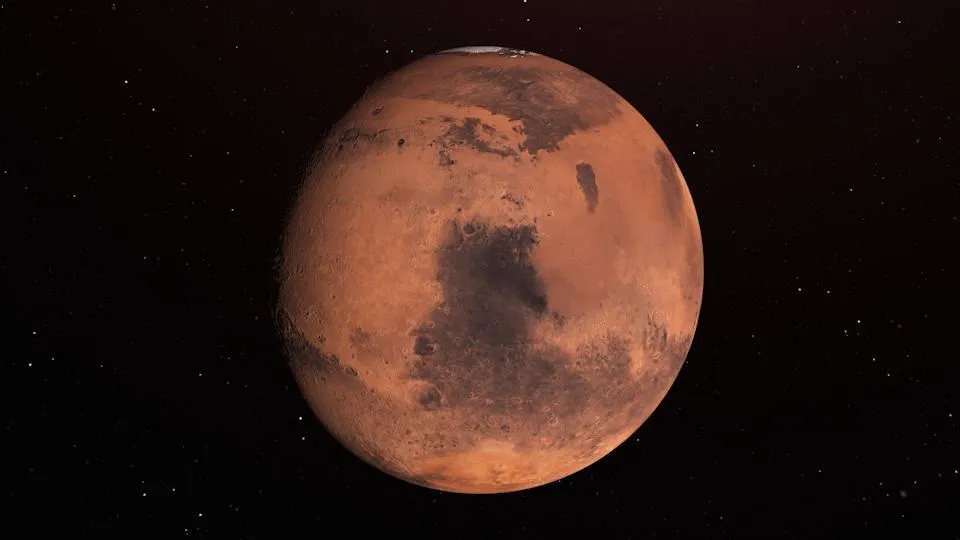
Water Ice Marked on Mars Globe (Illustration)
The annotated area of Mars in this illustration holds near-surface water ice that would be easily accessible for astronauts to dig up. "Water Ice Marked on Mars Globe (Illustration)" / NASA.

Could there be life on Mars? Scientists believe Mars may have supported life billions of years ago. Evidence shows the planet once had flowing rivers and large lakes. Mars also had a thicker atmosphere that could trap heat. These conditions were similar to early Earth, where life began. Today, scientists search for signs of ancient microbes that may have lived on Mars long ago.

Mars changed dramatically over time. The planet lost most of its atmosphere to space. Without a thick atmosphere, Mars could no longer hold heat or protect liquid water on its surface. The temperature dropped, and the water froze or evaporated. Mars became the cold, dry planet we observe today. Surface temperatures can reach minus 80 degrees Fahrenheit. However, scientists explain that liquid water may still exist deep underground where pressure and heat keep it from freezing.

NASA sends rovers to Mars to search for evidence of past life. The Perseverance rover landed in Jezero Crater in 2021. Scientists chose this location because it was once a lake bed. Rovers collect rock samples and analyze soil for chemical signs of ancient microbes. They look for fossils and organic molecules that living things leave behind. Perseverance uses special instruments to study rocks that formed in water billions of years ago.

Future missions will bring Mars samples back to Earth. Scientists can use powerful laboratory equipment to study these rocks in detail. They will search for biosignatures, which are chemical or physical signs that life once existed. This research helps scientists understand if Mars ever supported living organisms. It also helps them learn about conditions needed for life to develop on other planets. The search for life on Mars connects to understanding Earth's own history and the possibility of life elsewhere in the universe.

Interesting Fact: The Perseverance rover can collect up to 43 sample tubes of Martian rock and soil. These samples will remain sealed until a future mission retrieves them and brings them to Earth for analysis, possibly in the 2030s.

Comprehension quiz (10 questions)

1. What conditions did Mars have billions of years ago that were similar to early Earth?

Flowing rivers, large lakes, and a thicker atmosphere
Frozen oceans, thin atmosphere, and extreme cold
Active volcanoes, no water, and high temperatures
Dust storms, ice caps, and no atmosphere

2. Why did Mars lose the liquid water on its surface?

The water was absorbed by underground caves
The planet lost most of its atmosphere and could no longer hold heat or protect water
Volcanic eruptions evaporated all the water
The water turned into ice that never melted

3. What does the term 'biosignatures' mean in the context of the passage?

Signatures of famous biologists who study Mars
Chemical or physical signs that life once existed
Biological weapons found on Mars
Signs that show current life on Mars

4. According to the passage, where might liquid water still exist on Mars today?

In the polar ice caps on the surface
In large lakes visible from space
Deep underground where pressure and heat keep it from freezing
In the atmosphere as water vapor

5. Why did NASA choose Jezero Crater as the landing site for the Perseverance rover?

It was the flattest area on Mars for landing
It was once a lake bed where ancient life may have existed
It had the warmest temperatures on the planet
It was closest to Earth for communication

6. Based on the passage, what can scientists infer about the relationship between atmosphere and liquid water?

A thick atmosphere is necessary to trap heat and protect liquid water on a planet's surface
Liquid water can exist without any atmosphere
A thin atmosphere creates more liquid water
The atmosphere has no effect on liquid water

7. If scientists find organic molecules in Martian rocks, what would this suggest?

Mars currently has a thick atmosphere
Life may have once existed on Mars since organic molecules are associated with living things
Mars will soon have flowing rivers again
The rocks came from Earth

8. How does studying Mars help scientists understand Earth?

It helps them learn about conditions needed for life and Earth's own history
It proves that Earth will become like Mars
It shows that Earth has no atmosphere
It demonstrates that life cannot exist anywhere

9. True or False: Mars currently has flowing rivers and lakes on its surface.

True
False

10. True or False: The Perseverance rover uses special instruments to study rocks that formed in water billions of years ago.

True
False
Who it's for

Perfect for the way you teach

Teachers
  • Build comprehension skills
  • Auto-graded quiz
  • Differentiated reading
Parents
  • Read together at home
  • Improve fluency
  • Quiet reading time
Homeschoolers
  • Reading curriculum support
  • Independent practice
  • Track Lexile growth
Topics

Reviews & Ratings

No reviews yet. Be the first to share your experience!

More reading you might love

20 more
Passage
What is Solar Radiation - reading educational content
Grades 3–7

What is Solar Radiation

science · MS-ESS1-1

Free
Passage
How Incoming Solar Radiation Changes with Latitude - reading educational content
Grades 3–7

How Incoming Solar Radiation Changes with Latitude

science · MS-ESS1-1

$1.50
Passage
Tides and Tidal Forces - reading educational content
Grades 5–8

Tides and Tidal Forces

science · MS-ESS1-1

$1.50
Passage
The Night Sky - reading educational content
Grades 5–8

The Night Sky

earth science · MS-ESS1-1

$1.50
Passage
Ancient Astronomy - reading educational content
Grades 5–8

Ancient Astronomy

earth science · MS-ESS1-1

$1.50
Passage
Tools of Modern Astronomy - reading educational content
Grades 5–8

Tools of Modern Astronomy

earth science · MS-ESS1-1

$1.50
Passage
How Astronomy Became a Science - reading educational content
Grades 5–8

How Astronomy Became a Science

earth science · MS-ESS1-1

$1.50
Passage
Earth's Rotation - reading educational content
Grades 5–8

Earth's Rotation

science · MS-ESS1-1

$1.50
Passage
Earth's Revolution - reading educational content
Grades 5–8

Earth's Revolution

science · MS-ESS1-1

$1.50
Passage
Why We Have Seasons - reading educational content
Grades 5–8

Why We Have Seasons

science · MS-ESS1-1

$1.50
Passage
Earth's Seasons - reading educational content
Grades 5–8

Earth's Seasons

science · MS-ESS1-1

$1.50
Passage
The Moon's Characteristics - reading educational content
Grades 5–8

The Moon's Characteristics

science · MS-ESS1-1

$1.50
Passage
The Sun's Characteristics - reading educational content
Grades 5–8

The Sun's Characteristics

science · MS-ESS1-1

$1.50
Passage
What Is a Galaxy? - reading educational content
Grades 5–8

What Is a Galaxy?

earth science · MS-ESS1-1

$1.50
Passage
The Milky Way: Our Home Galaxy - reading educational content
Grades 5–8

The Milky Way: Our Home Galaxy

earth science · MS-ESS1-1

$1.50
Passage
Types of Galaxies - reading educational content
Grades 5–8

Types of Galaxies

earth science · MS-ESS1-1

$1.50
Passage
The Expanding Universe - reading educational content
Grades 5–8

The Expanding Universe

earth science · MS-ESS1-1

$1.50
Passage
The Big Bang - reading educational content
Grades 5–8

The Big Bang

earth science · MS-ESS1-1

$1.50
Passage
Dark Matter and Dark Energy - reading educational content
Grades 5–8

Dark Matter and Dark Energy

earth science · MS-ESS1-1

$1.50
Passage
How Do Stars Die - reading educational content
Grades 5–8

How Do Stars Die

science · MS-ESS1-1

$1.50
Copyright © 2026 Workybooks. Made with ♥ in California.