D-Day: The Liberation of Europe Begins — Reading Comprehension
Rate this
Premium Resource
Present
Present in classroom. No work saved
Assign
Classroom with student accounts, Track progress
Quick Play
No student accounts, assign with a link
Grades
5
6
7
8
PRINT+DIGITAL RESOURCE
This learning resource is available in interactive and printable formats. The interactive worksheet can be played online and assigned to students. The Printable PDF version can be downloaded and printed for completion by hand.
This comprehensive history reading passage focuses on D-Day, the Allied invasion of Normandy on June 6, 1944, which marked the turning point in World War II for the liberation of Europe from Nazi rule. Students will analyze the causes and effects of this major event, learn about military strategies, geographic importance, and the roles of soldiers and leaders from multiple nations. The passage is supported by a glossary, timeline, multiple-choice and writing activities, and graphic organizers to deepen historical understanding. Audio read-aloud and full Spanish translation are included to support diverse learners. This resource is aligned with CA HSS 7.10 and Common Core RI.6-8 standards, emphasizing analysis of primary sources, cause and effect, and historical significance. Ideal for building critical thinking and literacy skills in history classrooms.
CONTENT PREVIEW
Expand content preview
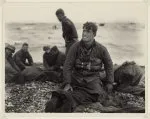
"D-Day Rescue, Omaha Beach" by Rosenblum, Walter, 1919- / Library of Congress.
On June 6, 1944, the largest seaborne invasion in history began as Allied forces landed on the beaches of Normandy, France. This day, known as D-Day, marked a critical turning point in World War II. The Allies, a coalition of countries including the United States, Britain, and Canada, launched a massive assault to liberate Western Europe from Nazi German control.
The planning for D-Day was vast and complex. Allied leaders, such as General Dwight D. Eisenhower, led months of secret preparations. They gathered intelligence from sources like the French Resistance, who provided maps and information about German defenses. The Allies assembled over 156,000 soldiers, 5,000 ships, and 11,000 aircraft. Normandy was chosen because its location offered a chance to surprise the Germans, who expected an attack further north at Pas de Calais. The success of the operation depended heavily on coordination among Allied forces and careful deception campaigns, such as Operation Fortitude, which tricked the Germans about the invasion's true location.
At dawn on June 6, Allied troops stormed five beaches code-named Utah, Omaha, Gold, Juno, and Sword. Soldiers faced fierce resistance from German forces, who had built bunkers, barbed wire, and mines along the coast. At Omaha Beach, American troops struggled under heavy fire, suffering nearly 2,000 casualties in the first hours. Despite these challenges, the Allies pressed forward, using specialized equipment like amphibious tanks and even "Hobart's Funnies," modified vehicles designed to clear obstacles. Firsthand accounts, such as the diary of Sergeant Bill Millin, who famously played bagpipes during the British landings, reveal the courage and chaos of that day.
The successful landings on D-Day were only the beginning. In the days that followed, the Allies established a foothold in Normandy, capturing key towns and pushing inland. The invasion helped to open a Western Front against Nazi Germany, forcing Adolf Hitler to divert troops from the east. This event marked a significant turning point in the war, leading to the liberation of Paris by August 1944 and, eventually, to the defeat of Nazi Germany in May 1945. D-Day also demonstrated the power of Allied cooperation, from military leaders to ordinary soldiers and civilians who contributed to the effort.
D-Day holds lasting significance because it shaped the course of world history. The operation showed how geography, technology, and human bravery combined to change the fate of Europe. It also highlights the importance of alliances and the collective struggle for freedom against tyranny. D-Day reminds us that major historical events often require careful planning, international collaboration, and tremendous sacrifice.
This invasion connects to broader themes in world history, such as the impact of war on societies, the struggle for freedom, and the role of cooperation between nations in times of crisis.
Interesting Fact: The term "D-Day" is military shorthand for the day an operation begins, but June 6, 1944, became so famous that "D-Day" is now mostly used to refer to the Normandy invasion.
When did D-Day happen?
June 6, 1944May 8, 1945July 4, 1943August 15, 1944
Where did the Allies land on D-Day?
Normandy, FranceBerlin, GermanyRome, ItalyLondon, England
Who was the main Allied commander?
Dwight D. EisenhowerAdolf HitlerWinston ChurchillJoseph Stalin
Why was Normandy chosen for the invasion?
It surprised the GermansIt was close to BerlinIt had no defensesIt was a small area
What did Operation Fortitude do?
Tricked the GermansSupplied weaponsBuilt shipsDefended Paris
How did D-Day affect WWII?
It opened a Western FrontIt ended the war instantlyIt helped JapanIt caused a truce
D-Day was a turning point in WWII.
TrueFalse
What does 'coalition' mean?
Group working togetherA secret planA type of shipA military leader
Perfect For:
👩🏫 Teachers
• Reading comprehension practice
• Auto-graded assessments
• Literacy skill development
👨👩👧👦 Parents
• Reading practice at home
• Comprehension improvement
• Educational reading time
🏠 Homeschoolers
• Reading curriculum support
• Independent reading practice
• Progress monitoring
Reading Features:
📖
Reading Passage
Engaging fiction or nonfiction text
❓
Comprehension Quiz
Auto-graded questions
📊
Instant Feedback
Immediate results and scoring
📄
Printable Version
Download for offline reading
🔊
Read Aloud
Voice-over with word highlighting
Reviews & Ratings
No reviews yet. Be the first to share your experience!
Related Content
Events Leading to World War II
This passage explores the complex causes of World War II, focusing on the interwar period, the Treaty of Versailles, the...
Causes of World War I
This comprehensive history reading passage explores the complex causes of World War I, focusing on alliances, nationalis...
World War I Impact on America
This engaging history reading passage explores World War I's impact on society and culture, highlighting key changes in ...
Leaders and Decisions in World War II
This passage explores the major leaders of World War II and the critical decisions they made that shaped the course of g...
American Life During World War II
This history reading passage explores life on the home front during World War II, focusing on the experiences of ordinar...
War Bonds: Financing World War II
This passage examines the critical role of war bonds in financing World War II, focusing on how the U.S. government enco...
D2.HIS.2.3-5D2.HIS.3.3-5RI.4.3RI.4.4
Trench Warfare in World War I
This comprehensive history reading passage explores the realities of life in the trenches during World War I, aligned to...
Russia Exits World War I
This comprehensive world history reading passage explores the Russian Revolution and how Russia exited World War I. Stud...
America Enters World War II
This history reading passage analyzes America’s entry into World War II, focusing on the causes, perspectives, and conse...
D2.HIS.2.3-5D2.HIS.3.3-5RI.4.3RI.4.4
World War II Home Front
This rigorous U.S. history reading passage explores the complexities and challenges of the World War II Home Front, focu...
D2.HIS.2.3-5D2.HIS.3.3-5RI.6.3RI.6.4
The Western Front in World War I
This engaging history reading passage explores the major battles of the Western Front during World War I, focusing on th...
Anne Frank's Message to the World
This reading passage explores the life and legacy of Anne Frank, a Jewish teenager who documented her experiences during...
Allied Strategy in the Pacific War
This comprehensive history reading passage dives into the strategic 'island hopping' campaign of World War II in the Pac...
Major Battles Change the War's Course
This engaging history reading passage examines three crucial turning points of World War II: the Battles of Stalingrad, ...
Japan Surrenders: World War II Ends
This comprehensive history reading passage examines the pivotal moment when Japan surrendered in August 1945, bringing W...
D2.HIS.2.3-5D2.HIS.3.3-5RI.4.3RI.4.4
America Enters the War: 1917
This comprehensive history reading passage explores America’s entry into World War I in 1917, examining the causes, even...
Black History Month Word Search
RF.4.3RF.5.3L.4.4L.5.4
Worky World! Capitalize Locations
This capitalization sheet will help students to practice capitalizing geographic locations. Illustrated on the sheet is ...
L.2.2.AL.2.2
Word Families: —ight Words
This word families worksheet focuses on -ight words and is designed to help 4th-grade students practice their reading an...
RF.4.4
The Atomic Bomb Ends the War
This informative passage explores the role of the atomic bomb in ending World War II, focusing on the events leading up ...