This learning resource is available in interactive and printable formats. The interactive worksheet can be played online and assigned to students. The Printable PDF version can be downloaded and printed for completion by hand.
This Grade 4-5 science passage, 'What Dinosaur Fossils Teach Us,' introduces students to the science of fossils and how they help us understand dinosaurs and ancient life. Aligned with NGSS standards, the passage explains important concepts like fossilization, paleontologists, and sedimentary rock, using clear language and real-world examples. Students will learn key vocabulary, answer comprehension questions, and complete writing activities that encourage deeper thinking about scientific processes and connections to everyday life. Ideal for classrooms and home learning, this resource also features audio integration for accessibility. Keywords include dinosaur fossils, paleontology, science, fossilization, and NGSS. Whether you are teaching earth science or looking for engaging reading material, this passage is perfect for developing scientific literacy in upper elementary students.
CONTENT PREVIEW
Expand content preview
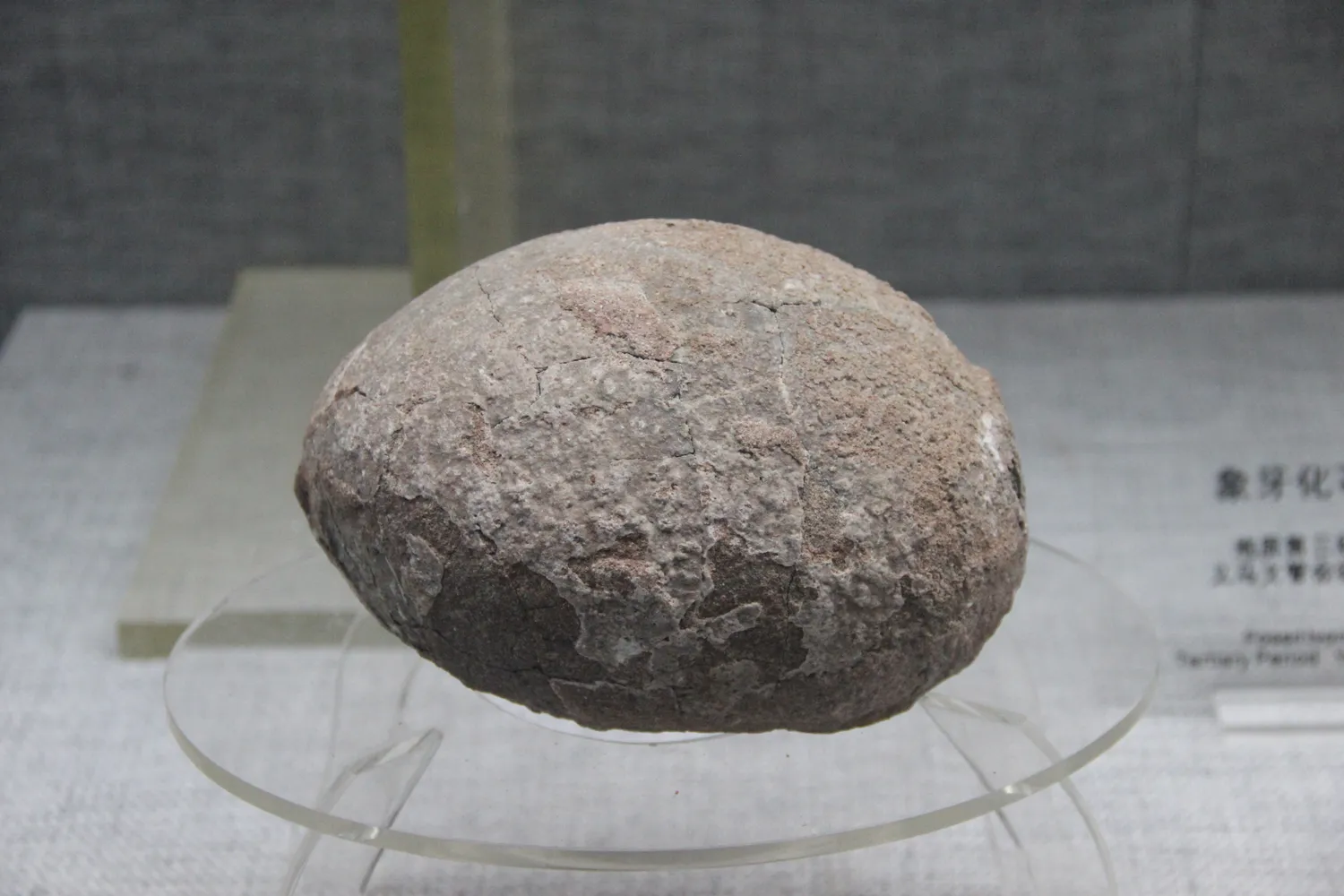
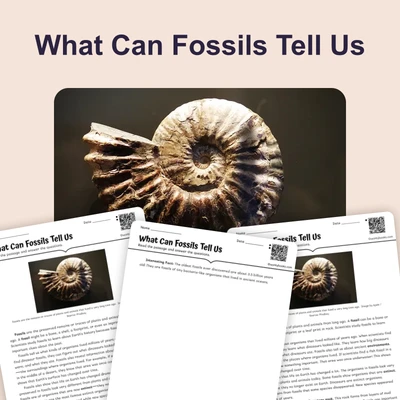
Paleolithic Gallery, Sanmenxia City Museum, Henan, China. Complete indexed photo collection at WorldHistoryPics.com. Gary Todd / Wikimedia Commons
Fossils are the preserved remains or traces of organisms that lived long ago. Dinosaurs are some of the most famous fossil organisms that scientists study today. These ancient reptiles lived millions of years before humans existed, and fossils are the only way we can learn about them.
Dinosaur fossils come in many different forms. Paleontologists—scientists who study fossils—have found dinosaur bones, teeth, claws, and eggs buried in rock layers. They have even discovered trace fossils, which are evidence of dinosaur activity rather than body parts. Footprints pressed into ancient mud and later turned to stone are examples of trace fossils. These footprints can show how dinosaurs walked and how fast they moved.
Scientists have found dinosaur fossils on every continent, including Antarctica. This tells us that dinosaurs lived all over the world. By carefully studying dinosaur bones, paleontologists can figure out how big a dinosaur was, what it ate, and how it moved. For example, sharp teeth suggest a dinosaur ate meat, while flat teeth indicate it ate plants. Long leg bones show that some dinosaurs could run quickly.
The last dinosaurs went extinct—meaning they all died out—about 66 million years ago. Dinosaur fossils prove that very different kinds of animals lived on Earth long before humans appeared. They help us understand how life on our planet has changed over time.
Interesting Fact: The largest dinosaur footprint ever found measures over 5 feet long! It belonged to a giant plant-eating dinosaur that lived in Australia about 130 million years ago.
What are fossils?
Rocks that look like animalsPreserved remains from long agoTools scientists useModern animal bones
Who studies dinosaur fossils?
PaleontologistsAstronautsEngineersVeterinarians
Where have scientists found dinosaur fossils?
Only in North AmericaOnly in hot placesOn every continentOnly in museums
What can sharp teeth tell scientists?
The dinosaur was youngThe dinosaur ate meatThe dinosaur was smallThe dinosaur lived in water
How do footprints help scientists study dinosaurs?
Show what color they wereTell how long they livedShow how they walked and movedReveal what they ate
Why are dinosaur fossils important?
They prove life changed over timeThey show dinosaurs still existThey help predict the futureThey tell us about modern animals
Dinosaurs went extinct before humans existed.
TrueFalse
What does the word 'extinct' mean?
Very old and ancientAll members died outLiving in cold placesBuried in the ground
Perfect For:
👩🏫 Teachers
• Reading comprehension practice
• Auto-graded assessments
• Literacy skill development
👨👩👧👦 Parents
• Reading practice at home
• Comprehension improvement
• Educational reading time
🏠 Homeschoolers
• Reading curriculum support
• Independent reading practice
• Progress monitoring
Reading Features:
📖
Reading Passage
Engaging fiction or nonfiction text
❓
Comprehension Quiz
Auto-graded questions
📊
Instant Feedback
Immediate results and scoring
📄
Printable Version
Download for offline reading
🔊
Read Aloud
Voice-over with word highlighting
Reviews & Ratings
No reviews yet. Be the first to share your experience!
Related Content
Tools and Technology in Earth Science
This middle school science reading passage explores the wide range of tools and technologies used in Earth science, from...
MS-ESS2-2MS-ESS3-2MS-ETS1-1MS-PS4-3
Scientific Inquiry in Earth Science
This passage explores scientific inquiry in Earth science for grades 6-8, aligned with NGSS standards MS-ESS1-4, MS-ESS2...
MS-ESS1-4MS-ESS2-1MS-ESS3-5SEP
What Is Earth Science?
This engaging middle school science passage introduces students to the field of Earth science, aligning with NGSS standa...
MS-ESS1MS-ESS2MS-ESS3SEP
Earth: Our Home in Space
This engaging Grade 4-5 science passage, aligned to NGSS, introduces students to Earth's special place in the solar syst...
Earth's Spheres
This middle school science passage introduces students to Earth's four major spheres: the geosphere, hydrosphere, atmosp...
MS-ESS2-4MS-ESS2-6
What Is Space Weather and How Does It Affect the Earth?
This NGSS-aligned science passage for middle school explains what space weather is and how it affects Earth. Students le...
MS-ESS2-2
Earth's Energy Balance
This engaging, NGSS-aligned science passage for grades 6–8 explores Earth's energy balance, a key process that keeps our...
MS-ESS2-6
Earth's Rotation
This middle school science passage, aligned with NGSS standard MS-ESS1-1, focuses on Earth's rotation—how Earth spins on...
MS-ESS1-1
Earth's Land and Water
This 250-word reading passage introduces fourth-grade students to the fundamental concept of how land and water are dist...
NGSS 4-ESS2-2ESS2.B
Earth's Interior
This comprehensive passage for grades 6-8 explores Earth's layered interior, including the crust, mantle, outer core, an...
MS-ESS2-1MS-ESS2-2
Facts About Earth
This engaging science reading passage introduces Grade 4 and 5 students to Earth, our home planet. Aligned with NGSS sta...
Meteorite Impacts on Earth
This engaging science reading passage for Grades 4-5 explores meteorite impacts on Earth, aligning with NGSS standards. ...
Venus: Earth's Twin?
This comprehensive science passage for grades 6-8 examines Venus—often called Earth's twin—by exploring its similarities...
MS-ESS1-2MS-ESS1-3
Earth Changes Over Millions of Years
This engaging, audio-integrated science passage for Grade 4-5 students explores how Earth has changed over millions of y...
Volcano Patterns on Earth
This Grade 4 science reading passage introduces students to volcano patterns on Earth, aligned with NGSS standard 4-ESS2...
NGSS 4-ESS2-2
Earth's Moon Facts
This engaging science passage, 'The Moon: Earth's Companion,' is designed for Grade 4-5 students and aligns with NGSS ge...
Earth's Quick and Slow Changes
In 'Earth's Quick and Slow Changes,' students categorize 12 Earth events by their speed of occurrence, enhancing underst...
Earth: Our Home Planet
This comprehensive science passage for grades 6-8 explores Earth’s unique characteristics and the interconnected systems...
MS-ESS1-2
Earth's Revolution
This middle school science passage explores the science behind Earth's revolution around the Sun, closely aligned with N...
MS-ESS1-1
Earthquake Patterns on Earth
This engaging 250-word reading passage introduces fourth-grade students to earthquake patterns on Earth, aligned with NG...