Do Black Holes Suck Things In
Interactive passage with audio narration, comprehension questions, and printable PDF.
By completing this purchase you agree to our Terms of Use and Privacy Policy. Your subscription renews automatically until you cancel. You can cancel anytime from your account settings. All sales are final and non-refundable. Digital content is available for download in your account immediately upon purchase.
What's included
Do Black Holes Suck Things In preview and details
About this printable Do Black Holes Suck Things In science reading passage, NGSS-aligned (Grades 5-8)
Sample passage and quiz from Do Black Holes Suck Things In
Reading passage and comprehension quiz preview
Do Black Holes Suck Things In
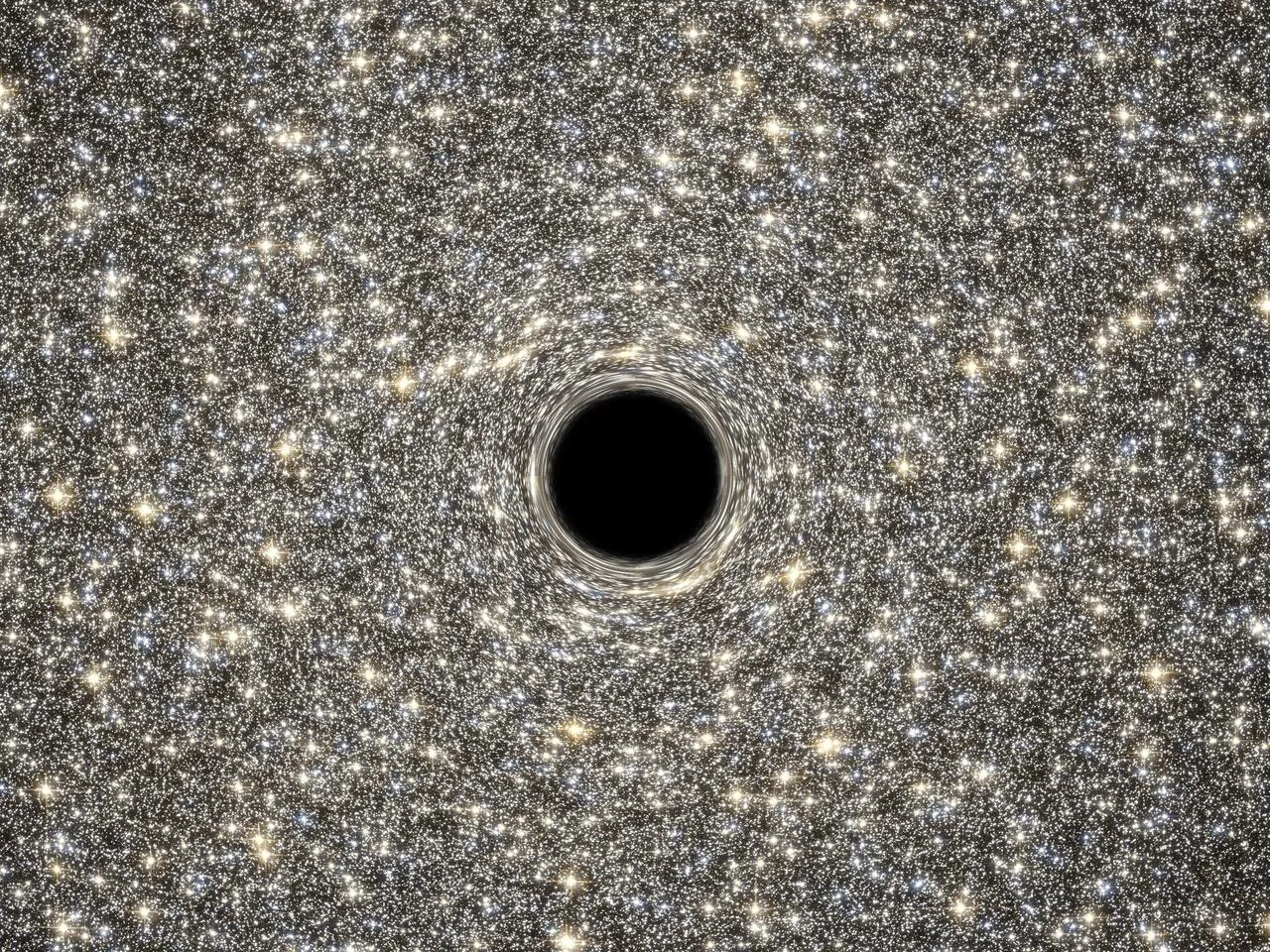
Do black holes suck things in like cosmic vacuum cleaners? The answer is no. This common misconception makes black holes seem more dangerous than they actually are. Black holes have gravity just like any other object in space. They only pull in objects that come extremely close to them.
Understanding how black holes work requires knowing about mass and gravity. Every object with mass creates a gravitational pull. The Sun pulls on Earth, and Earth pulls on you. A black hole forms when a massive star collapses into an incredibly small space. All the star's mass gets compressed into a tiny point. This creates very strong gravity, but only near the black hole itself.
Scientists explain that gravity weakens with distance. An object far from a black hole feels only weak gravitational pull. The dangerous zone around a black hole is called the event horizon. Beyond this boundary, objects can safely orbit the black hole. Inside this boundary, nothing can escape. However, the event horizon is relatively small compared to space distances.
Evidence shows that replacing our Sun with a black hole of equal mass would barely change Earth's orbit. Earth would continue circling at the same distance. The gravitational pull at Earth's location would remain the same. This demonstrates that mass, not the type of object, determines gravitational strength. The black hole wouldn't suddenly pull Earth inward.
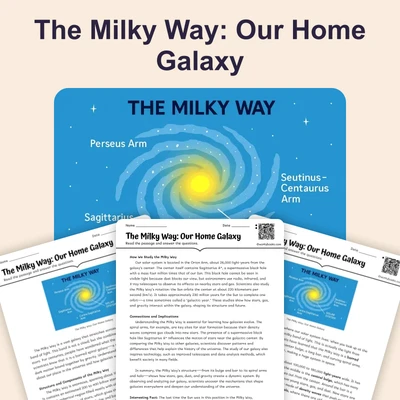
Real observations support this understanding. Astronomers have discovered a supermassive black hole at the center of our Milky Way galaxy. This black hole, called Sagittarius A*, has a mass of about four million Suns. Despite its enormous size, stars orbit safely around it. These stars follow predictable paths determined by gravity and distance. They don't get sucked in unless their orbits bring them extremely close.
This topic matters because understanding black holes helps us comprehend how gravity works throughout the universe. Black holes follow the same physical laws as other objects. They don't break the rules of physics. Knowing the truth about black holes also helps us appreciate the actual dangers and wonders of space. Scientists use telescopes and mathematical models to study these mysterious objects safely from Earth.
Interesting Fact: If you could replace Earth with a black hole of the same mass, your pencil would still fall at the same speed. Gravity depends on mass and distance, not on what type of object creates it.
Comprehension quiz (10 questions)
1. According to the passage, do black holes act like cosmic vacuum cleaners?
2. What would happen to Earth's orbit if the Sun were replaced with a black hole of equal mass?
3. What is the event horizon?
4. In the passage, the word 'compressed' most nearly means:
5. What does the passage say determines gravitational strength?
6. What can we infer about stars orbiting Sagittarius A*?
7. Based on the passage, what happens to gravity as distance increases?
8. If a spacecraft were orbiting far outside a black hole's event horizon, what would most likely happen?
9. True or False: A black hole forms when a massive star collapses into an incredibly small space.
10. True or False: Black holes break the normal laws of physics.
Perfect for the way you teach
- Build comprehension skills
- Auto-graded quiz
- Differentiated reading
- Read together at home
- Improve fluency
- Quiet reading time
- Reading curriculum support
- Independent practice
- Track Lexile growth