Dominant and Recessive Alleles
Interactive passage with audio narration, comprehension questions, and printable PDF.
By completing this purchase you agree to our Terms of Use and Privacy Policy. Your subscription renews automatically until you cancel. You can cancel anytime from your account settings. All sales are final and non-refundable. Digital content is available for download in your account immediately upon purchase.
What's included
Dominant and Recessive Alleles preview and details
About this printable Dominant and Recessive Alleles science reading passage, NGSS-aligned (Grades 5-8)
Sample passage and quiz from Dominant and Recessive Alleles
Reading passage and comprehension quiz preview
Dominant and Recessive Alleles
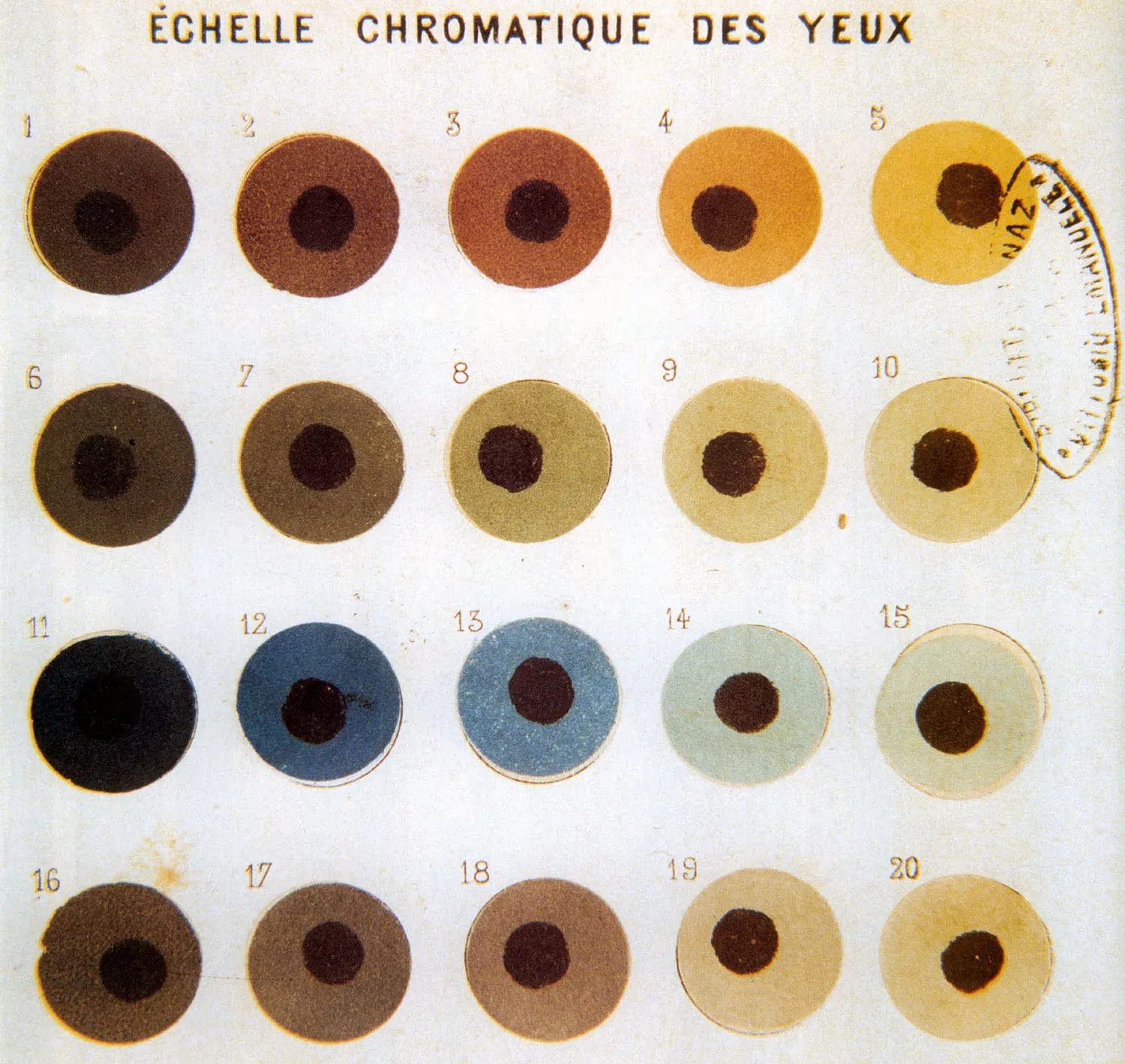
"Broca Eye Color Chart" by Paul Broca / Wikimedia Commons (Public domain).
Genetic inheritance shapes every living organism, from the color of pea plant flowers to the presence of a widow’s peak in humans. Some traits seem to appear more often in families, while others can skip generations. This pattern can be explained by the way alleles, or different forms of a gene, interact in our DNA. Understanding dominant and recessive alleles helps scientists, doctors, and breeders predict how traits are passed on from one generation to the next.
How Dominant and Recessive Alleles Work
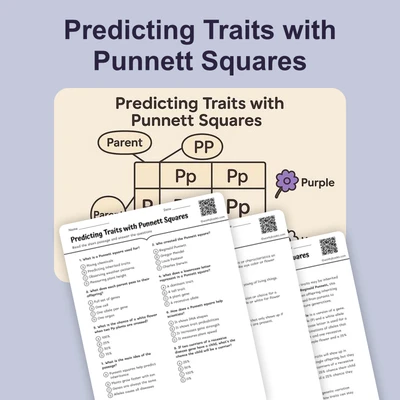
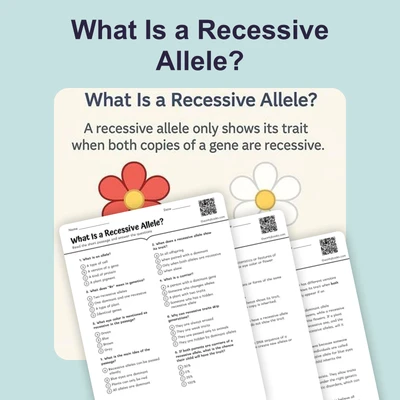
Each gene comes in two copies, one from each parent. These copies may be the same or different. A dominant allele is one that will show its effect if at least one copy is present. It is usually represented by a capital letter, such as 'P' for purple flower color in pea plants. A recessive allele will only show its effect if an organism has two copies, one from each parent. This allele is represented by a lowercase letter, like 'p' for white flower color. When a plant has both alleles (Pp), the dominant allele masks the effect of the recessive one, so the flowers appear purple. This mechanism was first described by Gregor Mendel in the 1800s, who carefully counted flower colors over generations and discovered predictable ratios—about 75% of the plants had purple flowers and 25% had white in the second generation.
Real-World Examples and Connections
Dominant and recessive alleles do not only apply to plants. In humans, traits such as a widow’s peak (a V-shaped point in the hairline) are dominant, while a straight hairline is recessive. Attached earlobes are recessive, while free earlobes are dominant. Another example is the hitchhiker’s thumb, a trait controlled by dominant and recessive alleles. The concept of heterozygous individuals—those with one dominant and one recessive allele—explains why some people can carry a recessive trait without showing it. They are known as carriers. This knowledge is important for understanding genetic diseases, many of which are caused by recessive alleles and can be passed silently from one generation to the next.
Implications for Health and Society
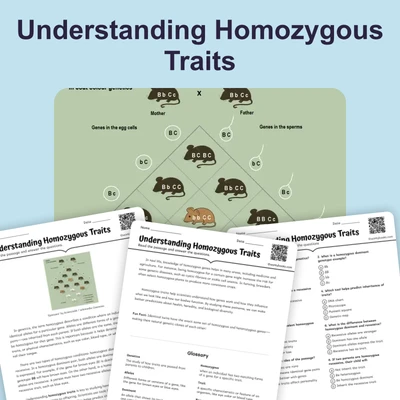
Studying dominant and recessive alleles allows scientists to predict the likelihood of certain traits or diseases appearing in offspring. By using tools like the Punnett square, researchers can visualize how alleles combine and calculate probabilities. This information helps genetic counselors advise families about inheritance risks. Advances in biotechnology, such as gene editing, rely on understanding allele interactions to address health challenges and create new solutions. The patterns discovered by Mendel connect to the broader principle that genes control the structure and function of living things, a key idea in life science.
Understanding how dominant and recessive alleles work gives us insight into the amazing variety of life. It helps us make informed choices about health, agriculture, and technology, and reminds us that even simple patterns in nature can lead to powerful scientific discoveries.
Interesting Fact: Some human traits, like eye color, are controlled by more than one gene, which is why blue-eyed parents can sometimes have a brown-eyed child!
Comprehension quiz (10 questions)
1. What is a dominant allele?
2. Which scientist first described the patterns of dominant and recessive alleles in pea plants?
3. What is the function of a Punnett square?
4. According to the passage, what percentage of Mendel’s second generation pea plants had purple flowers?
5. What does 'heterozygous' mean in the context of genetics?
6. In the passage, what is meant by a 'carrier'?
7. Which of the following is an example of a dominant human trait mentioned in the passage?
8. True or False: Recessive alleles are always visible in an organism's traits.
9. True or False: The concept of dominant and recessive alleles only applies to plants.
10. What is one real-world application of understanding dominant and recessive alleles?
Perfect for the way you teach
- Build comprehension skills
- Auto-graded quiz
- Differentiated reading
- Read together at home
- Improve fluency
- Quiet reading time
- Reading curriculum support
- Independent practice
- Track Lexile growth