Dry Climates of the World
Interactive passage with audio narration, comprehension questions, and printable PDF.
By completing this purchase you agree to our Terms of Use and Privacy Policy. Your subscription renews automatically until you cancel. You can cancel anytime from your account settings. All sales are final and non-refundable. Digital content is available for download in your account immediately upon purchase.
What's included
Dry Climates of the World preview and details
About this printable Dry Climates of the World science reading passage, NGSS-aligned (Grades 5-8)
Sample passage and quiz from Dry Climates of the World
Reading passage and comprehension quiz preview
Dry Climates of the World
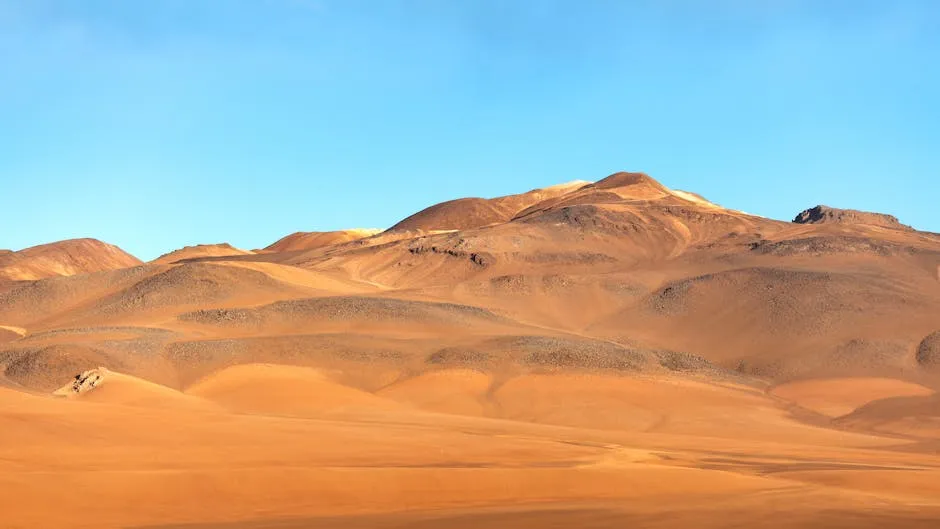
"Scenic view of Atacama Desert dunes and hills under the clear blue sky in Chile's Andes." by Marek Piwnicki / Pexels.
Dry climates are regions of the world where rainfall is much lower than evaporation. These areas are important to scientists because they reveal how Earth's systems interact to shape the environment. In fact, about one-third of Earth's land surface is considered dry. Understanding why some regions are so dry helps us explain patterns of weather, vegetation, and even human settlement.
How Dry Climates Work
The main characteristic of a dry climate is that it receives less precipitation than it loses through evaporation. Scientists measure precipitation in inches or millimeters per year. Deserts (arid regions) typically get less than 10 inches (about 250 millimeters) of rain annually. Semi-arid areas, like steppes, receive between 10 and 20 inches (250-500 millimeters). Because evaporation is so high, any moisture that falls is quickly lost to the atmosphere. This constant imbalance means that rivers are rare, lakes are often seasonal, and soils remain dry. Meteorologists use data from weather stations and satellites to monitor these patterns and compare them across regions.
Types of Dry Climates and Their Causes
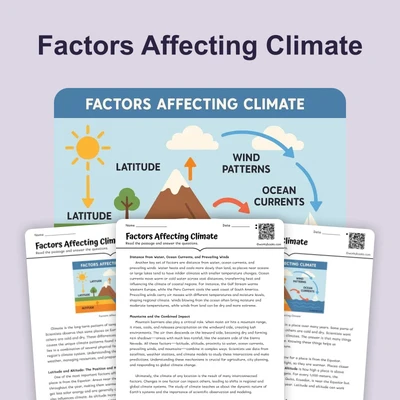
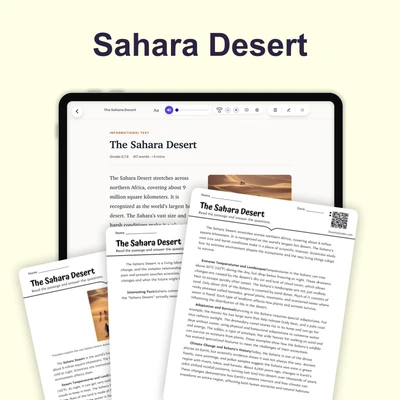
There are two main types of dry climates: arid and semi-arid. Arid climates include famous deserts like the Sahara in Africa and the Atacama in South America. Semi-arid climates, often called steppes, are found on the edges of deserts, such as the Great Plains of North America. Several factors create these dry conditions. First, some regions lie far from oceans, which are main sources of moisture. Second, mountain ranges can block wet air, causing a "rain shadow" effect. Third, high temperatures increase evaporation rates. All these factors interact as part of Earth's interconnected climate system.
Why Dry Climates Matter
Dry climates affect ecosystems, agriculture, and human societies. Plants and animals living there have evolved special adaptations to survive with little water. Farmers in semi-arid regions must use irrigation or grow drought-resistant crops. Dry climates also influence global weather patterns by reflecting sunlight and shaping wind systems. Scientists study how climate change might make some dry areas even drier, impacting food supplies and water resources. Understanding dry climates helps us prepare for future challenges and develop solutions for managing water and land more sustainably.
Interesting Fact:
The Atacama Desert in Chile is one of the driest places on Earth—parts of it have not seen measurable rain for hundreds of years!
Comprehension quiz (10 questions)
1. What is the main characteristic of a dry climate?
2. Which of the following is an example of a semi-arid region?
3. What is a rain shadow?
4. What does the term 'arid' mean in the passage?
5. Why are dry climates important for scientists to study?
6. What is one adaptation of plants or animals living in dry climates?
7. What tool do meteorologists use to monitor precipitation patterns?
8. Farmers in semi-arid regions often use irrigation to:
9. True or False: Deserts always receive more than 40 inches of rain per year.
10. True or False: The Atacama Desert is one of the driest places on Earth.
Perfect for the way you teach
- Build comprehension skills
- Auto-graded quiz
- Differentiated reading
- Read together at home
- Improve fluency
- Quiet reading time
- Reading curriculum support
- Independent practice
- Track Lexile growth