Reading PassagePremium

Forest Biomes of the World

Interactive passage with audio narration, comprehension questions, and printable PDF.

No ratings yet
Grades 5–8ScienceElaEnglish · SpanishInteractive · Printable
Aligned toMS-LS2-1
Just this resource
$1.50
One-time purchase
Best value
Unlock everything
$49.99$29.99/yr
40% off until Oct 31 — 10,000+ resources
Renews at $49.99/year.

By completing this purchase you agree to our Terms of Use and Privacy Policy. Your subscription renews automatically until you cancel. You can cancel anytime from your account settings. All sales are final and non-refundable. Digital content is available for download in your account immediately upon purchase.

Unlock above to use these actions

What's included

Reading passage
Audio narration
Comprehension quiz
Writing activity
Glossary & flashcards
Differentiated version
Spanish translation

Forest Biomes of the World preview and details

About this printable Forest Biomes of the World science reading passage, NGSS-aligned (Grades 5-8)

This comprehensive informational passage introduces middle school students to the concept of forest biomes, which are large ecological areas dominated by trees with at least 60% canopy cover. Aligned with NGSS standard MS-LS2-1, the text explains the mechanisms and systems that make forests crucial for supporting life on Earth. Students will learn about the three main types of forests—tropical, temperate, and boreal—and how these biomes exist across different climate zones. The passage provides clear explanations of how forests influence oxygen production, carbon storage, and global biodiversity, integrating scientific thinking, real-world data, and cause-and-effect relationships. The resource includes a glossary, multiple-choice quiz, graphic organizers, and writing prompts to deepen understanding. Spanish translations and differentiated versions ensure accessibility for all learners. All resources are audio-integrated for enhanced engagement.
Written by Workybooks TeamPublished by Workybooks
Preview

Sample passage and quiz from Forest Biomes of the World

Reading passage and comprehension quiz preview

What are Forest Biomes?
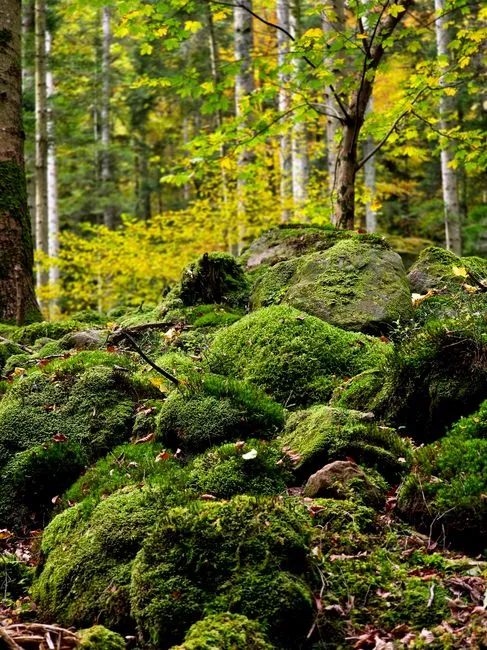
Lush green moss covering stones in a serene forest in Wangenbourg-Engenthal, Alsace.

"Lush green moss covering stones in a serene forest in Wangenbourg-Engenthal, Alsace." by Jean Maurer / Pexels.

Forests are among the most widespread and vital biomes on Earth, with trees dominating the landscape and forming a dense canopy that covers at least 60% of the land area beneath them. Forests can be found in many climate zones, from the humid tropics to cold northern latitudes. Scientists define a biome as a large ecological community shaped by climate, soil, and living organisms. Forest biomes are important because they control the flow of energy and matter through ecosystems, impact Earth's atmosphere, and support a wide array of life.

How Forests Work as Biomes

The structure of a forest biome develops through the interactions between trees, climate, soil, and living things. The canopy, formed by leaves and branches high above the ground, absorbs sunlight and regulates temperature and moisture below. Through photosynthesis, trees convert sunlight, water, and carbon dioxide into oxygen and sugars, releasing up to 40% of Earth's oxygen. In turn, forests store about 80% of the world's terrestrial carbon, acting as a carbon sink and helping to reduce climate change impacts. The layers of vegetation—from tall trees to shrubs and forest floor plants—create habitats for thousands of species. Nutrients cycle through the system as leaves and wood decompose, supporting plant growth and animal life.

Main Types of Forests Across the Globe

There are three major types of forest biomes: tropical forests, temperate forests, and boreal forests. Tropical forests, found near the Equator, are warm year-round and receive plenty of rain, hosting over half of the world's known species. Temperate forests experience four seasons with moderate rainfall and are home to many broadleaf trees like oaks and maples. Boreal forests, also called taiga, stretch across northern regions and have cold winters, short summers, and mostly evergreen trees like pines and spruces. Each forest type supports different communities of plants and animals, shaped by climate and geography.

The Global Importance of Forests

Forests provide essential ecosystem services that benefit the planet and humans. They purify air and water, prevent soil erosion, and reduce the effects of floods and droughts. Forests are home to about 80% of terrestrial biodiversity, meaning most land species depend on forests for survival. Human activities, such as deforestation and pollution, threaten forest health and the services they provide. Scientific research, including satellite imaging and field studies, helps us understand and protect forests. Efforts to conserve forests—like reforestation and sustainable management—are vital for maintaining Earth's environmental balance.

Protecting forests is crucial for sustaining life on Earth. They connect atmospheric, biological, and geological processes, showing how natural systems are interdependent. As our knowledge grows, so does our responsibility to use forests wisely and ensure their survival for future generations.

Interesting Fact: More than 300 million people around the world live in or near forests and rely on them for their livelihoods.

Comprehension quiz (10 questions)

1. What is the minimum canopy coverage for an area to be defined as a forest biome?

60%
30%
80%
100%

2. Which process in trees produces oxygen and stores carbon?

Respiration
Photosynthesis
Transpiration
Fermentation

3. What is the primary function of the forest canopy?

To absorb sunlight and regulate the climate below
To store water underground
To produce seeds
To attract animals

4. Which type of forest is found in cold regions with mostly evergreen trees?

Tropical forest
Temperate forest
Boreal forest
Rainforest

5. What does 'biodiversity' mean in the context of forests?

The number of trees in the forest
The amount of rainfall in the forest
The variety of living things in the forest
The depth of the soil

6. Which statement best describes an ecosystem service provided by forests?

Forests provide homes for animals and purify air and water.
Forests only grow in hot climates.
Forests never change over time.
Forests are always evergreen.

7. How does deforestation affect the environment?

It increases biodiversity.
It can harm ecosystem services and reduce carbon storage.
It makes forests grow faster.
It improves soil nutrients immediately.

8. Why are forests considered important for Earth's environmental balance?

They only provide wood for humans.
They connect atmospheric, biological, and geological systems.
They are always located near cities.
They have the same climate everywhere.

9. Forests store about 80% of the world’s terrestrial carbon. (True/False)

True
False

10. Tropical forests are found mostly in cold, dry regions. (True/False)

True
False
Who it's for

Perfect for the way you teach

Teachers
  • Build comprehension skills
  • Auto-graded quiz
  • Differentiated reading
Parents
  • Read together at home
  • Improve fluency
  • Quiet reading time
Homeschoolers
  • Reading curriculum support
  • Independent practice
  • Track Lexile growth
Topics

Reviews & Ratings

No reviews yet. Be the first to share your experience!

More reading you might love

20 more
Passage
The Narwhal: Arctic’s Unicorn of the Sea reading passage for grades 5 to 8
Grades 5–8

The Narwhal: Arctic’s Unicorn of the Sea

life science · MS-LS2-1+3

Free
Passage
The Blue-Ringed Octopus reading passage for grades 5 to 8
Grades 5–8

The Blue-Ringed Octopus

life science · MS-LS2-1+3

Free
Passage
Tardigrades: Microscopic Superheroes reading passage for grades 5 to 8
Grades 5–8

Tardigrades: Microscopic Superheroes

science · MS-LS2-1+3

Free
Passage
The Leafy Sea Dragon: Nature's Living Seaweed reading passage for grades 5 to 8
Grades 5–8

The Leafy Sea Dragon: Nature's Living Seaweed

life science · MS-LS2-1+3

Free
Passage
What Do Axolotls Eat? reading passage for grades 3 to 8
Grades 3–8

What Do Axolotls Eat?

life science · MS-LS2-1

$1.50
Passage
Where Do Axolotls Live? reading passage for grades 3 to 8
Grades 3–8

Where Do Axolotls Live?

life science · MS-LS4-D+1

$1.50
Passage
The Blobfish reading passage for grades 3 to 8
Grades 3–8

The Blobfish

life science · MS-LS4-D+1

$1.50
Passage
What Do Blobfish Eat? reading passage for grades 3 to 8
Grades 3–8

What Do Blobfish Eat?

life science · MS-LS2-1

$1.50
Passage
Where Do Penguins Live?  reading passage for grades 3 to 8
Grades 3–8

Where Do Penguins Live?

life science · MS-LS2-1

$1.50
Passage
The Emperor Penguin reading passage for grades 3 to 8
Grades 3–8

The Emperor Penguin

science · MS-LS2-1

$1.50
Passage
The Adélie Penguin reading passage for grades 3 to 8
Grades 3–8

The Adélie Penguin

life science · MS-LS2-1

$1.50
Passage
How Does Global Warming Affect Adélie Penguins? reading passage for grades 3 to 8
Grades 3–8

How Does Global Warming Affect Adélie Penguins?

life science · MS-LS2-1

$1.50
Passage
Desert Birds reading passage for grades 5 to 8
Grades 5–8

Desert Birds

science · MS-LS2-1+2

$1.50
Passage
Abiotic Factors in Ecosystems reading passage for grades 5 to 8
Grades 5–8

Abiotic Factors in Ecosystems

life science · MS-LS2-1

$1.50
Passage
Biomes: Terrestrial Ecosystems reading passage for grades 5 to 8
Grades 5–8

Biomes: Terrestrial Ecosystems

life science · MS-LS2-1

$1.50
Passage
Biomes: Aquatic Ecosystems reading passage for grades 5 to 8
Grades 5–8

Biomes: Aquatic Ecosystems

life science · MS-LS2-1

$1.50
Passage
The Galápagos Islands reading passage for grades 5 to 8
Grades 5–8

The Galápagos Islands

life science · MS-LS2-1+2

$1.50
Passage
The Florida Everglades reading passage for grades 5 to 8
Grades 5–8

The Florida Everglades

life science · MS-LS2-1+3

$1.50
Passage
The Great Barrier Reef reading passage for grades 5 to 8
Grades 5–8

The Great Barrier Reef

life science · MS-LS2-1+2

$1.50
Passage
Intertidal Zone Biome reading passage for grades 5 to 8
Grades 5–8

Intertidal Zone Biome

life science · MS-LS2-1+1

$1.50
Copyright © 2026 Workybooks Classroom. Made with ♥ in California.