What Are Genetic Disorders
Interactive passage with audio narration, comprehension questions, and printable PDF.
By completing this purchase you agree to our Terms of Use and Privacy Policy. Your subscription renews automatically until you cancel. You can cancel anytime from your account settings. All sales are final and non-refundable. Digital content is available for download in your account immediately upon purchase.
What's included
What Are Genetic Disorders preview and details
About this printable What Are Genetic Disorders science reading passage, NGSS-aligned (Grades 5-8)
Sample passage and quiz from What Are Genetic Disorders
Reading passage and comprehension quiz preview
Genetic Disorders
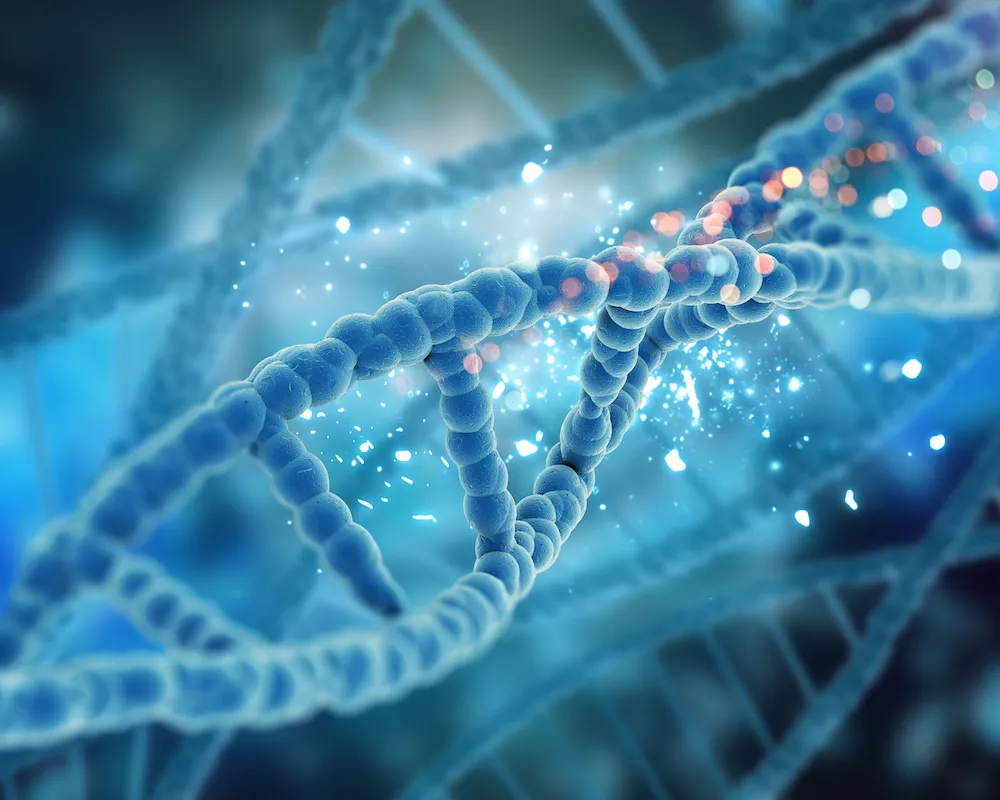
Genetic disorders are health conditions caused by changes in a person's genes or chromosomes. Scientists study these disorders to understand why some people are affected and how they are passed from parents to children. Knowing about genetic disorders helps doctors develop treatments and support families. Some genetic disorders are common, and learning about them can help us understand how traits and health conditions are inherited.
How Genetic Disorders Are Inherited
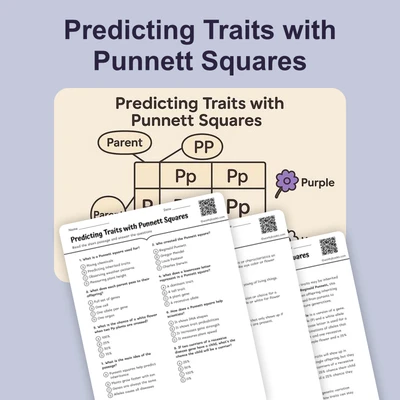
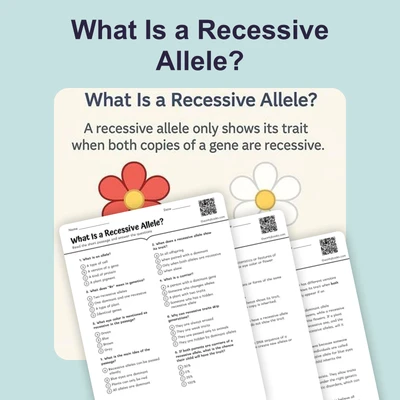
Genes are segments of DNA that give instructions for how our bodies work. Each person has two copies of most genes, one from their mother and one from their father. Genetic disorders can be caused by mutations, or changes, in these genes. Some disorders are recessive, meaning both copies of a gene must have a mutation for the disorder to appear. For example, cystic fibrosis is a recessive disorder. If both parents are carriers (they have one normal gene and one mutated gene), there is a 25% chance their child will have the disorder. Other disorders, like Huntington's disease, are dominant, which means only one mutated gene is needed for the disorder to show up. Punnett squares help predict these inheritance patterns. Sickle cell disease is a special case called codominance, where both gene versions are partly expressed.
Chromosome Disorders and Real-World Examples
Some genetic disorders happen when people have extra or missing chromosomes. Down syndrome occurs when there is an extra copy of chromosome 21. This leads to developmental differences and health challenges. Turner syndrome affects females who have only one X chromosome instead of two. Klinefelter syndrome affects males who have an extra X chromosome. These chromosome disorders are not inherited directly like single-gene disorders. Instead, they happen because of random errors during cell division. Scientists can detect these changes using genetic testing.
Genetic Testing, Counseling, and Advances in Treatment
Genetic testing allows doctors to find out if a person has a genetic disorder or is a carrier. Genetic counseling helps families understand what test results mean and what choices they might have. New treatments, such as gene therapy, are being developed to fix or replace faulty genes. While not all genetic disorders can be cured, medical advances are making a big difference. It's important to remember that genetic disorders are not a person's fault—they are the result of changes in the DNA or chromosomes, which people cannot control.
Understanding genetic disorders connects to larger scientific principles, such as the role of DNA and the process of inheritance. As scientists learn more, they can help more people live healthier lives.
Interesting Fact: The Human Genome Project, finished in 2003, mapped all the genes in human DNA—about 20,000 to 25,000 genes!
Comprehension quiz (10 questions)
1. What is a genetic disorder?
2. Which of these is a single gene disorder?
3. What does a Punnett square help predict?
4. What is the chance of a child having cystic fibrosis if both parents are carriers?
5. What does 'recessive' mean in genetics?
6. In the context of the passage, what is codominance?
7. Why are chromosome disorders like Down syndrome usually not inherited directly?
8. How does genetic counseling help families?
9. True or False: People can control whether they get a genetic disorder.
10. True or False: Gene therapy is a new treatment that tries to fix faulty genes.
Perfect for the way you teach
- Build comprehension skills
- Auto-graded quiz
- Differentiated reading
- Read together at home
- Improve fluency
- Quiet reading time
- Reading curriculum support
- Independent practice
- Track Lexile growth