George Washington Early Life — Reading Comprehension
Rate this|
1
Premium Resource
Present
Present in classroom. No work saved
Assign
Classroom with student accounts, Track progress
Quick Play
No student accounts, assign with a link
Grades
6
7
8
PRINT+DIGITAL RESOURCE
This learning resource is available in interactive and printable formats. The interactive worksheet can be played online and assigned to students. The Printable PDF version can be downloaded and printed for completion by hand.
This reading passage explores George Washington’s remarkable journey from Virginia plantation farmer to the first president of the United States. Students will analyze how Washington’s leadership, character, and sense of service shaped not only the outcome of the American Revolution but also the development of the new government. The passage addresses the complexities and challenges Washington faced, highlighting his commitment to precedent and the lasting impact of his decisions. Aligned to HSS 8.3.4, RI.6-8.1, and RI.6-8.2, this resource includes a glossary, differentiated and Spanish versions, timeline, graphic organizers, and assessment activities. It also provides a read aloud and is designed to help students develop historical reasoning and ELA skills while engaging with the story of one of America’s foundational leaders.
CONTENT PREVIEW
Expand content preview
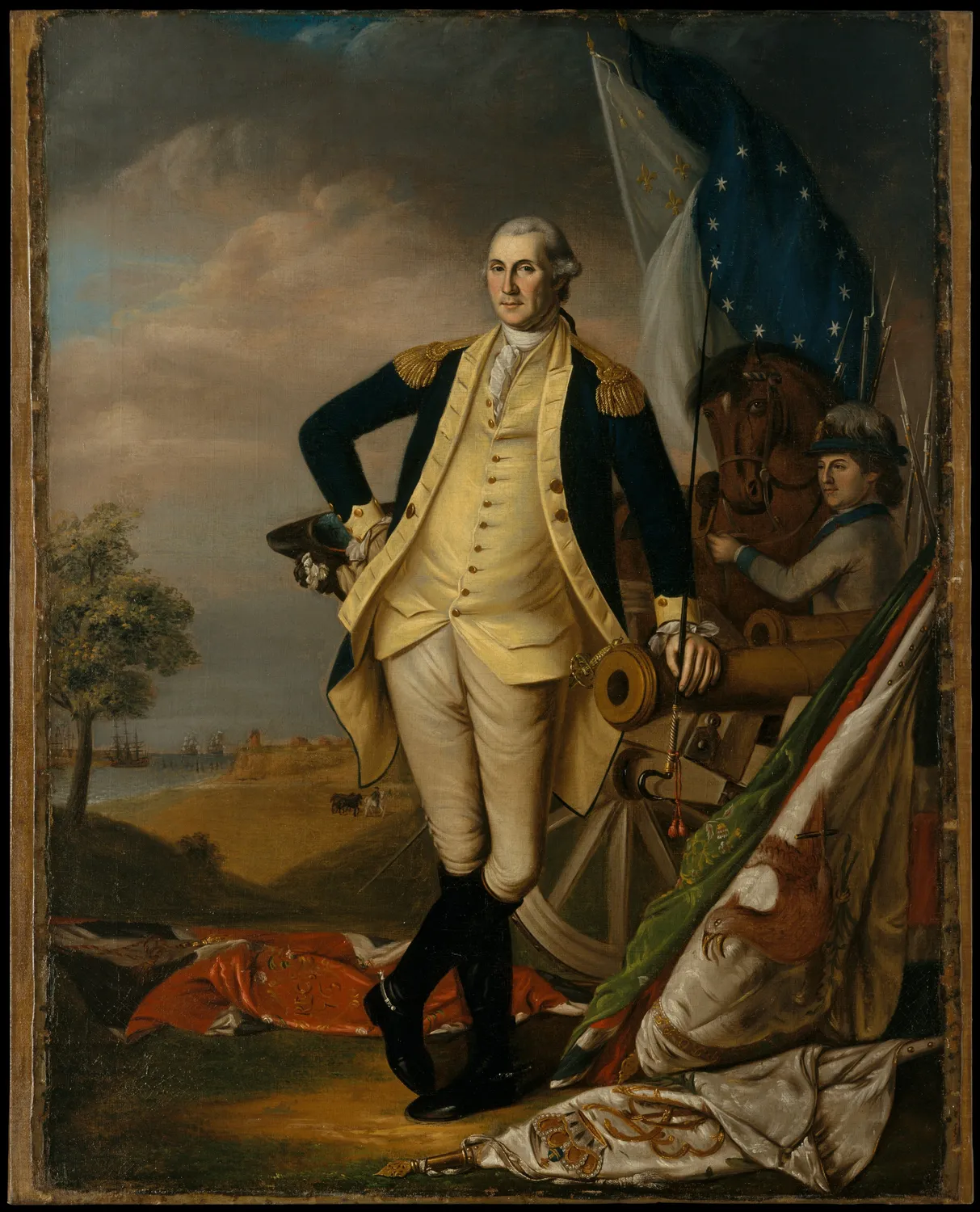
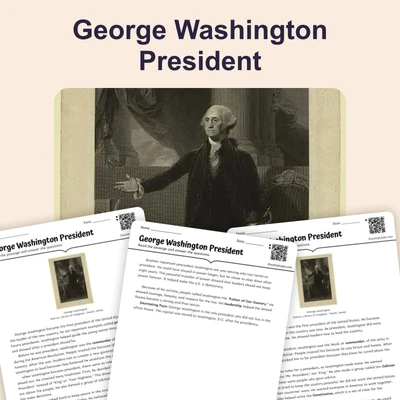
"George Washington MET DT220048" by James Peale / Source: Wikimedia Commons (CC0).
George Washington’s life tells the story of a man whose actions helped shape the United States. Born in 1732 in Virginia, Washington grew up on a plantation. As a young man, he managed farmland and learned the importance of hard work and responsibility. His experience as a planter and surveyor gave him practical skills and a strong sense of character. These qualities would later define his leadership.
The American colonies faced growing tension with Great Britain in the mid-1700s. Washington, though not born into great wealth, became known for his integrity and willingness to serve. When conflict erupted, he was chosen to command the Continental Army during the American Revolution. Leading an army of farmers and volunteers against a powerful British force, Washington encountered many challenges. His ability to motivate his troops and his skillful use of strategy were crucial to the eventual victory. Washington’s perseverance, even during harsh winters and repeated losses, demonstrated his commitment to the cause of independence.
After the war, the new nation needed stability. Many Americans were unsure about the future government. Some feared a return to monarchy, while others worried about too much power in a single leader’s hands. Washington’s reputation for honesty and service made him a trusted figure. In 1789, he was unanimously elected as the first president of the United States. He accepted the position reluctantly, believing that serving the country was his duty rather than a quest for personal power.
As president, Washington set important precedents that shaped the office and the government. He established a cabinet of advisors, supported the creation of a national bank, and encouraged peaceful solutions to international disputes. Perhaps most significantly, Washington decided not to seek a third term, showing that leaders should not hold power indefinitely. This peaceful transfer of power became a model for future presidents and strengthened the country’s democracy.
Washington’s leadership was not without conflicts or criticism. He faced opposition from political rivals and made difficult decisions, such as putting down the Whiskey Rebellion to support federal law. Washington believed that unity and cooperation were essential for the nation’s survival. In his farewell address, he warned against political parties and foreign entanglements, hoping to guide future generations.
Although Washington owned enslaved people throughout much of his life, he struggled privately with the issue of slavery. In his will, he arranged for the freedom of the enslaved people he owned, a decision that set him apart from many of his peers. This act reflected both his personal evolution and the complicated history of the founding era.
George Washington’s journey from farmer to president demonstrates how leadership, service, and strong character can influence a nation’s destiny. The precedents he established continue to shape American government and society today.
Interesting Fact: Washington was the only president unanimously elected by the Electoral College—both times he ran for office.
Where was George Washington born?
VirginiaNew YorkMassachusettsPennsylvania
Which army did Washington command?
British ArmyFrench ArmyContinental ArmyUnion Army
In what year was Washington elected first president?
1775178918011797
Why did Washington decide not to serve a third term?
He lost the electionHe wanted to set a precedentHe was illCongress told him to stop
What was one challenge Washington faced as a general?
Lack of moneyLack of soldiersHarsh winters and lossesNo support from people
How did Washington's actions shape the presidency?
He ignored all adviceHe set important precedentsHe ruled like a kingHe dissolved Congress
Washington was the only president unanimously elected. True or false?
TrueFalse
What does 'precedent' mean in the passage?
An advisor's suggestionA law passed by CongressAn example for others to followA type of government
Perfect For:
👩🏫 Teachers
• Reading comprehension practice
• Auto-graded assessments
• Literacy skill development
👨👩👧👦 Parents
• Reading practice at home
• Comprehension improvement
• Educational reading time
🏠 Homeschoolers
• Reading curriculum support
• Independent reading practice
• Progress monitoring
Reading Features:
📖
Reading Passage
Engaging fiction or nonfiction text
❓
Comprehension Quiz
Auto-graded questions
📊
Instant Feedback
Immediate results and scoring
📄
Printable Version
Download for offline reading
🔊
Read Aloud
Voice-over with word highlighting
Reviews & Ratings
No reviews yet. Be the first to share your experience!
Related Content
Presidential Precedents George Washington
This comprehensive history reading passage examines George Washington’s presidency and how his leadership set key nation...
New Nation America
This history reading passage, 'New Nation America,' covers how the United States struggled to become a united country af...
HSS 5.6.1RI.4.2
George Washington First President
This passage explores how George Washington became the first President of the United States in 1789 and the crucial prec...
The Cherokee Nation: History and Culture
This reading passage explores the rich history and culture of the Cherokee Nation, one of the largest Native American tr...
D2.HIS.2.3-5D2.HIS.14.3-5RI.4.3RI.4.4RI.4.10
American Indians and U.S. Citizenship
This reading passage explores the complex history of American Indians and U.S. citizenship, focusing on the period after...
John Adams: Second President
This engaging U.S. history reading passage introduces students to John Adams, the second President of the United States....
D2.HIS.2.3-5D2.HIS.14.3-5RI.4.3RI.4.4
George Washington: Our First President
This engaging U.S. history reading passage introduces students to George Washington, America’s first president, through ...
D2.HIS.2.3-5D2.HIS.3.3-5RI.4.3RI.4.4
James Madison Early Life
This passage explores the formative years of James Madison—his upbringing in Virginia, his education, and his early expe...
New Orleans: An Important Port
This engaging U.S. history reading passage explores the crucial role of New Orleans and the Louisiana Purchase in shapin...
D2.HIS.3.3-5D2.HIS.14.3-5RI.4.3RI.4.4
John Adams Presidency
This passage explores the complex presidency of John Adams, the second president of the United States, focusing on the p...
D2.HIS.2.3-5D2.HIS.3.3-5RI.4.3RI.4.4
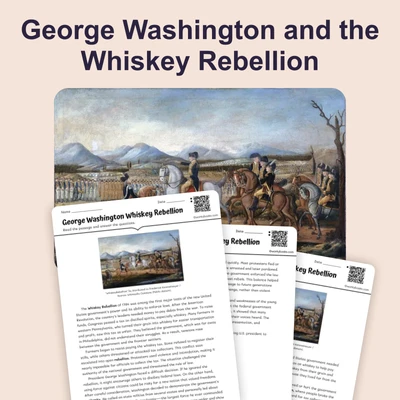
George Washington Whiskey Rebellion
This engaging U.S. History reading passage examines George Washington and the Whiskey Rebellion, a crucial moment that t...
Modern American Presidents
This engaging reading passage introduces students to Modern American Presidents, focusing on the leadership, challenges,...
D2.HIS.1-4.3-5RI.4.3RI.4.4
Hamilton vs Jefferson
This engaging U.S. history reading passage explores the contrasting visions of Alexander Hamilton and Thomas Jefferson, ...
Leaders Call for a New Constitution
This reading passage explores the pivotal moment in U.S. history when American leaders recognized the weaknesses of the ...
Madison War of 1812
This engaging reading passage explores President James Madison’s 1812 war message to Congress, which played a pivotal ro...
James Madison: Father of the Constitution
This passage provides a detailed exploration of James Madison’s pivotal role in creating the U.S. Constitution, earning ...
Battle of New Orleans 1815
This passage explores the pivotal Battle of New Orleans in 1815, focusing on Andrew Jackson’s leadership and the complex...
D2.HIS.2.3-5D2.HIS.3.3-5RI.4.3RI.4.4
James Monroe and the Monroe Doctrine
This engaging U.S. history reading passage introduces students to President James Monroe and the Monroe Doctrine, a key ...
D2.HIS.1-4.3-5RI.4.1RI.4.2RI.4.3
Madison First Congress
This passage explores the critical period of the First Congress in 1789, focusing on James Madison's leadership and the ...