George Washington Whiskey Rebellion — Reading Comprehension
Rate this|
1
Premium Resource
Present
Present in classroom. No work saved
Assign
Classroom with student accounts, Track progress
Quick Play
No student accounts, assign with a link
Grades
6
7
8
PRINT+DIGITAL RESOURCE
This learning resource is available in interactive and printable formats. The interactive worksheet can be played online and assigned to students. The Printable PDF version can be downloaded and printed for completion by hand.
This engaging U.S. History reading passage examines George Washington and the Whiskey Rebellion, a crucial moment that tested the authority of the new federal government. Students will learn how President Washington responded to a major challenge in the 1790s, when farmers in western Pennsylvania protested a tax on whiskey. The passage explores the causes of the rebellion, the government's response, and the long-term impact on American history. It features complex historical vocabulary and models the use of evidence and reasoning for analysis. The resource includes a glossary, differentiated simplified and Spanish versions, timeline, graphic organizers, and standards-aligned activities to build comprehension, analytical writing, and historical thinking. Audio read-aloud and Spanish translation support diverse learners. This lesson aligns with HSS 8.3.5 and CCSS.RI.6-8.1, RI.6-8.2, making it an excellent choice for middle school U.S. history and literacy instruction.
CONTENT PREVIEW
Expand content preview
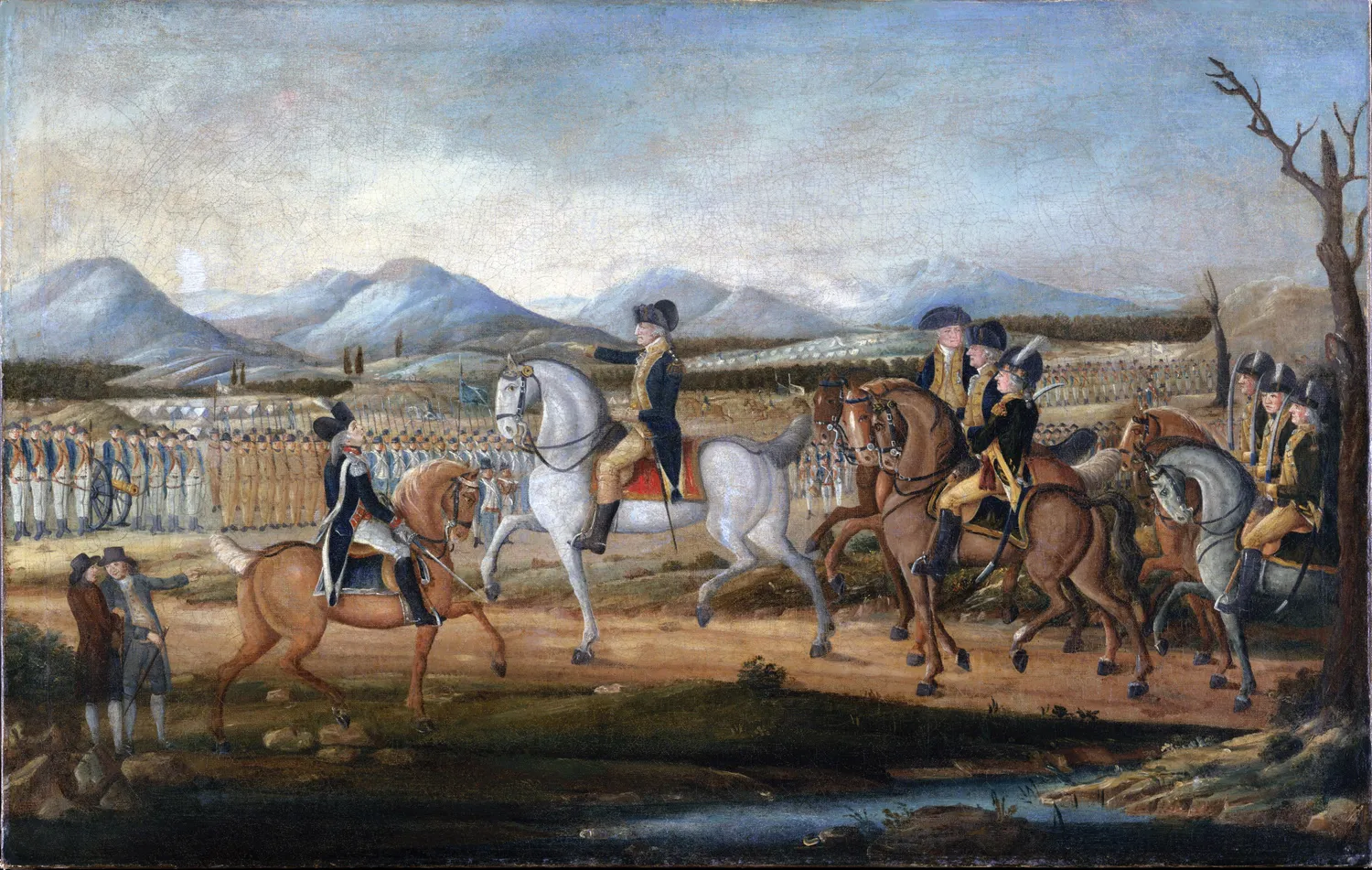
"WhiskeyRebellion" by Attributed to Frederick Kemmelmeyer / Source: Wikimedia Commons (Public domain).
The Whiskey Rebellion of 1794 was among the first major tests of the new United States government’s power and its ability to enforce laws. After the American Revolution, the country’s leaders needed money to pay debts from the war. To raise funds, Congress passed a tax on distilled spirits, especially whiskey. Many farmers in western Pennsylvania, who turned their grain into whiskey for easier transportation and profit, saw this tax as unfair. They believed the government, which was far away in Philadelphia, did not understand their struggles. As a result, tensions rose between the government and the frontier settlers.
Farmers began to resist paying the whiskey tax. Some refused to register their stills, while others threatened or attacked tax collectors. This conflict soon escalated into open rebellion. Protesters used violence and intimidation, making it nearly impossible for officials to collect the tax. The situation challenged the authority of the national government and threatened the rule of law.
President George Washington faced a difficult decision. If he ignored the rebellion, it might encourage others to disobey federal laws. On the other hand, using force against citizens could be risky for a new nation that valued freedoms. After careful consideration, Washington decided to demonstrate the government’s authority. He called on state militias from several states and personally led about 13,000 troops toward western Pennsylvania—the largest force he ever commanded during his presidency. This show of strength was intended to restore order and show that the government would not tolerate violent opposition.
When the troops arrived, the rebellion collapsed quickly. Most protesters fled or surrendered without a fight. Only a few leaders were arrested and later pardoned. Washington’s actions set an important precedent. The government enforced the law while also showing restraint by eventually forgiving most rebels. This balance helped reinforce respect for federal laws. It also sent a message to future generations about the importance of peaceful protest and legal change, rather than violent resistance.
The Whiskey Rebellion revealed both the strengths and weaknesses of the young nation. On one hand, Washington’s response proved that the federal government could enforce its laws and maintain order. On the other, it showed that many Americans still distrusted distant authority and wanted their voices heard. The rebellion’s legacy influenced debates about taxation, representation, and government enforcement for years to come.
Interesting Fact: President Washington is the only sitting U.S. president to personally lead troops in the field during his time in office.
Why did Congress tax whiskey?
To pay war debtsTo stop farmingTo help farmersTo lower prices
Where did the Whiskey Rebellion take place?
Western PennsylvaniaNew York CityBostonVirginia
Who led the troops to stop the rebellion?
George WashingtonThomas JeffersonJohn AdamsAlexander Hamilton
What effect did the rebellion have?
Proved federal authorityStopped all taxesCreated new statesLed to another war
Why did farmers turn grain into whiskey?
To make transport and profit easierTo avoid taxesFor funTo make bread
How did Washington show government strength?
Sent troopsRaised taxesBuilt new roadsWrote new laws
The rebellion ended quickly when troops arrived.
TrueFalse
What is 'enforcement'?
Making sure laws are obeyedMaking new lawsHelping farmersCollecting grain
Perfect For:
👩🏫 Teachers
• Reading comprehension practice
• Auto-graded assessments
• Literacy skill development
👨👩👧👦 Parents
• Reading practice at home
• Comprehension improvement
• Educational reading time
🏠 Homeschoolers
• Reading curriculum support
• Independent reading practice
• Progress monitoring
Reading Features:
📖
Reading Passage
Engaging fiction or nonfiction text
❓
Comprehension Quiz
Auto-graded questions
📊
Instant Feedback
Immediate results and scoring
📄
Printable Version
Download for offline reading
🔊
Read Aloud
Voice-over with word highlighting
Reviews & Ratings
No reviews yet. Be the first to share your experience!
Related Content
Presidential Precedents George Washington
This comprehensive history reading passage examines George Washington’s presidency and how his leadership set key nation...
New Nation America
This history reading passage, 'New Nation America,' covers how the United States struggled to become a united country af...
HSS 5.6.1RI.4.2
George Washington First President
This passage explores how George Washington became the first President of the United States in 1789 and the crucial prec...
The Cherokee Nation: History and Culture
This reading passage explores the rich history and culture of the Cherokee Nation, one of the largest Native American tr...
D2.HIS.2.3-5D2.HIS.14.3-5RI.4.3RI.4.4RI.4.10
American Indians and U.S. Citizenship
This reading passage explores the complex history of American Indians and U.S. citizenship, focusing on the period after...
John Adams: Second President
This engaging U.S. history reading passage introduces students to John Adams, the second President of the United States....
D2.HIS.2.3-5D2.HIS.14.3-5RI.4.3RI.4.4
George Washington: Our First President
This engaging U.S. history reading passage introduces students to George Washington, America’s first president, through ...
D2.HIS.2.3-5D2.HIS.3.3-5RI.4.3RI.4.4
James Madison Early Life
This passage explores the formative years of James Madison—his upbringing in Virginia, his education, and his early expe...
George Washington Early Life
This reading passage explores George Washington’s remarkable journey from Virginia plantation farmer to the first presid...
New Orleans: An Important Port
This engaging U.S. history reading passage explores the crucial role of New Orleans and the Louisiana Purchase in shapin...
D2.HIS.3.3-5D2.HIS.14.3-5RI.4.3RI.4.4
John Adams Presidency
This passage explores the complex presidency of John Adams, the second president of the United States, focusing on the p...
D2.HIS.2.3-5D2.HIS.3.3-5RI.4.3RI.4.4
Modern American Presidents
This engaging reading passage introduces students to Modern American Presidents, focusing on the leadership, challenges,...
D2.HIS.1-4.3-5RI.4.3RI.4.4
Hamilton vs Jefferson
This engaging U.S. history reading passage explores the contrasting visions of Alexander Hamilton and Thomas Jefferson, ...
Leaders Call for a New Constitution
This reading passage explores the pivotal moment in U.S. history when American leaders recognized the weaknesses of the ...
Madison War of 1812
This engaging reading passage explores President James Madison’s 1812 war message to Congress, which played a pivotal ro...
James Madison: Father of the Constitution
This passage provides a detailed exploration of James Madison’s pivotal role in creating the U.S. Constitution, earning ...
Battle of New Orleans 1815
This passage explores the pivotal Battle of New Orleans in 1815, focusing on Andrew Jackson’s leadership and the complex...
D2.HIS.2.3-5D2.HIS.3.3-5RI.4.3RI.4.4
James Monroe and the Monroe Doctrine
This engaging U.S. history reading passage introduces students to President James Monroe and the Monroe Doctrine, a key ...
D2.HIS.1-4.3-5RI.4.1RI.4.2RI.4.3
Madison First Congress
This passage explores the critical period of the First Congress in 1789, focusing on James Madison's leadership and the ...