Madison First Congress
Interactive passage with audio narration, comprehension questions, and printable PDF.
By completing this purchase you agree to our Terms of Use and Privacy Policy. Your subscription renews automatically until you cancel. You can cancel anytime from your account settings. All sales are final and non-refundable. Digital content is available for download in your account immediately upon purchase.
What's included
Madison First Congress preview and details
About this printable Madison First Congress reading passage (Grades 6-8)
Sample passage and quiz from Madison First Congress
Reading passage and comprehension quiz preview
Madison First Congress
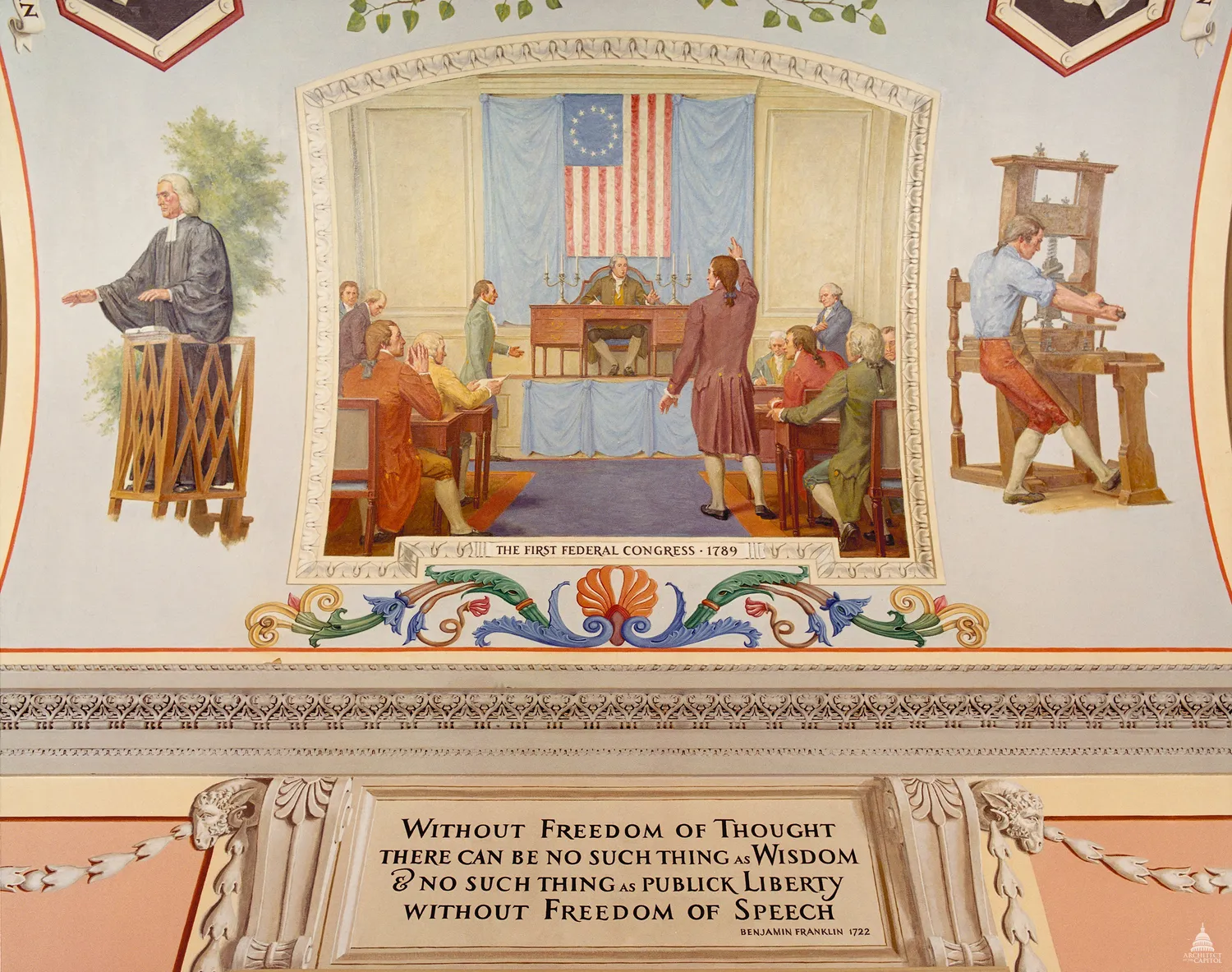
"Flickr - USCapitol - The First Federal Congress, 1789" by USCapitol/ Wikimedia Commons
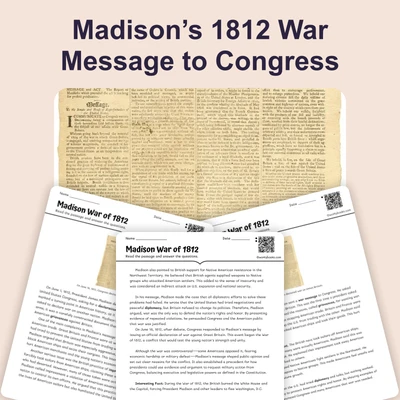
The First Congress of the United States met in 1789, just months after the new Constitution was ratified. This Congress faced the enormous challenge of transforming the ideas in the Constitution into a working national government. James Madison, a representative from Virginia, became a central figure in this process. Madison's knowledge of government and his commitment to the new republic made him a natural leader during these early years.
One of the main problems confronting Congress was how to organize the different parts of government. The Constitution set out the basic structure, but it left many details undecided. For example, Congress needed to create executive departments, establish a federal court system, and decide how laws would be enforced. Madison used his leadership skills to guide debates and propose practical solutions. He helped write the rules for the House of Representatives and was deeply involved in passing the first important legislation that would shape the new nation.
Another urgent issue was the demand for changes to the Constitution. Many Americans feared that the new national government might threaten their rights. Several states agreed to ratify the Constitution only if amendments would be added to protect individual freedoms. Madison listened to these concerns and took action. He drafted a series of amendments to guarantee rights such as freedom of speech, religion, and the press. These proposals would become the Bill of Rights.
Passing these amendments was not easy. Some members of Congress felt amendments were unnecessary or could lead to too many changes. Others worried about the balance of power between the federal and state governments. Madison had to use negotiation and compromise to build support. He explained how the amendments would limit the government's power without weakening it. In 1791, Congress approved ten amendments, and they were added to the Constitution as the Bill of Rights.
Madison's efforts demonstrated the importance of skilled representation and constructive debate in a democracy. Congress showed it could respond to the people's concerns while preserving the stability of the government. This set a crucial precedent for how future conflicts and questions would be resolved in the nation's legislative branch.
The work of the First Congress and leaders like Madison helped earn the trust of the American people. Their decisions gave the new government a strong foundation and protected basic liberties for generations to come.
Interesting Fact: Thomas Jefferson, who was serving as ambassador to France in 1789, wrote letters to Madison offering advice on protecting individual rights in the new government.
Comprehension quiz (8 questions)
1. Who led efforts in the First Congress?
2. What year did the First Congress meet?
3. What is the Bill of Rights?
4. Why did some states demand amendments?
5. How did Madison help Congress?
6. What challenge did Congress face?
7. The Bill of Rights includes freedom of speech. True or false?
8. What is 'legislation'?
Perfect for the way you teach
- Build comprehension skills
- Auto-graded quiz
- Differentiated reading
- Read together at home
- Improve fluency
- Quiet reading time
- Reading curriculum support
- Independent practice
- Track Lexile growth