James Madison: Father of the Constitution — Reading Comprehension
Rate this
Premium Resource
Present
Present in classroom. No work saved
Assign
Classroom with student accounts, Track progress
Quick Play
No student accounts, assign with a link
Grades
6
7
8
PRINT+DIGITAL RESOURCE
This learning resource is available in interactive and printable formats. The interactive worksheet can be played online and assigned to students. The Printable PDF version can be downloaded and printed for completion by hand.
This passage provides a detailed exploration of James Madison’s pivotal role in creating the U.S. Constitution, earning him the title 'Father of the Constitution.' Students will learn about Madison’s preparation for the Constitutional Convention, his advocacy for a strong federal government, and the challenges he faced in uniting diverse states. The passage addresses important vocabulary such as Constitution, compromise, legacy, and contribution, and encourages historical analysis through compare and contrast structure. Activities include a multiple-choice quiz, writing prompts, graphic organizers, and timeline, all aligned to HSS 8.5.1 and CCSS.RI.6-8.1, RI.6-8.2. The resource offers read aloud audio, Spanish translation, and differentiated versions to support all learners. This is an ideal resource for students to deepen their understanding of early U.S. history and the foundational principles of American democracy.
CONTENT PREVIEW
Expand content preview
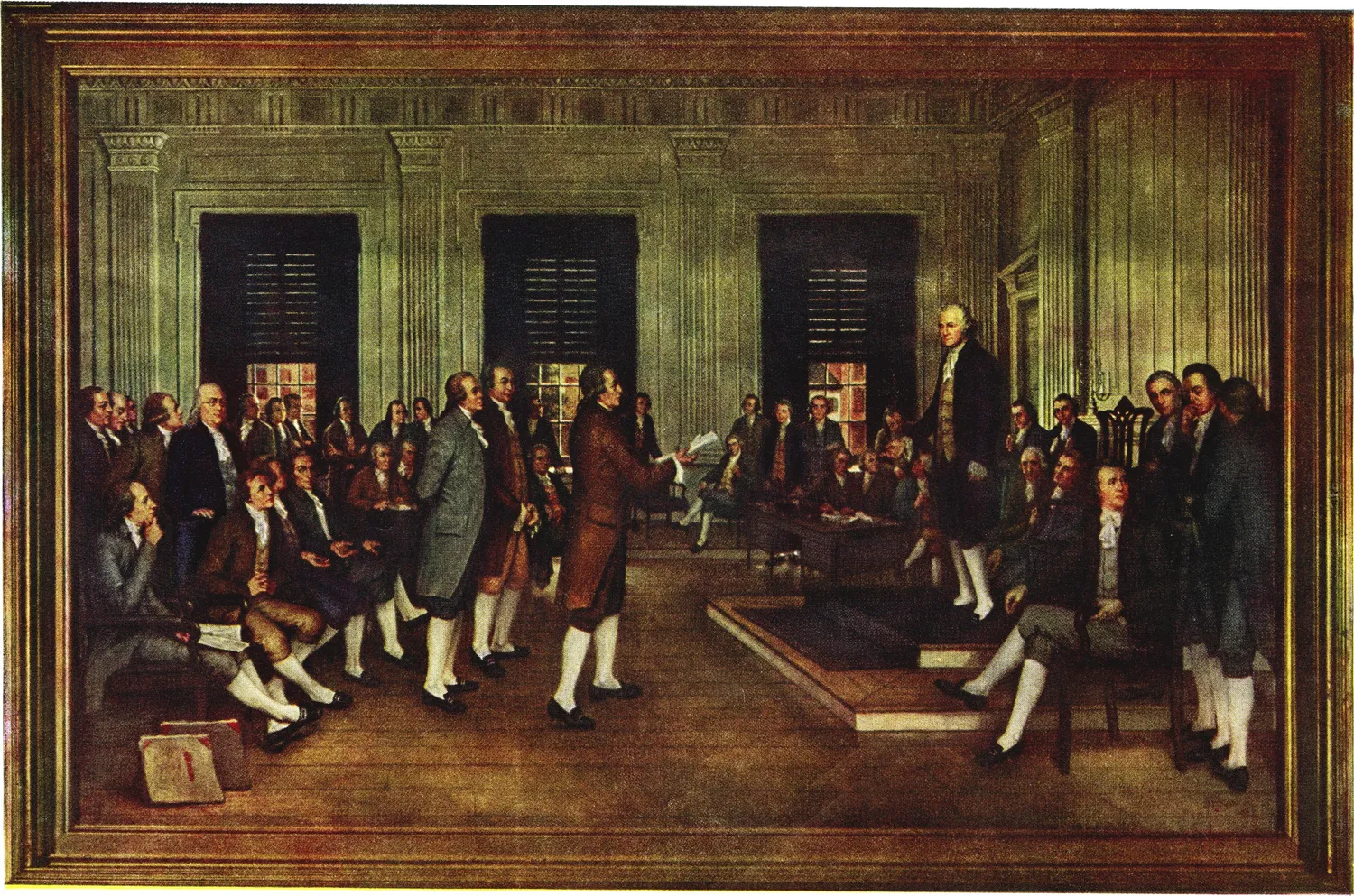
"'The Adoption of the U.S. Constitution in Congress at Independence Hall, Philadelphia, Sept. 17, 1787' (1935), by John H. Froehlich / Wikimedia Commons
The United States Constitution stands as one of the most important documents in American history. At the heart of its creation was James Madison. Madison is often called the Father of the Constitution because of his central role in drafting and promoting the new system of government for the United States. His thoughtful preparation and dedication helped shape the nation during a time of great uncertainty.
After the American Revolution, the country faced serious problems. The first government, created by the Articles of Confederation, was weak and could not resolve disputes between states or raise money effectively. Many leaders recognized the need for a stronger, more unified government. Madison was one of the first to see that the existing system was failing. He studied other forms of government, read political philosophy, and became convinced that a new framework was necessary.
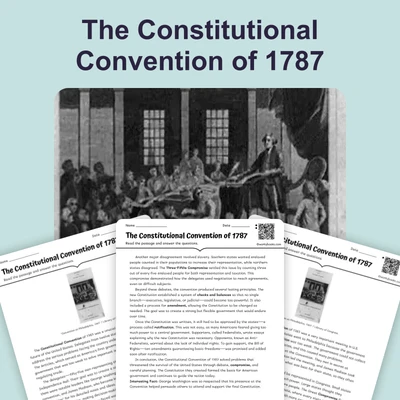
At the Constitutional Convention in 1787, Madison arrived well prepared. He brought with him the Virginia Plan, which proposed a government with three branches: legislative, executive, and judicial. This plan became the basis for discussion and debate. Madison believed that dividing power among branches would prevent any one group from becoming too powerful. However, not everyone agreed. Delegates from smaller states worried about losing influence, while others feared a strong central government might threaten individual rights.
The convention was full of conflict and required compromise. Madison worked tirelessly to persuade others and find solutions. He supported the creation of a Senate to balance the interests of smaller states, and a House of Representatives to represent the population. He also argued for the inclusion of checks and balances to protect liberties. Madison’s ability to listen, reason, and build consensus was a key factor in the Constitution’s success.
Despite his influence, Madison did not get everything he wanted. Many of his ideas were changed or rejected during the debates. Even so, he became one of the Constitution’s strongest supporters. Alongside Alexander Hamilton and John Jay, Madison wrote the Federalist Papers to defend the new Constitution and explain its principles to the public. These essays remain some of the most important writings in American political thought.
Madison’s contributions did not end with the Constitution’s signing. He later helped draft the Bill of Rights, the first ten amendments that guaranteed basic freedoms. As the fourth president of the United States, Madison continued to influence American government. His legacy is one of compromise, thoughtful argument, and a belief in the power of a written constitution to protect the people.
Interesting Fact: James Madison was one of the shortest presidents in U.S. history, standing only about 5 feet 4 inches tall.
Who is called the Father of the Constitution?
James MadisonGeorge WashingtonAlexander HamiltonBenjamin Franklin
What was Madison's proposal at the Convention?
Virginia PlanNew Jersey PlanBill of RightsFederalist Papers
Which document did Madison help write after the Constitution?
Bill of RightsDeclaration of IndependenceGettysburg AddressEmancipation Proclamation
Why did Madison believe in three branches of government?
To prevent too much powerTo raise more moneyTo make new statesTo stop all conflict
What was the main weakness of the Articles of Confederation?
Too weak to governToo strongOnly had one branchToo many amendments
How did Madison help the Constitution succeed?
By finding compromiseBy fighting warsBy ignoring conflictsBy leaving early
James Madison was the fourth president. True or False?
TrueFalse
What does legacy mean in this passage?
What someone leaves behindA documentA type of lawAnother name for president
Perfect For:
👩🏫 Teachers
• Reading comprehension practice
• Auto-graded assessments
• Literacy skill development
👨👩👧👦 Parents
• Reading practice at home
• Comprehension improvement
• Educational reading time
🏠 Homeschoolers
• Reading curriculum support
• Independent reading practice
• Progress monitoring
Reading Features:
📖
Reading Passage
Engaging fiction or nonfiction text
❓
Comprehension Quiz
Auto-graded questions
📊
Instant Feedback
Immediate results and scoring
📄
Printable Version
Download for offline reading
🔊
Read Aloud
Voice-over with word highlighting
Reviews & Ratings
No reviews yet. Be the first to share your experience!
Related Content
Presidential Precedents George Washington
This comprehensive history reading passage examines George Washington’s presidency and how his leadership set key nation...
New Nation America
This history reading passage, 'New Nation America,' covers how the United States struggled to become a united country af...
HSS 5.6.1RI.4.2
George Washington First President
This passage explores how George Washington became the first President of the United States in 1789 and the crucial prec...
The Cherokee Nation: History and Culture
This reading passage explores the rich history and culture of the Cherokee Nation, one of the largest Native American tr...
D2.HIS.2.3-5D2.HIS.14.3-5RI.4.3RI.4.4RI.4.10
American Indians and U.S. Citizenship
This reading passage explores the complex history of American Indians and U.S. citizenship, focusing on the period after...
John Adams: Second President
This engaging U.S. history reading passage introduces students to John Adams, the second President of the United States....
D2.HIS.2.3-5D2.HIS.14.3-5RI.4.3RI.4.4
James Madison Early Life
This passage explores the formative years of James Madison—his upbringing in Virginia, his education, and his early expe...
George Washington: Our First President
This engaging U.S. history reading passage introduces students to George Washington, America’s first president, through ...
D2.HIS.2.3-5D2.HIS.3.3-5RI.4.3RI.4.4
George Washington Early Life
This reading passage explores George Washington’s remarkable journey from Virginia plantation farmer to the first presid...
New Orleans: An Important Port
This engaging U.S. history reading passage explores the crucial role of New Orleans and the Louisiana Purchase in shapin...
D2.HIS.3.3-5D2.HIS.14.3-5RI.4.3RI.4.4
John Adams Presidency
This passage explores the complex presidency of John Adams, the second president of the United States, focusing on the p...
D2.HIS.2.3-5D2.HIS.3.3-5RI.4.3RI.4.4
George Washington Whiskey Rebellion
This engaging U.S. History reading passage examines George Washington and the Whiskey Rebellion, a crucial moment that t...
Modern American Presidents
This engaging reading passage introduces students to Modern American Presidents, focusing on the leadership, challenges,...
D2.HIS.1-4.3-5RI.4.3RI.4.4
Hamilton vs Jefferson
This engaging U.S. history reading passage explores the contrasting visions of Alexander Hamilton and Thomas Jefferson, ...
Leaders Call for a New Constitution
This reading passage explores the pivotal moment in U.S. history when American leaders recognized the weaknesses of the ...
Madison War of 1812
This engaging reading passage explores President James Madison’s 1812 war message to Congress, which played a pivotal ro...
Battle of New Orleans 1815
This passage explores the pivotal Battle of New Orleans in 1815, focusing on Andrew Jackson’s leadership and the complex...
D2.HIS.2.3-5D2.HIS.3.3-5RI.4.3RI.4.4
Madison First Congress
This passage explores the critical period of the First Congress in 1789, focusing on James Madison's leadership and the ...
James Monroe and the Monroe Doctrine
This engaging U.S. history reading passage introduces students to President James Monroe and the Monroe Doctrine, a key ...