Germany Attacks Britain from the Air
Interactive passage with audio narration, comprehension questions, and printable PDF.
By completing this purchase you agree to our Terms of Use and Privacy Policy. Your subscription renews automatically until you cancel. You can cancel anytime from your account settings. All sales are final and non-refundable. Digital content is available for download in your account immediately upon purchase.
What's included
Germany Attacks Britain from the Air preview and details
About this printable Germany Attacks Britain from the Air reading passage (Grades 5-8)
Sample passage and quiz from Germany Attacks Britain from the Air
Reading passage and comprehension quiz preview
The Battle of Britain: Standing Alone
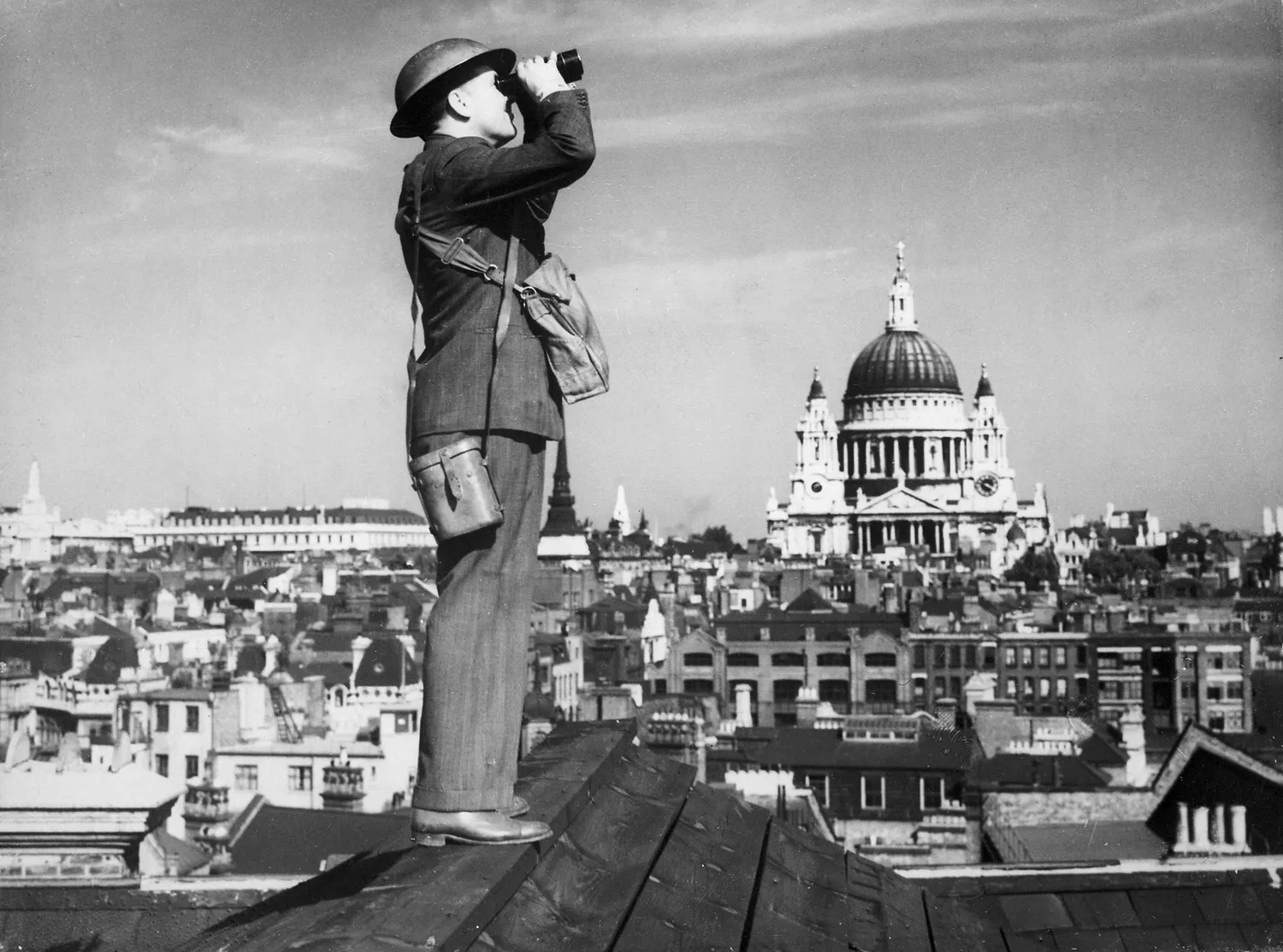
"Battle of britain air observer"/ Wikimedia Commons (Public domain).
The Battle of Britain began in July 1940 when Nazi Germany launched a massive air campaign against the United Kingdom. This battle was the first major military campaign fought entirely by air forces. Adolf Hitler, Germany’s leader, aimed to destroy Britain’s Royal Air Force (RAF) and force the nation to surrender, making Britain stand alone against the Nazi threat in Western Europe.
Britain’s geographic position played a crucial role in the conflict. As an island, Britain was separated from Nazi-occupied Europe by the English Channel, making a traditional land invasion difficult. Instead, the German Luftwaffe (air force) sought to gain control of the skies. From July to October 1940, German bombers targeted RAF airfields, radar stations, and eventually cities like London in what became known as the Blitz. According to primary sources, such as RAF pilot diaries, intense dogfights filled the skies, and civilians faced nightly bombings. One diary entry from September 1940 described Londoners sheltering in subway stations as bombs fell above.
The RAF, though outnumbered, used new technology like radar to detect incoming enemy planes. British pilots, known as "The Few," demonstrated extraordinary bravery, as noted in Prime Minister Winston Churchill’s famous speech: "Never in the field of human conflict was so much owed by so many to so few." The government also involved civilians in the war effort, encouraging them to volunteer as air raid wardens and firefighters. The sense of unity and resilience became a defining characteristic of British society during this period.
By October 1940, the RAF had successfully resisted the German attacks, forcing Hitler to postpone his plans for invasion. The failure of the Luftwaffe marked a turning point in World War II. Britain’s victory showed that Nazi Germany could be stopped, inspiring hope among other nations. The battle also had long-term effects on military strategy, highlighting the importance of air power and civilian morale in modern warfare.
The Battle of Britain connects to broader themes of resistance, the impact of geography on history, and the role of technology and ordinary people in shaping major events. It stands as a reminder of how societies respond to crisis and defend their freedoms.
Interesting Fact: During the Blitz, the British Museum moved its most valuable artifacts underground to protect them from bombing raids.
Comprehension quiz (8 questions)
1. When did the Battle of Britain start?
2. Who led Germany during the battle?
3. What was the Blitz?
4. Why was radar important?
5. How did geography affect the battle?
6. What did civilians do during the Blitz?
7. The RAF was outnumbered but still won. True or false?
8. What does 'morale' mean?
Perfect for the way you teach
- Build comprehension skills
- Auto-graded quiz
- Differentiated reading
- Read together at home
- Improve fluency
- Quiet reading time
- Reading curriculum support
- Independent practice
- Track Lexile growth