Great Awakening Colonial America — Reading Comprehension
Rate this
Premium Resource
Present
Present in classroom. No work saved
Assign
Classroom with student accounts, Track progress
Quick Play
No student accounts, assign with a link
Grades
6
7
8
PRINT+DIGITAL RESOURCE
This learning resource is available in interactive and printable formats. The interactive worksheet can be played online and assigned to students. The Printable PDF version can be downloaded and printed for completion by hand.
This engaging history reading passage explores the impact of the Great Awakening on colonial America. Through analysis of causes, multiple perspectives, and consequences, students will learn how this religious revival fostered new ideas about equality and influenced the movement toward independence. Including a primary source quotation and vocabulary support, this passage supports historical thinking and close reading. Activities include a reading comprehension quiz, writing prompts, and graphic organizers. Spanish translation and a simplified version ensure accessibility for diverse learners. This resource is aligned with CA HSS 8.1.2 and Common Core standards RI.6.3, RI.6.4, and W.6.2, making it ideal for classrooms focused on US history and literacy skills. Includes a read aloud audio feature to support understanding.
CONTENT PREVIEW
Expand content preview
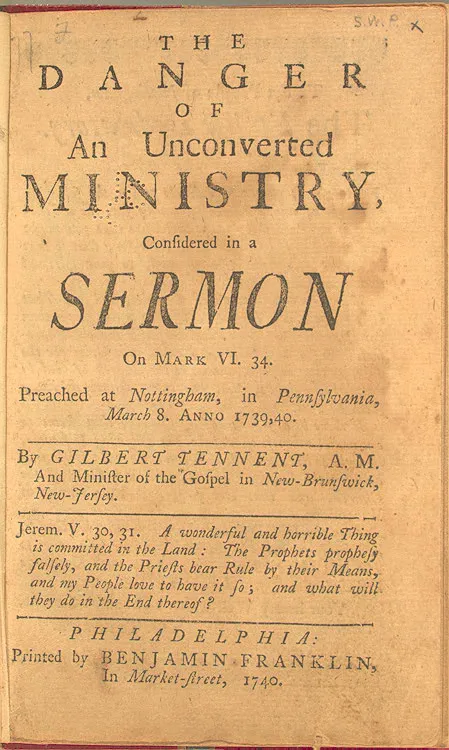
Gilbert Tennent, along with George Whitefield and Jonathan Edwards, was a leader of the First Great Awakening in the Middle Colonies. Wikimedia Commons (Public domain).
The Great Awakening was a widespread religious movement that changed colonial America in the 1730s and 1740s. During this period, many colonists began to question traditional forms of worship and authority. Instead, they sought a more personal and emotional connection to religion. This revival spread rapidly, crossing boundaries between colonies and social classes. The movement was marked by passionate sermons and gatherings that drew large crowds eager for spiritual renewal.
One of the main problems that the Great Awakening addressed was the decline in religious enthusiasm among colonists. Churches had become formal and strict, and many people felt disconnected from their faith. In response, evangelical preachers such as Jonathan Edwards and George Whitefield traveled from town to town. These itinerant preachers were known for their powerful and emotional sermons. Unlike traditional ministers, they spoke directly to the listeners’ hearts, encouraging them to experience a personal conversion—a deep change in beliefs and behavior.
This movement challenged the existing religious and social order. Established church authorities, especially in the Anglican and Congregational churches, worried that these new ideas threatened their control. However, many ordinary colonists welcomed the message of spiritual equality. The Great Awakening encouraged people to think for themselves about faith and question traditional authority figures. This spirit of independence later influenced political attitudes and played a role in shaping ideas about freedom and equality in America.
The impact of the Great Awakening was significant and long-lasting. New churches and denominations, such as Baptists and Methodists, grew rapidly. The movement also contributed to a sense of unity among the colonies, as people from different regions shared similar religious experiences. Furthermore, the Great Awakening helped spread the idea that all individuals could have a direct relationship with God, regardless of social status or wealth. This belief challenged established hierarchies and inspired new discussions about rights and democracy.
In summary, the Great Awakening was not just a religious revival; it was also a catalyst for social and political change. By promoting emotional religion, encouraging independent thought, and challenging traditional authority, it helped lay the groundwork for the American Revolution. The movement’s legacy can still be seen today in American religious and cultural life.
Interesting Fact: Benjamin Franklin, though not especially religious, was so impressed by George Whitefield’s preaching that he once emptied his pockets into a collection plate.
When did the Great Awakening start?
1730s-1740s1600s1770s1800s
Who was a famous preacher during the Great Awakening?
Jonathan EdwardsBenjamin FranklinGeorge WashingtonAbigail Adams
Which new denominations grew rapidly?
Baptists and MethodistsAnglicans onlyPuritansQuakers only
Why did some church leaders oppose the movement?
It threatened their authorityIt increased taxesIt supported the kingIt banned religion
What effect did the Great Awakening have?
Encouraged independenceStopped colonists from travelingCreated new lawsEnded all churches
How did the movement unite the colonies?
Shared religious experiencesFought in warsBuilt shipsTraded goods
The Great Awakening started in the 1800s.
TrueFalse
What is a revival?
Religious renewalPolitical meetingBuilding churchWar
Perfect For:
👩🏫 Teachers
• Reading comprehension practice
• Auto-graded assessments
• Literacy skill development
👨👩👧👦 Parents
• Reading practice at home
• Comprehension improvement
• Educational reading time
🏠 Homeschoolers
• Reading curriculum support
• Independent reading practice
• Progress monitoring
Reading Features:
📖
Reading Passage
Engaging fiction or nonfiction text
❓
Comprehension Quiz
Auto-graded questions
📊
Instant Feedback
Immediate results and scoring
📄
Printable Version
Download for offline reading
🔊
Read Aloud
Voice-over with word highlighting
Reviews & Ratings
No reviews yet. Be the first to share your experience!
Related Content
Quakers in Colonial America
This passage explores the role of the Quakers in Colonial America, focusing on their pursuit of peace, religious freedom...
D2.HIS.2.3-5D2.HIS.3.3-5RI.4.3RI.4.4
Indentured Servants in Colonial America
This comprehensive passage and activity set explores the crucial but complex role of indentured servants in colonial Ame...
D2.HIS.2.3-5D2.HIS.3.3-5RI.4.3RI.4.4
Cities in Colonial America
This engaging U.S. history reading passage explores the rise of colonial American cities such as Boston, Philadelphia, a...
HSS 5.4.68.1RI.6-8.1RI.6-8.7
Why Europeans Immigrated to Colonial America
This passage examines the complex reasons why Europeans immigrated to Colonial America, exploring both push and pull fac...
D2.HIS.2.3-5D2.HIS.3.3-5RI.4.3RI.4.4
Colonial Social Classes
This comprehensive history reading passage delves into the complex social classes of Colonial America, exploring their o...
D2.HIS.2.3-5D2.HIS.3.3-5RI.4.3RI.4.4
Colonial Slave Resistance
This U.S. History reading passage explores the complex topic of slave resistance in colonial America, examining the many...
D2.HIS.2.3-5D2.HIS.3.3-5RI.4.3RI.4.4
Benjamin Franklin in Colonial America
This U.S. History reading passage explores the life and influence of Benjamin Franklin, a key colonial leader whose idea...
HSS 5.58.1RI.6-8.1RI.6-8.3
How the Middle Colonies Were Governed
This engaging history reading passage explores how the Middle Colonies of Colonial America—such as New York, New Jersey,...
D2.HIS.2.3-5D2.HIS.3.3-5RI.4.3RI.4.4
Labor Shortages in the American Colonies
This passage examines the causes and effects of labor shortages in the American colonies, focusing on the economic and s...
Colonial Printing Press
This passage explores the revolutionary impact of the colonial printing press in America, examining how it enabled the s...
HSS 5.58.1RI.6-8.1RI.6-8.2
Life in the Southern Colonies
This engaging reading passage explores Colonial America's Southern Colonies, focusing on how geography, climate, and peo...
D2.HIS.4.3-5D2.GEO.4.3-5RI.4.3RI.4.4
Frontier Life in Colonial America
This passage examines the realities of frontier life in colonial America, highlighting both the promise and peril faced ...
HSS 5.4.68.1RI.6-8.1RI.6-8.2
Colonial Jobs: Blacksmiths, Bakers, and Craftsmen
This engaging history reading passage explores the vital roles of blacksmiths, bakers, and craftsmen in colonial America...
D2.HIS.2.3-5D2.HIS.3.3-5RI.4.3RI.4.4
Colonial Apprenticeship System
This comprehensive passage explores the Colonial Apprenticeship System and its role in education during Colonial America...
HSS 5.4.6RI.6-8.1RI.6-8.2
The Breadbasket Colonies
This engaging U.S. history reading passage explores the Breadbasket Colonies, also known as the Middle Colonies, which p...
D2.HIS.2.3-5D2.HIS.3.3-5RI.4.3RI.4.4
Native American Allies in Colonial Wars
This passage examines the complex role of Native American nations as allies and adversaries during the colonial wars of ...
D2.HIS.2.3-5D2.HIS.3.3-5RI.4.3RI.4.4
Colonial Clothing and Homemade Goods
This engaging U.S. history passage explores the daily life of early American colonists with a focus on colonial clothing...
D2.HIS.2.3-5RI.4.3RI.4.4
African Diaspora Americas
This engaging history reading passage explores the fact that more Africans than Europeans arrived in the Americas during...
Colonial Women's Lives
This history reading passage examines the complex roles, rights, and daily experiences of women in colonial America. Stu...