Heat Energy Transfer
Interactive passage with audio narration, comprehension questions, and printable PDF.
By completing this purchase you agree to our Terms of Use and Privacy Policy. Your subscription renews automatically until you cancel. You can cancel anytime from your account settings. All sales are final and non-refundable. Digital content is available for download in your account immediately upon purchase.
What's included
Heat Energy Transfer preview and details
About this printable Heat Energy Transfer science reading passage, NGSS-aligned (Grades 3-5)
Sample passage and quiz from Heat Energy Transfer
Reading passage and comprehension quiz preview
Heat Energy Transfer

"Scenic view of the sun setting over sand dunes in the Dubai desert." Image Credit Fabio Partenheimer / Pexels.
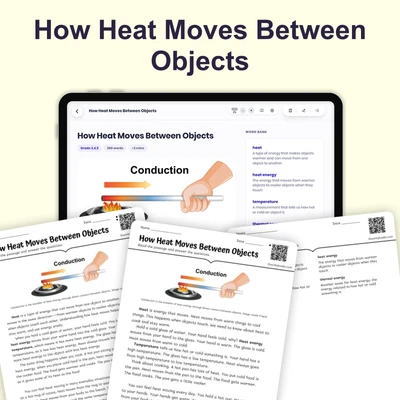
Heat energy is the energy that makes things feel warm or hot. Heat energy always moves from warmer places to cooler places. This movement happens in two main ways.
The first way heat moves is by contact, which means things are touching. When you hold a metal spoon in hot soup, the spoon gets warm. The heat from the soup moves into the spoon because they are touching. This is called conduction. The heat travels through the metal until the whole spoon feels warm.
The second way heat moves is without contact. When you stand in the sunshine, you feel warm even though you are not touching the sun. The sun's heat travels through space and air to reach you. This is called radiation. Heat can move through empty space or air without needing to touch anything.
Understanding heat transfer helps explain many everyday events. When you put ice in a glass of water, the water feels cold. This happens because heat from the warmer water moves into the cooler ice. The ice melts as it gains heat energy. When you cook food on a stove, heat moves from the hot burner into the pan by contact. Then the heat moves from the pan into the food. Heat always flows from the warmer object to the cooler object until both reach the same temperature, which is how hot or cold something is.
Comprehension quiz (8 questions)
1. Heat energy always moves from where?
2. What is conduction?
3. How does the sun warm you?
4. Why does ice melt in water?
5. What happens when a spoon touches soup?
6. Heat can move through empty space.
7. When does heat stop moving between objects?
8. What does temperature measure?
Perfect for the way you teach
- Build comprehension skills
- Auto-graded quiz
- Differentiated reading
- Read together at home
- Improve fluency
- Quiet reading time
- Reading curriculum support
- Independent practice
- Track Lexile growth