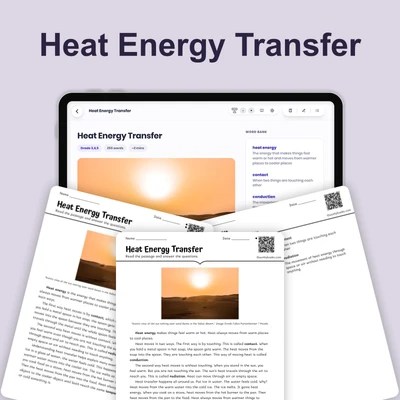
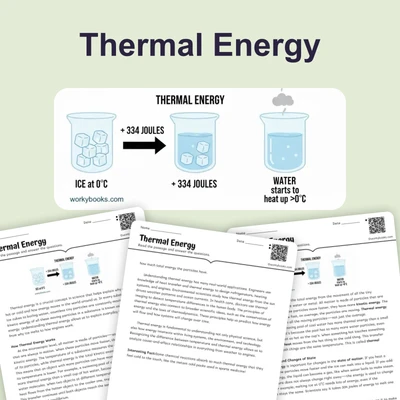
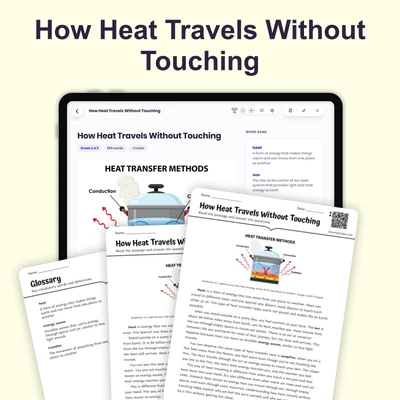
This learning resource is available in interactive and printable formats. The interactive worksheet can be played online and assigned to students. The Printable PDF version can be downloaded and printed for completion by hand.
This 4th-grade science passage explores the concept of heat transfer, a key topic in the NGSS standards. Students will learn that heat is a form of energy that moves from a warmer object to a cooler one. The passage provides a simple definition of energy and explains the three main methods of heat transfer: conduction, convection, and radiation, using relatable examples like a metal spoon in hot water. This resource is designed to improve reading comprehension skills while teaching foundational science concepts. It aligns with the NGSS standard PS3.A, which focuses on the definition of energy and its transfer.
CONTENT PREVIEW
Expand content preview
Heat Transfer
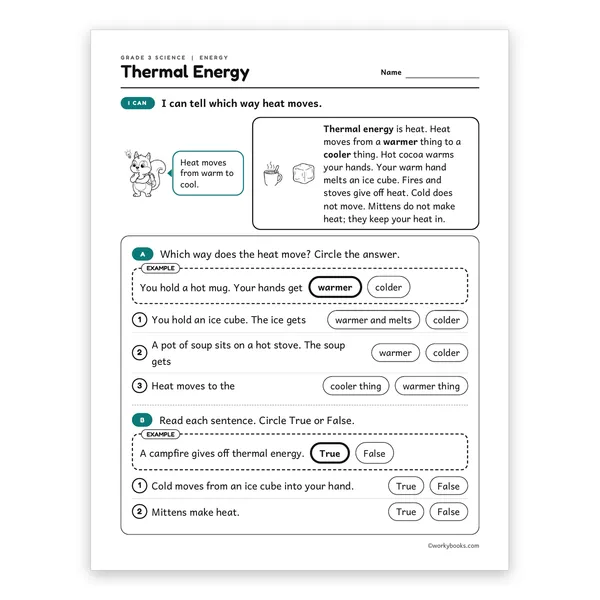
Heat is a kind of energy that moves from warmer things to cooler things. The process of moving heat energy is called heat transfer. Heat always travels from hot to cold. It never goes from cold to hot by itself. When something feels warm, it means heat is moving into it!
There are three main ways heat moves:
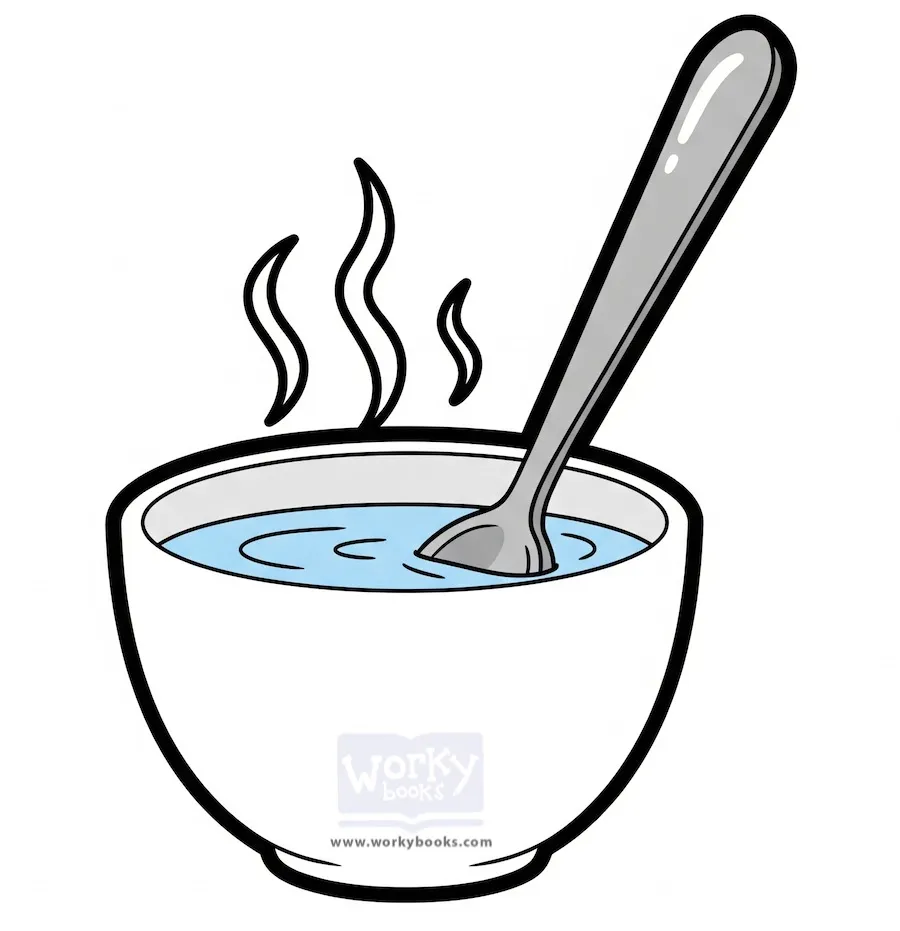
Conduction: Conduction happens when heat moves through things that are touching. For example, if you hold a metal spoon in hot soup, the spoon gets hot because heat moves from the soup to the spoon. Touching a warm mug or a hot stove are both examples of conduction.
Convection: Convection is how heat moves in liquids and gases. Warm parts rise up while cool parts sink, creating a cycle. This is why a hot air balloon rises or why the top of boiling water is hot. Warm air from a heater goes up to the ceiling—another example of convection.
Radiation: Radiation is when heat travels through empty space, not needing to touch anything. The Sun warms Earth with radiation. You can feel heat from a campfire or a light bulb even if you are not touching them. That is radiation in action!
Some materials slow down heat transfer. These are called insulators. Oven mitts, winter coats, and coolers are all insulators. They keep heat from moving too quickly, keeping things hot or cold for longer.
Understanding heat transfer is important in everyday life. Engineers design houses to keep heat in during winter and out during summer. Cooking uses all three types: conduction (pan on stove), convection (boiling water), and radiation (oven or grill).
Heat transfer is like heat playing tag—it always chases cold things until everything is the same temperature!
Interesting Fact: The inside of an igloo stays warm because snow is a great insulator, trapping heat inside!
What is heat transfer?
Heat moving from hot to coldCold moving to hotLight turning to heatEnergy staying in place
Which is not a type of heat transfer?
ConductionConvectionReflectionRadiation
What does an insulator do?
Slows heat transferSpeeds up heatMakes things hotterCools everything
Why does a metal spoon get hot in soup?
ConductionConvectionRadiationReflection
What happens in convection?
Warm rises, cool sinksHeat moves by touchingHeat travels in wavesNothing moves
Why do we use oven mitts?
They are insulatorsThey heat foodThey cool handsThey make things shiny
Heat always moves from cold to hot.
TrueFalse
Which word means heat moving by touching?
ConductionConvectionRadiationInsulator
Perfect For:
👩🏫 Teachers
• Reading comprehension practice
• Auto-graded assessments
• Literacy skill development
👨👩👧👦 Parents
• Reading practice at home
• Comprehension improvement
• Educational reading time
🏠 Homeschoolers
• Reading curriculum support
• Independent reading practice
• Progress monitoring
Reading Features:
📖
Reading Passage
Engaging fiction or nonfiction text
❓
Comprehension Quiz
Auto-graded questions
📊
Instant Feedback
Immediate results and scoring
📄
Printable Version
Download for offline reading
🔊
Read Aloud
Voice-over with word highlighting
Reviews & Ratings
No reviews yet. Be the first to share your experience!
Related Content
How Speed Affects Energy
This Grade 4 physical science reading passage introduces students to the relationship between speed and kinetic energy, ...
NGSS 4-PS3-2
Science Vocabulary
This worksheet on domain-specific words will help students learn some science vocabulary. Students will be asked to matc...
L.3.6L.3.4.A
How Electric Current Transfers Energy
This 250-word reading passage introduces fourth-grade students to the concept of energy transfer through electric curren...
NGSS 4-PS3-2
What Is Potential Energy
This 250-word reading passage introduces fourth-grade students to the fundamental concept of potential energy aligned wi...
NGSS 4-PS3-1
Simple Machines Science Report
This science writing task requires students to clearly explain how three simple machines work using precise domain-speci...
W.5.4
What Is Energy
This engaging 250-word reading passage introduces fourth-grade students to the fundamental concept of energy as outlined...
NGSS 4-PS3-1
Work and Energy
This science reading passage for grades 6-8 introduces students to the concepts of work and energy, aligned with NGSS st...
MS-PS3-1
Motion Energy
This NGSS-aligned science passage for 4th graders focuses on the disciplinary core concept of Motion Energy (PS1.A). It'...
Energy Transformation
This middle school science passage aligned to NGSS standard MS-PS3-5 explains the concept of energy transformation—the p...
MS-PS3-5
Heat Energy Transfer
This Grade 4 physical science reading passage explores heat energy transfer aligned to NGSS standard 4-PS3-2 and Discipl...
NGSS 4-PS3-2
Thermal Energy
This comprehensive passage explores the concept of thermal energy, aligning with NGSS standards MS-PS3-3 and MS-PS3-4. S...
MS-PS3-3MS-PS3-4
Beach Day Science
This passage addresses NGSS K-PS3-1 by comparing temperature differences in materials exposed to sunlight versus shade. ...
K-PS3-1RL.1.1
How Circuits Convert Energy
This 250-word reading passage introduces Grade 4 students to the concept of energy conversion in electric circuits, alig...
NGSS 4-PS3-2
Sound Energy
This engaging science passage, titled "What is Sound Energy?", is designed for 4th-grade students and aligns with the NG...
What Happens When Cars Collide
This 250-word reading passage introduces fourth-grade students to the concept of energy transfer and transformation duri...
NGSS 4-PS3-3
Pool Table Physics
The Pool Table Physics reading passage is a highly engaging educational resource designed for fourth-grade science stude...
Energy Transformations
This engaging middle school science passage explores the concept of energy transformations, aligning with NGSS standards...
MS-PS3-1MS-PS3-2MS-PS3-5
Energy Transfer
This NGSS-aligned science passage introduces middle school students to the concept of energy transfer, aligned to standa...
MS-PS3-5
Where Does Our Energy Come From
This 250-word reading passage aligns with NGSS standard ESS3.A and introduces fourth-grade students to the fundamental c...
NGSS 4-ESS3-1
The Future of Energy
This engaging science passage for grades 6-8, aligned with NGSS standards MS-PS3-4, MS-ESS3-3, and MS-ESS3-4, introduces...