This learning resource is available in interactive and printable formats. The interactive worksheet can be played online and assigned to students. The Printable PDF version can be downloaded and printed for completion by hand.
This engaging science passage for grades 6-8, aligned with NGSS standards MS-PS3-4, MS-ESS3-3, and MS-ESS3-4, introduces students to the rapidly evolving world of energy. It explains how emerging technologies like advanced batteries, hydrogen fuel cells, carbon capture, fusion power, and space-based solar can reduce greenhouse gas emissions and transform global energy systems. The passage details how smart grids and policy tools—such as carbon pricing and renewable energy mandates—interact to speed up the transition to cleaner energy. Students will learn about the scientific mechanisms behind these technologies, their real-world impact, and the critical role of innovation and decision-making in addressing climate change. The content also highlights opportunities for future careers in clean energy. The resource includes a Spanish translation, a differentiated version for struggling readers, comprehension questions, writing prompts, and graphic organizers. All passages are audio integrated for accessibility. This resource is ideal for building science literacy and empowering students as future leaders in sustainability.
CONTENT PREVIEW
Expand content preview
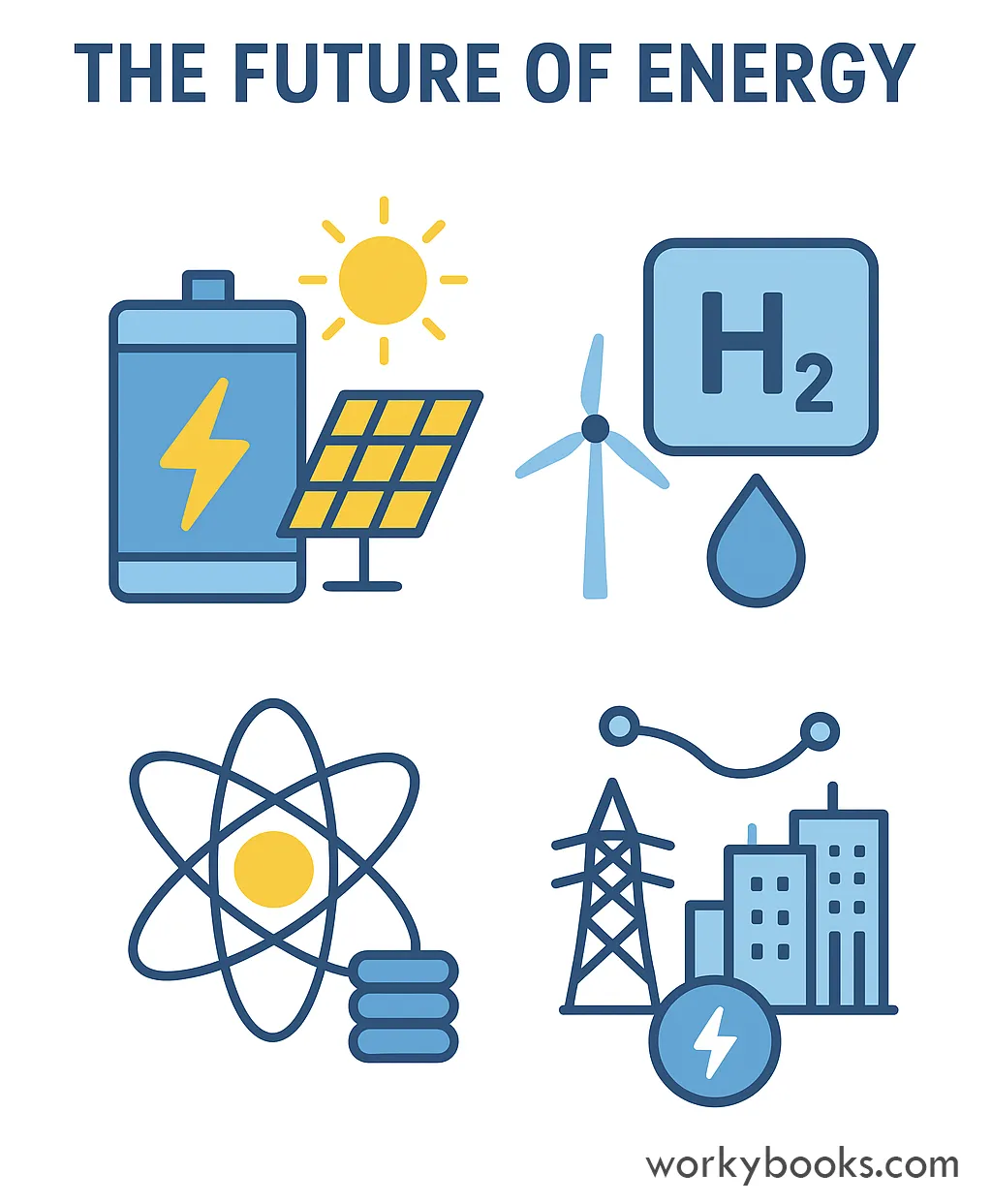
Clean energy innovations: storage, hydrogen, fusion, smart grids, space solar.
Energy powers almost every aspect of modern life, from transportation to communication. As the world faces the urgent problem of climate change, scientists and engineers are searching for cleaner, more sustainable ways to produce and use energy. In recent years, new technologies and policies have begun to change how entire countries generate electricity and fuel transportation. Understanding these changes is important for making informed decisions about our planet’s future.
Emerging Energy Technologies
Advanced batteries are transforming how we store and use electricity. These batteries can store energy from renewable sources like solar and wind, releasing it when the sun isn’t shining or the wind isn’t blowing. Hydrogen fuel cells use a chemical reaction between hydrogen and oxygen to generate electricity, producing only water as a byproduct. Another breakthrough, fusion power, aims to replicate the energy process of the sun by fusing atomic nuclei together, which could offer nearly limitless clean energy if made practical. Smart grids use digital technology to manage electricity across cities, allowing energy from different sources to flow efficiently where it’s needed most. Even more futuristic, space-based solar power proposes collecting solar energy in space and sending it wirelessly to Earth.
Policy Approaches and Global Transitions
Technological changes alone are not enough. Governments use policy tools like carbon pricing—charging companies for emitting carbon dioxide—to encourage cleaner choices. Renewable energy mandates require a certain percentage of energy to come from sources like wind or solar. Funding for research and development helps invent new solutions. Around the world, countries like Denmark and Costa Rica are already generating more than 50% of their electricity from renewable sources. In 2022, global investment in clean energy reached over $1.4 trillion, showing how rapidly the transition is accelerating.
Systems Interactions and Careers in Clean Energy
All these innovations work together as a system. For example, advanced batteries make it possible to use more solar and wind energy by storing power for when demand is high. Smart grids help balance energy supplies, while carbon pricing motivates companies to invest in clean technology. These changes support climate change mitigation, reducing greenhouse gas emissions to protect Earth’s climate. As the world shifts to cleaner energy, new careers are emerging in engineering, science, and policy. Young people today will play a key role in designing, building, and managing these energy systems of the future.
Understanding the science and systems behind the energy transition helps people make choices that affect their communities and the world. By learning about how technology, policy, and science connect, students can become informed decision-makers and leaders in sustainability.
Interesting Fact: One hour of sunlight reaching Earth contains enough energy to power the world for a year, if we could capture and store it all efficiently!
What is the main reason scientists and engineers are searching for new energy technologies?
To address climate change and make energy cleanerTo make devices work fasterTo use more gasolineTo increase electricity prices
Which of the following is NOT mentioned as an advanced energy technology in the passage?
Hydrogen fuel cellsFusion powerCoal power plantsSpace-based solar
How do smart grids help manage electricity?
They use digital technology to send power where it's neededThey store energy undergroundThey make electricity more expensiveThey only use solar panels
What does 'carbon pricing' mean in the context of the passage?
Charging companies for emitting carbon dioxideSelling carbon batteriesMaking fuel cells cheaperMandating solar panels
What does the word 'mitigation' mean as used in the passage?
Making a problem less harmfulInventing new fuelsBuilding more power plantsUsing more energy
What is the main effect of advanced batteries on renewable energy use?
They allow energy to be stored for later useThey make cars run fasterThey increase pollutionThey replace hydrogen fuel cells
Why do governments fund research and development in energy?
To help invent new solutions for cleaner energyTo build more coal plantsTo reduce the number of engineersTo stop using wind power
If a country uses carbon pricing and renewable mandates, what is the likely outcome?
More energy will come from clean sourcesEnergy will be stored undergroundLess funding for scienceMore fossil fuel use
True or False: Fusion power creates energy by splitting atoms apart.
TrueFalse
True or False: In 2022, global investment in clean energy was over $1.4 trillion.
TrueFalse
Perfect For:
👩🏫 Teachers
• Reading comprehension practice
• Auto-graded assessments
• Literacy skill development
👨👩👧👦 Parents
• Reading practice at home
• Comprehension improvement
• Educational reading time
🏠 Homeschoolers
• Reading curriculum support
• Independent reading practice
• Progress monitoring
Reading Features:
📖
Reading Passage
Engaging fiction or nonfiction text
❓
Comprehension Quiz
Auto-graded questions
📊
Instant Feedback
Immediate results and scoring
📄
Printable Version
Download for offline reading
🔊
Read Aloud
Voice-over with word highlighting
Reviews & Ratings
No reviews yet. Be the first to share your experience!
Related Content
Natural Disaster: Volcanic Eruptions
Volcanoes can erupt with lava and ash, changing the landscape. While dangerous, they also create fertile land and new la...
RI.3.1RI.4.4RI.4.2RI.5.2
Human Impacts: Pollution
This middle school science reading passage, aligned with NGSS standards MS-LS2-4 and MS-ESS3-3, examines the mechanisms ...
MS-LS2-4MS-ESS3-3
Human Impacts: Habitat Destruction
This grade 6-8 science passage explores human impacts on ecosystems, focusing on habitat destruction as the leading caus...
MS-LS2-4MS-LS2-5MS-ESS3-3
Ecosystem Services
This engaging middle school science passage introduces students to the concept of ecosystem services, the vital benefits...
MS-LS2-5MS-ESS3-3
Environmental Problems and Solutions
This passage for grades 6-8 introduces major environmental problems such as habitat loss, pollution, climate change, inv...
MS-LS2-4MS-ESS3-3MS-ESS3-4
Remote Sensing
This middle school science passage introduces students to the concept of remote sensing—the collection of information ab...
MS-ESS3-3MS-PS4-2MS-ETS1-1MS-ETS1-3
Geographic Information Systems (GIS)
This engaging middle school science passage introduces students to Geographic Information Systems (GIS), aligning with N...
MS-ESS3-3MS-ETS1-1MS-ETS1-2MS-ETS1-3
Renewable vs. Nonrenewable Energy
This engaging passage, aligned with NGSS standards MS-PS3-4, MS-ESS3-3, and MS-ESS3-4, helps middle school students diff...
MS-PS3-4MS-ESS3-3MS-ESS3-4
Fossil Fuels: Coal
This middle school science reading passage explores the science behind coal, a major fossil fuel. Students will learn ho...
MS-PS3-4MS-ESS3-3MS-ESS3-4
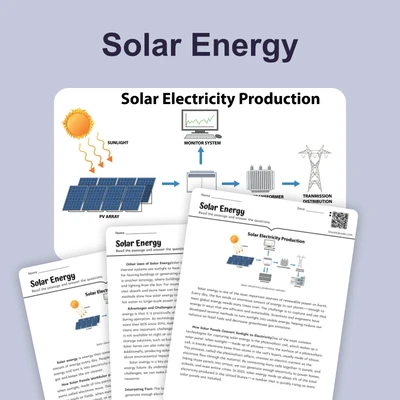
Solar Energy
This engaging passage for grades 6-8 explores the science of solar energy, focusing on how sunlight is converted into el...
MS-PS3-4MS-ESS3-3MS-ESS3-4
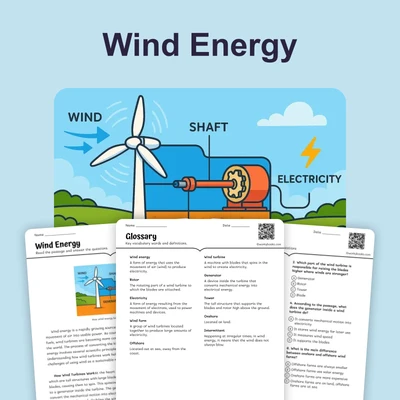
Wind Energy
This comprehensive middle school science passage explores the scientific principles behind wind energy and how wind turb...
MS-PS3-4MS-ESS3-3MS-ESS3-4
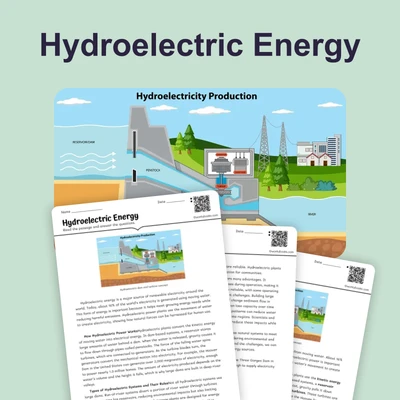
Hydroelectric Energy
This comprehensive passage introduces middle school students to the science behind hydroelectric energy, directly aligni...
MS-PS3-4MS-ESS3-3MS-ESS3-4
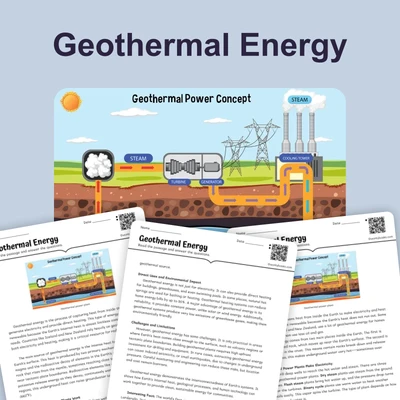
Geothermal Energy
This comprehensive science passage introduces middle school students to the mechanisms and applications of geothermal en...
MS-PS3-4MS-ESS3-3MS-ESS3-4
Biomass and Biofuels
This NGSS-aligned passage introduces grades 6-8 students to the science of biomass and biofuels, explaining how organic ...
MS-PS3-4MS-ESS3-3MS-ESS3-4
Nuclear Energy as a Resource
This NGSS-aligned informational science passage, designed for grades 6-8, explores nuclear energy as a resource in the c...
MS-PS3-4MS-ESS3-3MS-ESS3-4
Water Quality
This middle school science reading passage covers the topic of water quality, aligned with NGSS standards MS-ESS3-1 and ...
MS-ESS3-1MS-ESS3-3
Florida Everglades
This comprehensive passage introduces middle school students to the Florida Everglades, a distinctive wetland ecosystem ...
MS-LS2-1MS-LS2-4MS-ESS3-3MS-ESS3-4
Congo Rainforest
This middle school science passage explores the Congo Rainforest—Earth’s second-largest rainforest, located in Central A...
MS-LS2-1MS-ESS3-3
Nuclear Power Plants
This comprehensive reading passage introduces middle school students (grades 6-8) to the science of nuclear power plants...
MS-PS3-4MS-ESS3-3
Nuclear Safety and Waste
This middle school science passage explores the critical topic of nuclear safety and waste management, aligned with NGSS...