Where Does Our Energy Come From — Reading Comprehension
Rate this
Premium Resource
Present
Present in classroom. No work saved
Assign
Classroom with student accounts, Track progress
Quick Play
No student accounts, assign with a link
Grades
3
4
5
Standards
NGSS 4-ESS3-1
PRINT+DIGITAL RESOURCE
This learning resource is available in interactive and printable formats. The interactive worksheet can be played online and assigned to students. The Printable PDF version can be downloaded and printed for completion by hand.
This 250-word reading passage aligns with NGSS standard ESS3.A and introduces fourth-grade students to the fundamental concept that energy and fuels humans use are derived from natural sources. Students explore how electricity in their homes comes from power plants that burn fuels or capture energy from wind, water, or sunlight. They learn that gasoline for cars originates from oil pumped from underground, and food energy comes from plants that captured energy from the sun. The passage uses age-appropriate language and real-world examples to help students trace everyday energy use back to its natural source. Audio integration supports diverse learners by providing multiple ways to access the content. This foundational understanding prepares students for hands-on investigations about energy transformation and conservation. The passage includes bolded vocabulary terms with immediate definitions, concrete analogies, and connections to students' daily experiences. Accompanying activities include reading comprehension questions, writing prompts, and graphic organizers that reinforce the core science concept while building literacy skills across the curriculum.
CONTENT PREVIEW
Expand content preview
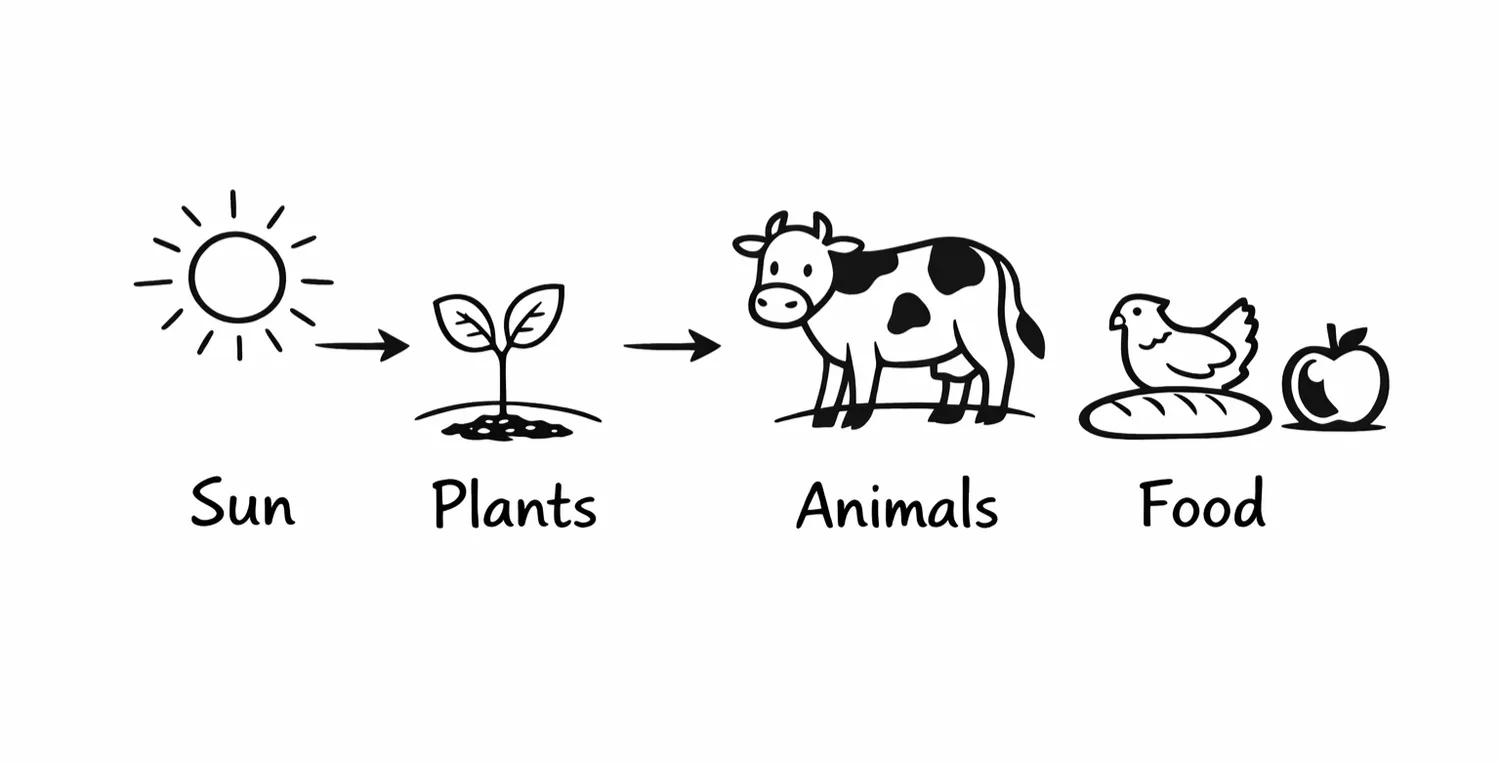
All the energy we use can be traced back to natural sources on Earth, and much of it originally came from the sun.
Energy is the power that makes things work and move. Every day, you use energy when you turn on lights, ride in a car, or eat your lunch. All of this energy comes from natural resources, which are materials found in nature that people can use.
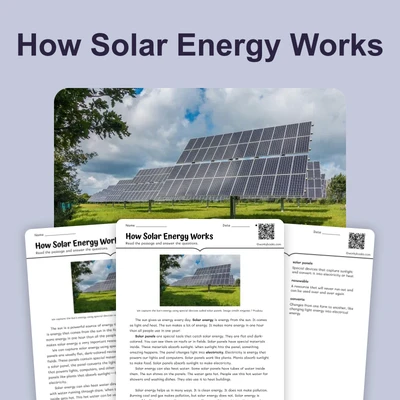
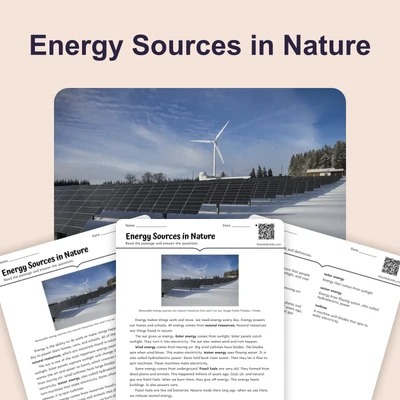
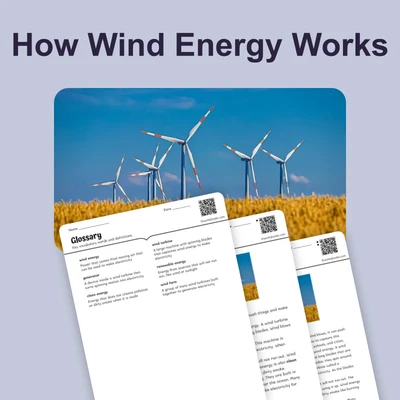
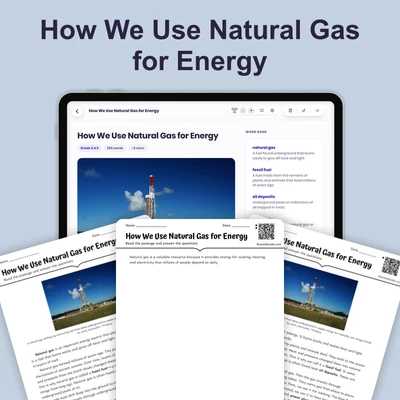
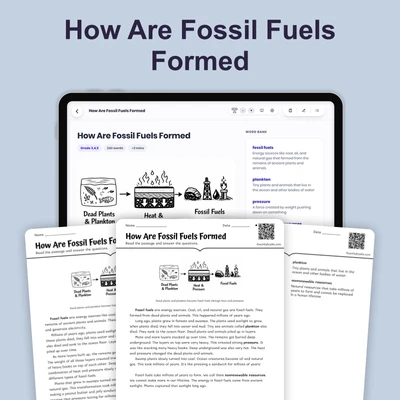
The electricity in your home travels through wires from a power plant. A power plant is a building where energy is made for many homes and buildings. Some power plants burn fuels like coal or natural gas. These fuels formed underground from plants and animals that died millions of years ago. Other power plants capture energy from wind using giant spinning blades, from flowing water in rivers, or from sunlight using special panels.
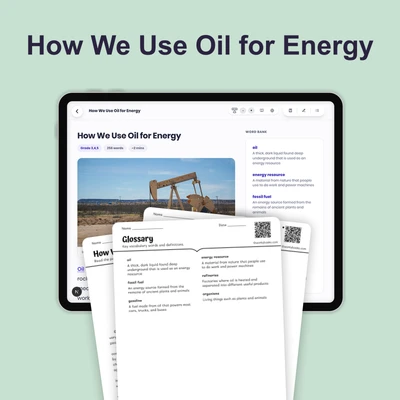
The gasoline that makes cars go also comes from underground. It is made from oil, which formed the same way as coal—from ancient living things. When you pump gas at a station, that fuel started deep in the Earth.
Even the food you eat contains energy! Plants capture energy from sunlight and store it. Think of a plant like a tiny solar panel that turns sunlight into food. When you eat fruits, vegetables, or bread made from wheat, you are using energy that started as sunlight. Animals that people eat, like chickens or cows, got their energy by eating plants.
Almost all the energy we use can be traced back to natural sources on Earth, and much of it originally came from the sun.
What are natural resources?
Materials found in nature people useThings made in factoriesEnergy from batteriesElectricity in wires
Where does electricity travel from?
From batteries in homesFrom power plantsFrom cars and trucksFrom underground caves
What did coal form from?
Rocks and mineralsWater and airDead plants and animalsSunlight and wind
Why do plants capture sunlight energy?
To make electricity for homesTo turn it into foodTo heat the groundTo create wind
How does gasoline reach gas stations?
It's made from oil undergroundIt falls from the skyPlants produce it directlyWind creates it naturally
Where does food energy originally start?
In the soil undergroundIn animals that eat grassAs sunlight captured by plantsIn water from rivers
Most energy we use comes from nature.
TrueFalse
What does 'fuel' mean in this passage?
Water used for drinkingMaterial burned to produce energyFood that animals eatAir that we breathe
Perfect For:
👩🏫 Teachers
• Reading comprehension practice
• Auto-graded assessments
• Literacy skill development
👨👩👧👦 Parents
• Reading practice at home
• Comprehension improvement
• Educational reading time
🏠 Homeschoolers
• Reading curriculum support
• Independent reading practice
• Progress monitoring
Reading Features:
📖
Reading Passage
Engaging fiction or nonfiction text
❓
Comprehension Quiz
Auto-graded questions
📊
Instant Feedback
Immediate results and scoring
📄
Printable Version
Download for offline reading
🔊
Read Aloud
Voice-over with word highlighting
Reviews & Ratings
No reviews yet. Be the first to share your experience!
Related Content
How Hydropower Works
This engaging 250-word science passage explains how hydropower works for Grade 4-5 students. Aligned with NGSS 4-ESS3-1,...
NGSS 4-ESS3-1
Reducing Air Pollution
This engaging 250-word science passage introduces Grade 4-5 students to the technology used to reduce air pollution from...
NGSS 4-ESS3-1
How We Can Use Less Energy
This engaging 250-word science passage for Grade 4-5 students explores how people can reduce the environmental impact of...
NGSS 4-ESS3-1
How Mining Affects the Land
This comprehensive 250-word reading passage helps Grade 4-5 students understand the environmental impacts of mining oper...
NGSS 4-ESS3-1
Air Pollution from Burning Fuels
This comprehensive science passage on air pollution is designed for Grade 4-5 students and aligns with NGSS 4-ESS3-1 sta...
NGSS 4-ESS3-1
How Solar Energy Works
This engaging 250-word science passage explains how solar energy works for Grade 4-5 students. The reading explores how ...
NGSS 4-ESS3-1
Energy Sources in Nature
This engaging 250-word science passage for Grade 4-5 students explores Energy Sources in Nature, aligned with NGSS stand...
NGSS 4-ESS3-1
What Is Fuel
This engaging 250-word science passage introduces Grade 4-5 students to the concept of fuel as any material that stores ...
NGSS 4-ESS3-1
Renewable vs Nonrenewable
This comprehensive 250-word passage helps Grade 4-5 students understand the critical difference between renewable and no...
NGSS 4-ESS3-1
How We Use Coal for Energy
This comprehensive 250-word reading passage introduces fourth-grade students to coal as an energy resource, aligned with...
NGSS 4-ESS3-1
Biomass Energy
This engaging Grade 4-5 science passage explains biomass energy and how it works as a renewable energy source. Students ...
NGSS 4-ESS3-1
How Wind Energy Works
This 250-word reading passage introduces fourth-grade students to wind energy and how it works, aligned with NGSS standa...
NGSS 4-ESS3-1
How We Use Oil for Energy
This 250-word reading passage aligns with NGSS standard 4-ESS3-1 and introduces fourth-grade students to oil as a vital ...
NGSS 4-ESS3-1
How We Use Natural Gas for Energy
This 250-word reading passage introduces fourth-grade students to natural gas as an important energy resource. Aligned w...
NGSS 4-ESS3-1
How Are Fossil Fuels Formed
This 250-word reading passage introduces fourth-grade students to the formation of fossil fuels, aligned with NGSS stand...
NGSS 4-ESS3-1
Where Do We Find Fossil Fuels
This Grade 4 Earth Science reading passage aligns with NGSS standard 4-ESS3-1 and introduces students to the locations a...
NGSS 4-ESS3-1
Why Fossil Fuels Run Out
This 250-word reading passage introduces fourth-grade students to the concept of nonrenewable energy resources, specific...
NGSS 4-ESS3-1
Benefits of Renewable Energy
This 250-word reading passage introduces fourth-grade students to the benefits of renewable energy sources aligned with ...
NGSS 4-ESS3-1
Challenges of Renewable Energy
This 250-word reading passage introduces fourth-grade students to the challenges of renewable energy sources, aligned wi...
NGSS 4-ESS3-1
How Energy Use Affects the Environment
This 250-word informational reading passage aligns with NGSS standard 4-ESS3-1 and introduces fourth-grade students to t...