Reading PassagePremium

High- and Low-Pressure Systems

Interactive passage with audio narration, comprehension questions, and printable PDF.

No ratings yet
Grades 5–8ScienceElaEnglish · SpanishInteractive · Printable
Aligned toMS-ESS2-6
Just this resource
$1.50
One-time purchase
Best value
Unlock everything
$49.99$29.99/yr
40% off until Aug 1 — 10,000+ resources
Renews at $49.99/year.
Unlock above to use these actions

What's included

Reading passage
Audio narration
Comprehension quiz
Writing activity
Glossary & flashcards
Differentiated version
Spanish translation

High- and Low-Pressure Systems preview and details

About this printable High- and Low-Pressure Systems science reading passage, NGSS-aligned (Grades 5-8)

This comprehensive middle school science reading passage explores atmospheric pressure systems and their role in weather patterns. Students learn how high pressure systems bring fair, dry weather while low pressure systems create clouds, wind, and storms. The passage explains how meteorologists use pressure measurements in millibars to track and predict weather changes. Aligned with NGSS standards MS-ESS2-5 and DCI MS-ESS2.D, this resource includes audio-integrated reading support, making it accessible for all learners. The curriculum package features a differentiated version for struggling readers and English Language Learners, complete Spanish translations, a comprehensive glossary of key atmospheric science terms, multiple-choice assessments, writing activities, and graphic organizers. Students explore real-world applications through examples like the 1993 Storm of the Century, understanding how pressure systems move across Earth's surface and influence daily weather. This standards-aligned resource supports science literacy development while building foundational knowledge of Earth's weather and climate systems.
Written by Workybooks TeamPublished by Workybooks
Preview

Sample passage and quiz from High- and Low-Pressure Systems

Reading passage and comprehension quiz preview

What Are Pressure Systems
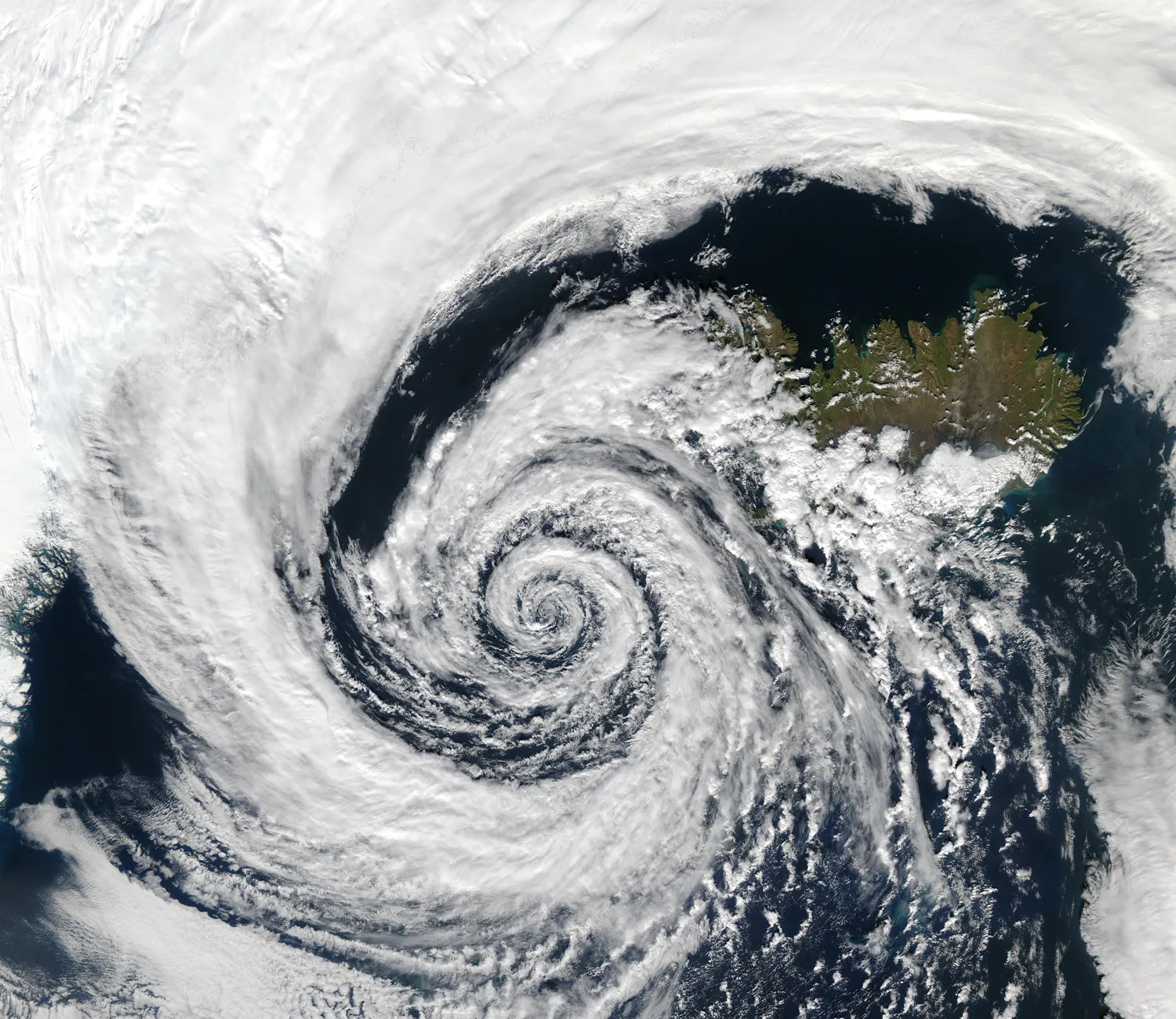
Low pressure system over Iceland

A beautifully-formed low-pressure system swirls off the southwestern coast of Iceland. This huge system swirled over the Denmark Strait in between Greenland and Iceland. The image was taken by the Aqua MODIS instrument on September 4, 2003.. by NASA/GSFC, MODIS Rapid Response Team, Jacques Descloitres / Wikimedia Commons

Pressure systems are large regions of air with different amounts of atmospheric pressure. Atmospheric pressure is the weight of air pushing down on Earth's surface. These systems can stretch across hundreds or thousands of miles. They control most of the weather patterns we experience every day.

Scientists classify pressure systems into two main types: high pressure and low pressure. High pressure systems form when air sinks toward the ground. The sinking air compresses and warms, which prevents clouds from forming. This is why high pressure usually brings clear skies and calm, dry weather. Weather maps show these systems with the letter H. In contrast, low pressure systems form when air rises away from the surface. Rising air expands and cools, causing water vapor to condense into clouds. Low pressure systems bring cloudy skies, wind, and often precipitation. Weather maps mark these systems with the letter L.

Meteorologists measure pressure using instruments called barometers. Pressure values are recorded in units called millibars or inches of mercury. Average sea level pressure is about 1013 millibars. High pressure systems typically measure above 1020 millibars. Low pressure systems usually measure below 1000 millibars. Evidence shows that tracking these pressure values helps scientists predict weather changes. When pressure drops quickly, storms may be approaching. When pressure rises, fair weather is likely ahead.

Pressure systems constantly move across Earth's surface, carried by winds in the upper atmosphere. In North America, most systems move from west to east. One dramatic example occurred in March 1993 when a powerful low pressure system brought the "Storm of the Century." This cyclone dropped heavy snow from Alabama to Maine and caused widespread damage. Meteorologists tracked the system's low pressure center, which measured as low as 960 millibars. By monitoring pressure patterns, forecasters warned millions of people days before the storm arrived.

Understanding pressure systems matters because they drive weather across the entire planet. These systems interact with Earth's oceans, land surfaces, and atmosphere to create our daily weather. Farmers use pressure forecasts to protect crops. Airlines route flights around low pressure systems to avoid storms. Emergency managers prepare communities when dangerous low pressure systems approach. The ability to track and predict pressure systems has saved countless lives and helps society plan for weather-related challenges.

Interesting Fact: The lowest atmospheric pressure ever recorded at sea level was 870 millibars inside Typhoon Tip in 1979. This massive low pressure system was the largest tropical cyclone ever observed, with winds spanning over 1,300 miles across the Pacific Ocean.

Comprehension quiz (10 questions)

1. What are pressure systems?

Large regions of air with different amounts of atmospheric pressure
Small areas where temperature changes rapidly
Tools that scientists use to measure wind speed
Ocean currents that affect coastal weather

2. What type of weather does a high pressure system typically bring?

Heavy rain and strong winds
Clear skies and dry weather
Thick fog and cold temperatures
Thunderstorms and tornadoes

3. What instrument do meteorologists use to measure atmospheric pressure?

Thermometer
Anemometer
Barometer
Hygrometer

4. What is the average sea level pressure in millibars?

960 millibars
1000 millibars
1013 millibars
1020 millibars

5. Why do low pressure systems bring cloudy weather and precipitation?

Because sinking air warms up and prevents clouds
Because rising air cools and causes water vapor to condense into clouds
Because the air pressure is too heavy for the sky
Because low pressure pulls moisture from the ocean

6. Based on the passage, what can meteorologists predict when atmospheric pressure drops quickly?

Fair weather is approaching
Temperatures will rise significantly
Storms may be approaching
Wind speeds will decrease

7. In which direction do most pressure systems move across North America?

From north to south
From south to north
From east to west
From west to east

8. How does understanding pressure systems help society?

It allows farmers to protect crops, airlines to route flights safely, and emergency managers to prepare communities
It helps scientists control the weather
It makes pressure systems move faster across Earth
It prevents all storms from forming

9. True or False: High pressure systems are marked with the letter L on weather maps.

True
False

10. True or False: The 1993 Storm of the Century was caused by a powerful low pressure system.

True
False
Who it's for

Perfect for the way you teach

Teachers
  • Build comprehension skills
  • Auto-graded quiz
  • Differentiated reading
Parents
  • Read together at home
  • Improve fluency
  • Quiet reading time
Homeschoolers
  • Reading curriculum support
  • Independent practice
  • Track Lexile growth
Topics

Reviews & Ratings

No reviews yet. Be the first to share your experience!

More reading you might love

20 more
Passage
Understanding the Koppen Climate Classification System - reading educational content
Grades 5–8

Understanding the Koppen Climate Classification System

weather and climate · MS-ESS2-6

$1.50
Passage
Humid Continental Climate Countries - reading educational content
Grades 5–8

Humid Continental Climate Countries

weather and climate · MS-ESS2-6

Free
Passage
How Do Highland Climates Differ from Polar Climates? - reading educational content
Grades 5–8

How Do Highland Climates Differ from Polar Climates?

weather and climate · MS-ESS2-6

$1.50
Passage
What Are Natural Causes That Lead to Increased CO₂ Levels in the Carbon Cycle? - reading educational content
Grades 5–8

What Are Natural Causes That Lead to Increased CO₂ Levels in the Carbon Cycle?

weather and climate · MS-ESS2-6

$1.50
Passage
Global vs. Local Temperature - reading educational content
Grade 6

Global vs. Local Temperature

weather and climate · MS-ESS2-6

$1.50
Passage
How Land and Water Heat Differently - reading educational content
Grade 6

How Land and Water Heat Differently

science · MS-ESS2-6

$1.50
Passage
Earth's Spheres - reading educational content
Grades 5–8

Earth's Spheres

earth science · MS-ESS2-4

$1.50
Passage
Factors Affecting Climate - reading educational content
Grades 5–8

Factors Affecting Climate

science · MS-ESS2-6

$1.50
Passage
Global Wind Patterns - reading educational content
Grades 5–8

Global Wind Patterns

science · MS-ESS2-6

$1.50
Passage
Wind - reading educational content
Grades 5–8

Wind

science · MS-ESS2-5

$1.50
Passage
El Niño - reading educational content
Grades 5–8

El Niño

science · MS-ESS2-6

$1.50
Passage
Hurricanes and Ocean Heat - reading educational content
Grades 5–8

Hurricanes and Ocean Heat

science · MS-ESS2-6

$1.50
Passage
ENSO and Global Climate - reading educational content
Grades 5–8

ENSO and Global Climate

science · MS-ESS2-6

$1.50
Passage
Earth's Energy Balance - reading educational content
Grades 5–8

Earth's Energy Balance

weather and climate · MS-ESS2-6

$1.50
Passage
Reflection, Absorption, and Albedo - reading educational content
Grades 5–8

Reflection, Absorption, and Albedo

weather and climate · MS-ESS2-6

$1.50
Passage
Natural Climate Variability - reading educational content
Grades 5–8

Natural Climate Variability

weather and climate · MS-ESS2-6

$1.50
Passage
Climate Through Earth's History - reading educational content
Grades 5–8

Climate Through Earth's History

weather and climate · MS-ESS1-4

$1.50
Passage
Proxy vs. Real Temperature Data - reading educational content
Grade 6

Proxy vs. Real Temperature Data

weather and climate · MS-ESS2-6

$1.50
Passage
What Are Climate Zones - reading educational content
Grades 5–8

What Are Climate Zones

weather and climate · MS-ESS2-6

$1.50
Passage
The Sahara Desert - reading educational content
Grades 5–8

The Sahara Desert

weather and climate · MS-LS2-1

$1.50
Copyright © 2026 Workybooks. Made with ♥ in California.