How Did Ancient Cultures Track Time
Interactive passage with audio narration, comprehension questions, and printable PDF.
By completing this purchase you agree to our Terms of Use and Privacy Policy. Your subscription renews automatically until you cancel. You can cancel anytime from your account settings. All sales are final and non-refundable. Digital content is available for download in your account immediately upon purchase.
What's included
How Did Ancient Cultures Track Time preview and details
About this printable How Did Ancient Cultures Track Time science reading passage, NGSS-aligned (Grades 5-8)
Sample passage and quiz from How Did Ancient Cultures Track Time
Reading passage and comprehension quiz preview
How Did Ancient Cultures Track Time
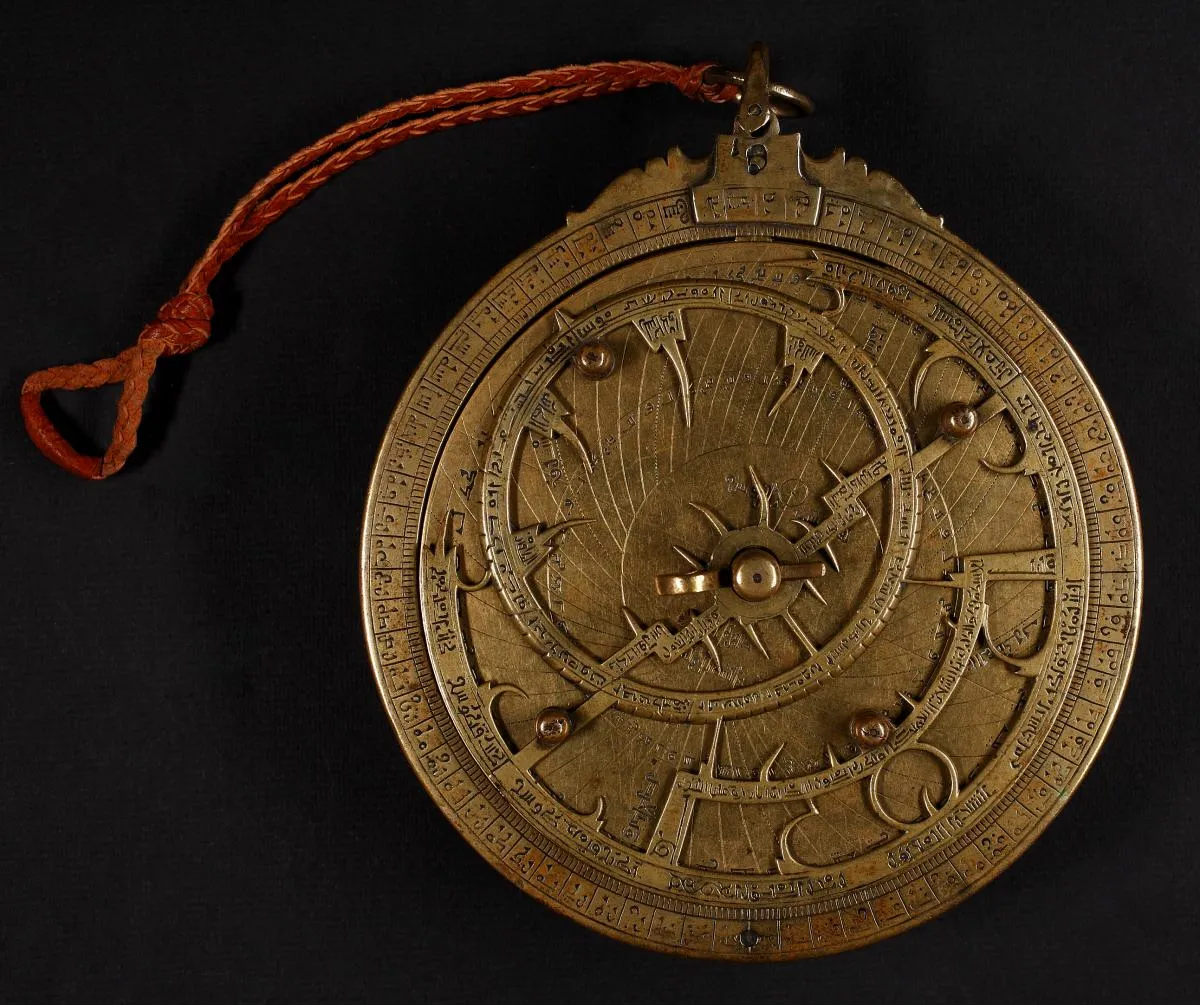
Andalusian astrolabe from King Catalogue of Medieval Astronomical Instruments/ Wikimedia Commons
Ancient cultures tracked time by observing patterns in the sky. People around the world noticed that the sun, moon, and stars moved in predictable ways. These observations helped them create calendars to measure days, months, and years. Different cultures developed unique systems based on what they needed to track.
The Mayans of Central America built one of the most accurate ancient calendars. Scientists discovered that Mayan astronomers tracked the planet Venus with remarkable precision. They recorded Venus's movements over many years and calculated its cycle to within hours of modern measurements. The Mayans used this information for religious ceremonies and agricultural planning. Their observations show how careful study of celestial patterns can produce reliable timekeeping systems.
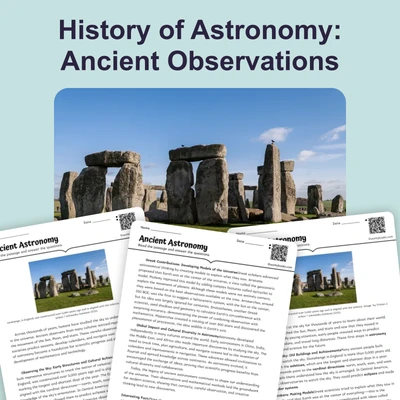
In England, the ancient monument Stonehenge demonstrates another approach to tracking time. Evidence shows that Stonehenge aligns with the summer and winter solstices. During the summer solstice, the sun rises directly over a specific stone when viewed from the center. This alignment helped ancient people mark the longest day of the year. The monument may have served as a giant calendar to track seasonal changes.
Polynesian navigators developed sophisticated methods for tracking time and location using stars. They sailed thousands of miles across the Pacific Ocean without modern instruments. These sailors memorized the positions of stars at different times of year. They used this knowledge to navigate between islands and predict seasonal weather patterns. Their system combined astronomy with practical needs for ocean travel.
The Islamic calendar follows a different pattern based on lunar months. Each month begins when observers can first see the new moon crescent. This calendar contains 354 or 355 days per year, which is shorter than Earth's orbit around the sun. The Islamic calendar connects religious observances to lunar cycles rather than seasonal patterns.
Understanding ancient timekeeping systems matters because it shows how humans use scientific observation to solve problems. Each culture looked at the same sky but created different calendars based on their needs and values. These systems helped societies organize agriculture, religious practices, and navigation. Modern calendars still reflect these ancient observations of celestial patterns.
Interesting Fact: The Mayan calendar was so accurate that their calculation of a year differed from modern measurements by only 17 seconds. This precision was achieved without telescopes or electronic instruments.
Comprehension quiz (10 questions)
1. What did ancient cultures observe to help them track time?
2. How accurate was the Mayan calculation of Venus's cycle?
3. What does the word 'celestial' mean in the passage?
4. What is a solstice?
5. Why did Polynesian navigators memorize star positions?
6. How does the Islamic calendar differ from calendars based on the sun?
7. Based on the passage, what can you infer about why different cultures created different calendar systems?
8. How might ancient calendar systems be applied to modern problems?
9. True or False: Stonehenge aligns with the sun during the summer and winter solstices.
10. True or False: The Mayan calendar calculation of a year was exactly the same as modern measurements.
Perfect for the way you teach
- Build comprehension skills
- Auto-graded quiz
- Differentiated reading
- Read together at home
- Improve fluency
- Quiet reading time
- Reading curriculum support
- Independent practice
- Track Lexile growth